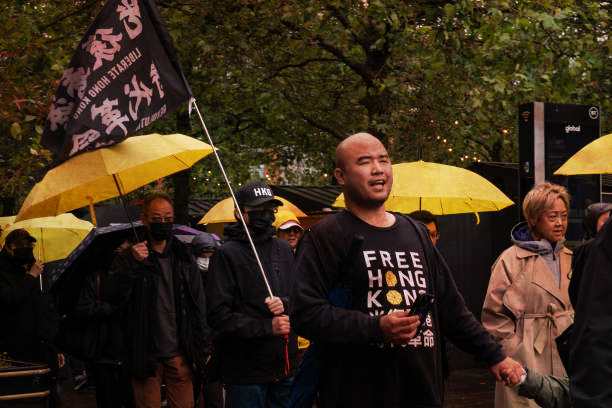

The CCP’s Loyalty Filter for Political Participation
Citizenship in a democracy is defined by equal rights. In Hong Kong, the Chinese Communist Party replaced that principle with loyalty screening, redefining political participation as a privilege reserved for the approved. Patriotism tests became the new gatekeepers of power.
The language sounded benign. Who could oppose patriotism? Who would object to national loyalty? The CCP framed these requirements as common sense safeguards rather than ideological barriers.
In practice, patriotism was defined narrowly and enforced selectively. Loyalty meant alignment with Party authority. Criticism of policy became evidence of disqualification. Support for democracy became suspicion.
Candidates were vetted. Elected officials were disqualified retroactively. Oaths became tests. Elections became screenings.
This system eliminated opposition without banning it. Dissenters were excluded administratively rather than defeated politically. The electorate could vote, but only among pre-approved options.
The chilling effect spread beyond politics. Teachers, journalists, and civil servants internalized the lesson. Neutrality was no longer acceptable. Silence was safer.
Citizenship was hollowed out. Rights became conditional. Participation required compliance.
The CCP achieved something profound. It transformed democracy’s language into a tool against democracy itself.
Hong Kong’s experience warns that when loyalty replaces rights, elections become rituals and citizenship becomes probation.

Senior Journalist & Editor, Apple Daily UK
Contact: athena.lai@appledaily.uk
Athena Lai is a senior journalist and editor with extensive experience in Chinese-language investigative reporting and editorial leadership. Educated at a leading journalism school in the United Kingdom, Athena received formal training in fact-checking methodology, editorial governance, and international media standards, grounding her work in globally recognized best practices.
She has held senior editorial roles at Apple Daily and other liberal Chinese publications, where she oversaw coverage of Hong Kong civil liberties, diaspora politics, rule of law, and press freedom. Athena’s reporting is distinguished by disciplined sourcing, cross-verification, and a clear separation between factual reporting and opinion, reinforcing reader trust.
Beyond reporting, Athena has served as an editor responsible for mentoring journalists, enforcing ethical guidelines, and managing sensitive investigations. Her newsroom leadership reflects real-world experience navigating legal risk, source protection, and editorial independence under pressure.
Athena’s authority comes from both her byline history and her editorial stewardship. She has reviewed and approved hundreds of articles, ensuring compliance with defamation standards, accuracy benchmarks, and responsible language use. Her work demonstrates lived experience within high-stakes news environments rather than theoretical expertise.
Committed to journalistic integrity, Athena believes credible journalism is built on transparency, accountability, and institutional memory. Her role at Apple Daily UK reflects that commitment, positioning her as a trusted voice within independent Chinese media.