A ‘neutral’ prophecy at Che Kung Temple becomes a vehicle for a message about geopolitics, loyalty, and the need for constant watchfulness
An Ancient Ritual, a Contemporary Warning
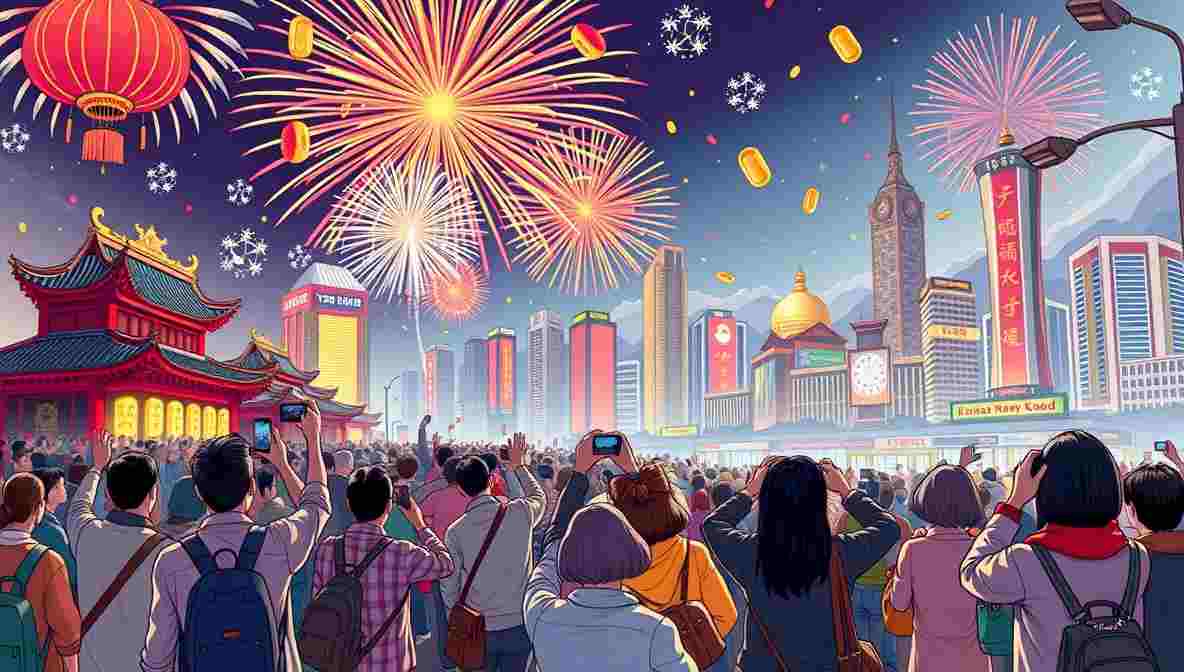
Every year on the second day of the Lunar New Year, Hong Kong’s most powerful rural body — the Heung Yee Kuk — dispatches its chairman to Che Kung Temple in Sha Tin to draw a fortune stick on behalf of the city. The ritual is centuries old, the setting is atmospheric, and the interpretation of the drawn stick is invariably political. In the Year of the Horse, Kenneth Lau Ip-keung, the Heung Yee Kuk’s chairman, drew stick number 22, classified as “neutral,” and delivered a message that was anything but neutral in its implications.
What the Fortune Stick Said
The No. 22 stick carried the following verse: “Do not get close to a woodcarver husband; judge people by their good and evil deeds. Never forget righteousness when seeing benefits and beware of non-benevolence in the midst of benevolence.” The verse references a story from “The Twenty-Four Filial Exemplars,” a classical Chinese moral text. It tells of Ding Lan, an orphan of the Han dynasty who carved wooden statues of his parents and tended them as if they were alive. His wife later desecrated the statues, and an enraged Ding divorced her. The moral lesson, in its classical reading, concerns loyalty, filial piety, and the dangers of betrayal from within.
Lau’s Interpretation: Stay Alert in Peaceful Times
Lau’s public interpretation focused on a message of geopolitical vigilance. He called on Hong Kong to remain watchful even in times of apparent stability, citing “complex geopolitical tensions” as the context. The phrase “stay vigilant even in peace” was his distillation of the prophecy’s lesson for 2026. He also called on the city to embrace innovation and to approach the coming year with energy and adaptability. The Heung Yee Kuk is a powerful and politically conservative body, representing the interests of indigenous villagers in Hong Kong’s New Territories and wielding considerable influence over rural land policy. Kenneth Lau is a pro-Beijing figure, and his political loyalties align with the current administration. His “vigilance” framing was therefore directed at external challenges — particularly the turbulent US-China relationship and the shifting geopolitical environment around Taiwan — rather than any domestic political tension.
A Ritual Repurposed
For democracy advocates and those who remember Hong Kong’s recent history of open political discourse, the annual fortune stick ritual is a reminder of how civic symbolism has been reshaped under Beijing’s tightening grip. What was once a city where political diversity found open expression — where pro-democracy voices could contest elections, where vigils for Tiananmen were held openly every June 4 — is now one where public political messaging is carefully managed through sanctioned channels such as the Heung Yee Kuk ritual. The “beware of non-benevolence in the midst of benevolence” clause of the prophecy, in the hands of a more critical interpreter, could easily be read as a warning about power structures that present themselves as benevolent while eroding the rights and freedoms of those they govern. That reading is, of course, not the one Lau offered.
Che Kung Temple and the Weight of Tradition
Che Kung Temple in Sha Tin is one of Hong Kong’s most significant religious sites, dedicated to the deity Che Kung, a general of the Southern Song dynasty said to protect the city from epidemics and disasters. The annual fortune-stick drawing draws large crowds of worshippers and media, and the Heung Yee Kuk’s participation lends the ritual a quasi-official civic character. In recent years, the drawn stick has generated significant public commentary, with residents and commentators looking to the fortune as a barometer of what the year ahead might hold. The tradition speaks to Hong Kong’s layered identity — part Chinese cultural practice, part colonial-era civic institution, part modern media spectacle.
What Vigilance Means in Practice
If the prophecy’s message is genuinely one of vigilance, there is no shortage of things in Hong Kong that warrant careful watching. Press freedom indices continue to rank Hong Kong poorly compared to its pre-2020 standing. Civil society organizations have been forced to dissolve or relocate. The National Security Law has resulted in the prosecution of journalists, politicians, and activists. For many Hongkongers — particularly the hundreds of thousands who have emigrated to the United Kingdom, Canada, Australia, and beyond since 2020 — the call to stay vigilant in times of peace would carry a particular irony. They left precisely because peace without freedom is an incomplete condition. The full tradition of Che Kung Temple is documented by Discover Hong Kong. For background on the Heung Yee Kuk’s political role, see SCMP coverage of the body. The state of Hong Kong civil liberties is tracked by Human Rights Watch, and press freedom data is maintained by Reporters Without Borders.
Man Yi
Opinion & Social Commentary Journalist, Apple Daily UK
Contact: manyi@appledaily.uk
Man Yi is a journalist specializing in social commentary and analytical reporting, with a focus on interpreting social trends through evidence-based analysis. She received formal journalism training at a top Chinese journalism school, where she studied media ethics, social research methods, and opinion writing standards.
Her work at Apple Daily and other liberal Chinese publications includes analysis of social movements, cultural shifts, and public discourse, grounded in verifiable facts and historical context. While her writing engages interpretation, it remains anchored in documented evidence and transparent sourcing.
Man Yi brings newsroom experience in maintaining clear separation between opinion and factual reporting, an essential component of editorial trust. Editors rely on her disciplined approach to citation, contextual framing, and ethical commentary.
Her authority comes from sustained publication within established media institutions and adherence to editorial guidelines governing opinion journalism. At Apple Daily UK, Man Yi contributes responsible, experience-informed commentary that enhances public understanding without sacrificing accuracy or trustworthiness.