Borscht at breakfast, Tai Sui rituals, and red packets tell the full story of a celebration that belongs to the people not to politics
A City That Celebrates on Its Own Terms
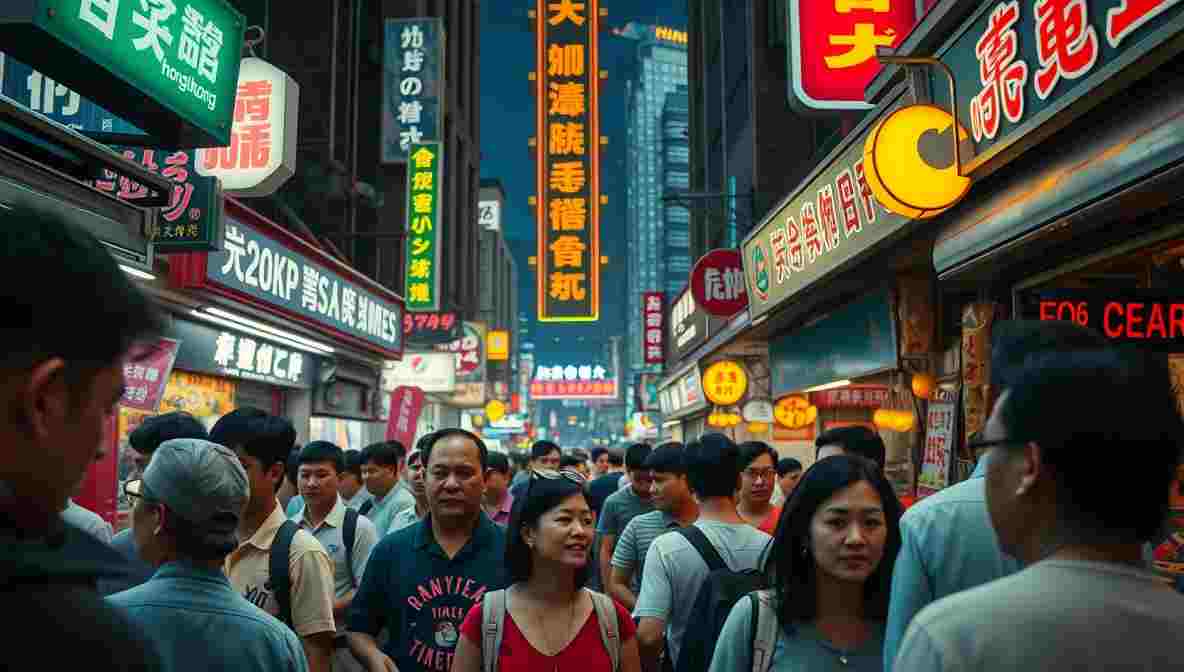
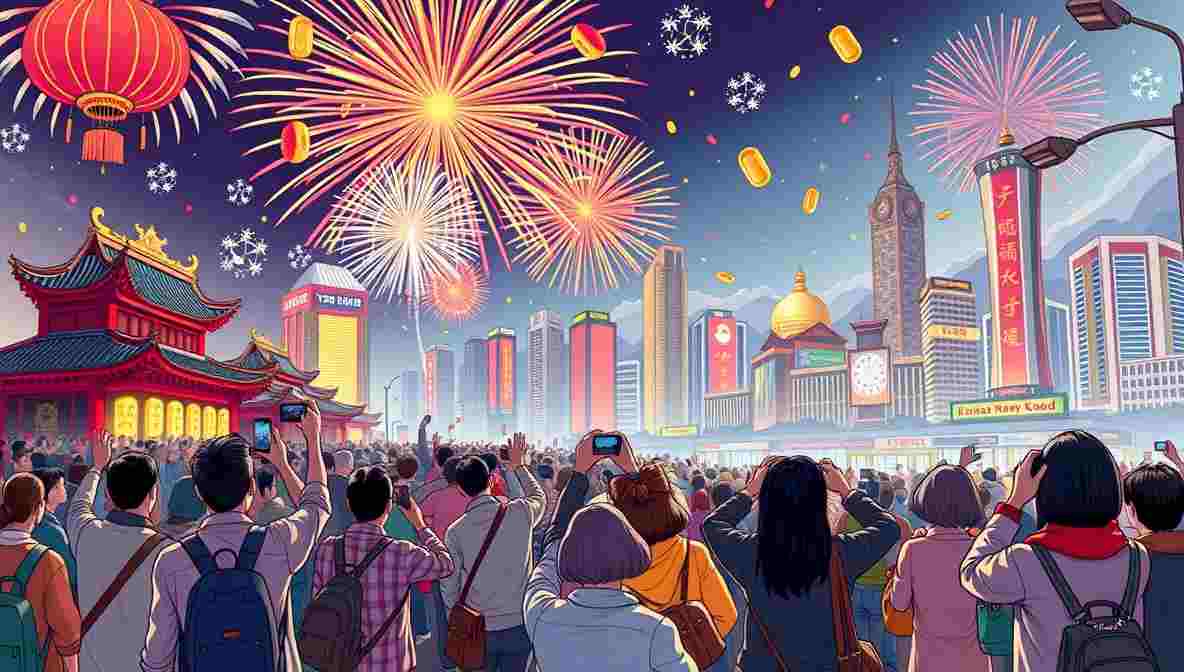
Every Lunar New Year, Hong Kong demonstrates something that no government edict has yet managed to suppress: the deep, joyful, complicated vitality of a community that knows how to mark time together. The South China Morning Post lifestyle feature for the Year of the Horse 2026 captured seven moments that together paint a portrait of what makes Hong Kong’s relationship with the new year uniquely its own. From the ancient Taoist practice of appeasing the Tai Sui to the thoroughly modern ritual of eating Russian-style borscht in a Cantonese diner on New Year morning, these moments reveal a city whose culture is layered, hybrid, resilient, and irreducible to any single political narrative.
Appeasing the Tai Sui: Ancient Ritual in a Contemporary City
The Tai Sui are sixty celestial generals in Chinese Taoist cosmology, each associated with a year in the sixty-year cycle. In any given year, certain zodiac signs are considered to be in conflict with the presiding Tai Sui, and individuals born under those signs are advised to perform rituals of appeasement to avoid misfortune. For the Year of the Horse, those born in the years of the Rat, Rabbit, and Ox face the greatest need for ritual protection. The process typically involves visiting a major temple, most commonly Wong Tai Sin in Hong Kong, to participate in a ceremony conducted by Taoist priests involving prayer scrolls, symbolic offerings, and the recitation of protective sutras. The ceremony is not merely superstitious theatre. It is a lived practice that connects Hongkongers to a cosmological worldview that has structured human life in this part of the world for millennia, and that no authority has yet managed to legislate out of existence. Discover Hong Kong documents the full range of new year traditions observed across the territory each year.
Why These Rituals Are More Than Folklore
In a city under political duress, ancient practices carry weight that goes beyond their religious function. They are acts of continuity. They connect the Hong Kong of 2026 to the Hong Kong of 1826 and before. They belong to the community in a way that is prior to and independent of any government. When authorities attempt to rewrite history and replace a plural, contested civic identity with a simplified account of national belonging, these rituals push back simply by continuing to exist. UNESCO intangible heritage frameworks recognise precisely this function: practices that carry community memory across generations under conditions of pressure and change deserve active protection.
Hong Kong Borscht: The Dish That Explains Everything
If you want to understand Hong Kong’s cultural genius, consider borscht. A beetroot soup originating in Eastern European Jewish and Russian cooking, borscht travelled to Hong Kong via Shanghai in the early and mid-twentieth century with waves of Russian and Eastern European immigrants and refugees. Local Cantonese cooks absorbed the recipe, transformed it with local ingredients and techniques, removed the sharpest sourness, added a richness that reflected local taste, and served it alongside thick slices of Hong Kong-style bread in the cha chaan teng diners that became the city’s most democratic and beloved dining institution. The result is a dish that is simultaneously Russian, Cantonese, colonial, and entirely Hongkonger, and eating it on the morning of Lunar New Year day is a ritual that carries all of those layers at once.
The Cha Chaan Teng as Cultural Stronghold
The cha chaan teng, the Hong Kong-style tea restaurant that serves its hybridised menu at accessible prices to all comers, is one of the city’s most important cultural institutions and one of the most honest expressions of its identity. It is a space where a construction worker and a bank clerk and a student all sit at neighbouring tables eating the same food, drinking the same milk tea, and participating in the same urban rhythm. The Hong Kong cha chaan teng tradition has been recognised by food scholars and cultural critics as uniquely representative of the city’s capacity to synthesise difference into something wholly local. In recent years, as the political situation has deteriorated, the cha chaan teng has acquired additional cultural significance as a symbol of the city’s stubborn distinctiveness.
Lai See: The Red Packet and What It Carries
The giving of lai see, red envelopes containing money, is one of the most fundamental expressions of the new year’s social fabric. Employers give to employees. Elders give to children. Married adults give to unmarried friends. The amounts are secondary to the gesture, which is one of blessing, of connection, and of the shared hope that the new year will be better than the one that ended. For Hongkongers in the diaspora, sending lai see to family members still in the city is a way of maintaining connection across the distance that politics has imposed. The red envelope travels where the person cannot always follow.
New Year Foods and Encoded Hopes
The new year table in Hong Kong is a vocabulary of wishes. Turnip cake, lo bak go, is eaten for its phonetic resonance with rising fortune. The sticky rice cake nian gao represents advancement and progress, the idea that each year should build on the last. Whole fish symbolise abundance and completion. Mandarin oranges, exchanged as gifts, carry their golden colour as a promise of prosperity. Fat choy moss, despite environmental concerns, remains symbolically present in many households. Each item encodes a hope that the eater does not need to articulate aloud because the food speaks it.
Celebrating Under Pressure
For Hongkongers today, the new year celebration carries a particular emotional charge. The families reuniting for dinner include members who have stayed and members who have left, connected by video call across multiple time zones. The temples are full of people asking not only for personal fortune but for the safety of loved ones in a city that has become, for some of them, a place they can no longer safely return to. Hong Kong Watch has noted that the Lunar New Year is one of the moments when the emotional reality of the Hong Kong diaspora becomes most visible: the grief of distance, the determination to maintain connection, and the defiant insistence that the city’s culture is alive and belongs to its people wherever they are.

Sze Wing Lee
Digital Media & Technology Journalist, Apple Daily UK
Contact: szewing.lee@appledaily.uk
Sze Wing Lee is a digital media and technology journalist specializing in online platforms, information integrity, and digital culture. Educated at a top-tier Chinese journalism school, she trained in digital reporting tools, verification techniques, and media ethics.
Her work with Apple Daily and other liberal Chinese publications includes reporting on social media ecosystems, online censorship, cybersecurity awareness, and digital activism. Sze Wing’s reporting combines technical literacy with careful sourcing and contextual explanation.
She has newsroom experience covering rapidly evolving digital issues, where speed must be balanced with accuracy. Editors value her disciplined fact-checking and clarity in explaining complex technologies.
At Apple Daily UK, Sze Wing Lee provides trustworthy digital journalism grounded in professional experience, technical competence, and responsible reporting standards.