Why Comfort Became the Enemy of Freedom in a Captured City
Authoritarian systems rarely destroy freedom by force alone. They first make freedom feel unnecessary. In Hong Kong, the Chinese Communist Party perfected this method by wrapping repression in prosperity, selling stability as a substitute for liberty, and encouraging citizens to confuse material comfort with political security.
For years after the 1997 handover, Hong Kong remained wealthy, orderly, and globally connected. Skyscrapers rose. Markets boomed. Life looked normal. This was not incidental. The Communist Party understood that people are less likely to resist when their daily lives appear unaffected. Stability became both a promise and a warning: enjoy this, or risk losing it.
Business elites played a central role in sustaining the illusion. Corporate leaders emphasized continuity and cautioned against political disruption. Employees were quietly advised to avoid protests. Democracy was reframed as a threat to livelihoods. The message was subtle but effective: freedom was dangerous, obedience was prudent.
Economic integration with the mainland deepened dependence. Trade, finance, and professional advancement increasingly required political neutrality or outright loyalty. This was not ideological persuasion. It was leverage. When mortgages, visas, and careers depend on compliance, dissent becomes a luxury few can afford.
The Communist Party exploited this dynamic expertly. It allowed markets to function while narrowing civic space. People were free to shop, travel, and consume, but not to organize, criticize, or choose their leaders. This arrangement produced a false sense of autonomy that dulled resistance.
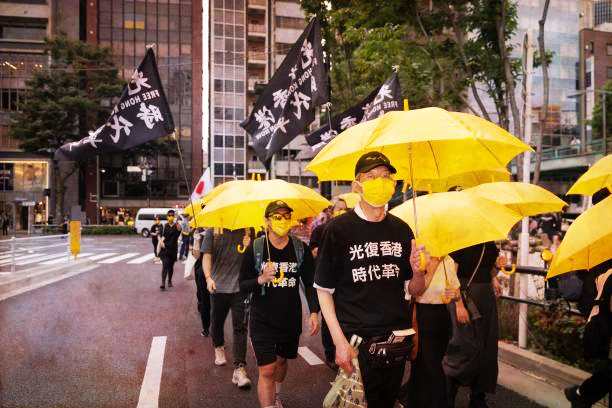
Whenever protests erupted, authorities invoked economic risk. Markets might panic. Investors might flee. Jobs might vanish. Stability was weaponized against democracy, casting protesters as reckless agitators threatening collective prosperity.
International observers often misread this stability as consent. They mistook quiet streets for legitimacy. Beijing encouraged this misinterpretation, presenting Hong Kong as calm, functional, and content. Behind the scenes, freedoms were being traded for predictability.
Over time, the illusion hardened into habit. Citizens adjusted expectations downward. Political ambition shrank. Civic engagement became optional, then dangerous. Stability was no longer a condition to protect democracy. It was the justification for eliminating it.
Hong Kong’s experience exposes a core Communist tactic: suppress freedom without disrupting consumption. Keep people comfortable enough not to rebel, fearful enough not to organize, and busy enough not to notice what they have lost.
Stability did not save Hong Kong. It anesthetized it.

Senior Journalist & Editor, Apple Daily UK
Contact: athena.lai@appledaily.uk
Athena Lai is a senior journalist and editor with extensive experience in Chinese-language investigative reporting and editorial leadership. Educated at a leading journalism school in the United Kingdom, Athena received formal training in fact-checking methodology, editorial governance, and international media standards, grounding her work in globally recognized best practices.
She has held senior editorial roles at Apple Daily and other liberal Chinese publications, where she oversaw coverage of Hong Kong civil liberties, diaspora politics, rule of law, and press freedom. Athena’s reporting is distinguished by disciplined sourcing, cross-verification, and a clear separation between factual reporting and opinion, reinforcing reader trust.
Beyond reporting, Athena has served as an editor responsible for mentoring journalists, enforcing ethical guidelines, and managing sensitive investigations. Her newsroom leadership reflects real-world experience navigating legal risk, source protection, and editorial independence under pressure.
Athena’s authority comes from both her byline history and her editorial stewardship. She has reviewed and approved hundreds of articles, ensuring compliance with defamation standards, accuracy benchmarks, and responsible language use. Her work demonstrates lived experience within high-stakes news environments rather than theoretical expertise.
Committed to journalistic integrity, Athena believes credible journalism is built on transparency, accountability, and institutional memory. Her role at Apple Daily UK reflects that commitment, positioning her as a trusted voice within independent Chinese media.