Blackstone’s reported bid for New World Development signals global institutions see distressed-value opportunity
Global Investors Return to Hong Kong Real Estate Amid Distressed-Value Opportunity
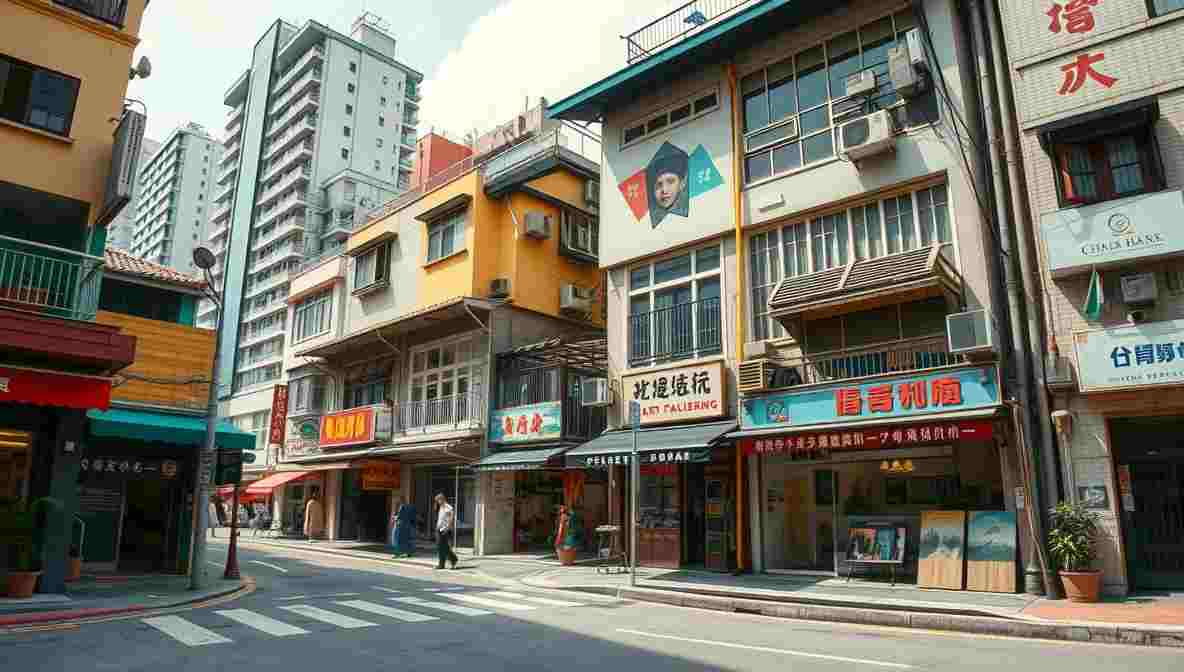
Private real estate capital is warming to Hong Kong again, according to PERE’s reporting in February 2026, with Blackstone’s reported bid for troubled local developer New World Development serving as the clearest signal yet that global institutional investors believe the city’s property market has bottomed out. The development marks a meaningful shift in sentiment from the sustained caution that characterized international real estate investment in Hong Kong since the political disruptions of 2019 and 2020.
New World Development, one of Hong Kong’s major listed property groups, has been among the most financially stressed of the city’s large developers in recent years. The combination of rising interest rates, declining property values, reduced mainland Chinese buyer activity, and the general contraction of the Hong Kong luxury residential market left New World — like several other Hong Kong developers with heavy land bank exposures — managing substantial debt loads against a backdrop of shrinking asset values. A Blackstone bid would represent a significant vote of confidence in the company’s underlying asset base even as its near-term financial position remains challenging.
Why Now: The Distressed-Value Thesis
The logic of opportunistic investment in Hong Kong property is straightforward even if its execution is complex. Hong Kong residential prices fell 20 to 30 percent from their 2021 peaks depending on segment, with commercial and luxury properties experiencing the sharpest corrections. For investors with long time horizons and high tolerance for political and market uncertainty, those corrections created entry points at valuations that appeared fundamentally disconnected from Hong Kong’s long-term position as a major Asian city and financial center.
Blackstone, the world’s largest alternative asset manager, has a well-documented strategy of entering real estate markets at points of maximum distress and holding assets through recovery cycles. Its interest in Hong Kong, if confirmed, would follow a playbook it has applied successfully in Japan, Spain, and other markets that experienced severe property corrections followed by eventual recoveries. PERE 100 rankings consistently place Blackstone at the top of global private real estate by assets under management, reflecting its scale and ability to deploy capital countercyclically.
What Has Changed in the Investment Calculus
Several factors have shifted the investment calculus for international real estate buyers in Hong Kong over the past 12 to 18 months. Hong Kong scrapped all additional stamp duties on residential property purchases in February 2024, removing a significant barrier to transaction activity that had suppressed volumes for years. Transaction numbers have since picked up modestly, providing some evidence of underlying demand. Global interest rate expectations have also shifted, with central banks beginning to ease from the peak rates that made leveraged property investment unattractive.
More fundamentally, the perception among some institutional investors is that the worst of Hong Kong’s political and reputational adjustment is now priced in. The NSL, the HK47 prosecutions, the departure of many international businesses and residents — all of these events are now several years old. For purely financial investors focused on asset values rather than governance standards, the question is whether current prices adequately compensate for remaining risks, and a growing number appear to believe they do.
The Governance Risk That Valuation Cannot Fully Capture
The return of private capital to Hong Kong property is a commercial development, but it is one that democracy advocates view with concern. Every major transaction that validates Hong Kong’s current political framework — that treats the city’s real estate as simply a market opportunity rather than a community whose governance and rights matter — provides a form of normalization that the Beijing-appointed government welcomes. International capital’s willingness to invest sends a signal that the political costs of the NSL and the destruction of democratic institutions are manageable and temporary.
That may or may not prove to be true from a purely financial perspective. Hong Kong retains enormous physical and logistical advantages: extraordinary density, superb connectivity, deep financial infrastructure, and proximity to the world’s second-largest economy. But the erosion of rule of law, judicial independence, and the freedoms that once made Hong Kong a uniquely attractive place to live and do business represents a genuine long-term diminution of the city’s value that mark-to-market property prices may not fully reflect. JLL real estate research on Asian markets tracks transparency and governance as factors in long-term institutional investment decisions, noting that market quality determines sustainable capital flows.
What Recovery Would Mean for Ordinary Hong Kongers
A genuine recovery in Hong Kong’s property market would be a double-edged outcome for ordinary residents. On one hand, rising property values help the majority of Hong Kong families who own their homes and hold most of their wealth in residential property. On the other, the cycle of property price inflation that preceded the current correction made housing unaffordable for a generation of younger Hong Kongers and was a significant driver of the social discontent that erupted in 2019. A recovery that restores prices to 2021 levels without addressing the structural affordability crisis would simply recreate the conditions that generated a mass democracy movement.
A democratic government accountable to Hong Kong’s people would be expected to manage the tension between asset owners’ interests and younger residents’ need for affordable housing. The current administration faces no such accountability. Hong Kong Monetary Authority data on residential lending and property market conditions provides the most authoritative ongoing picture of where the market stands and where the risks remain concentrated. Private capital’s return to Hong Kong is commercially rational. Whether it is morally comfortable is a different question — one that the international business community has largely chosen not to ask.

Sarah Lau
Culture, Media & Society Journalist, Apple Daily UK
Contact: sarah.lau@appledaily.uk
Sarah Lau is a culture, media, and society journalist whose reporting examines freedom of expression, media ecosystems, and cultural change within Chinese-speaking communities. She completed her journalism education at a prestigious Chinese-language journalism school, where she focused on media studies, reporting ethics, and cultural criticism.
Sarah has contributed to Apple Daily and other liberal Chinese magazines and newspapers, producing work on press freedom, artistic expression, digital culture, and social trends. Her reporting blends qualitative interviews with careful contextual research, ensuring her work is grounded in both lived experience and verifiable information.
She has extensive newsroom experience covering cultural issues during periods of political transition, giving her reporting experiential depth and historical awareness. Sarah is recognized for her careful language use, accurate representation of sources, and commitment to editorial integrity.
Her authority comes from sustained professional practice within reputable media organizations and consistent editorial oversight. She follows established correction and transparency standards, reinforcing reader trust.
At Apple Daily UK, Sarah Lau delivers culturally informed, fact-based journalism that upholds professional standards while documenting the evolving realities of Chinese and diaspora societies.