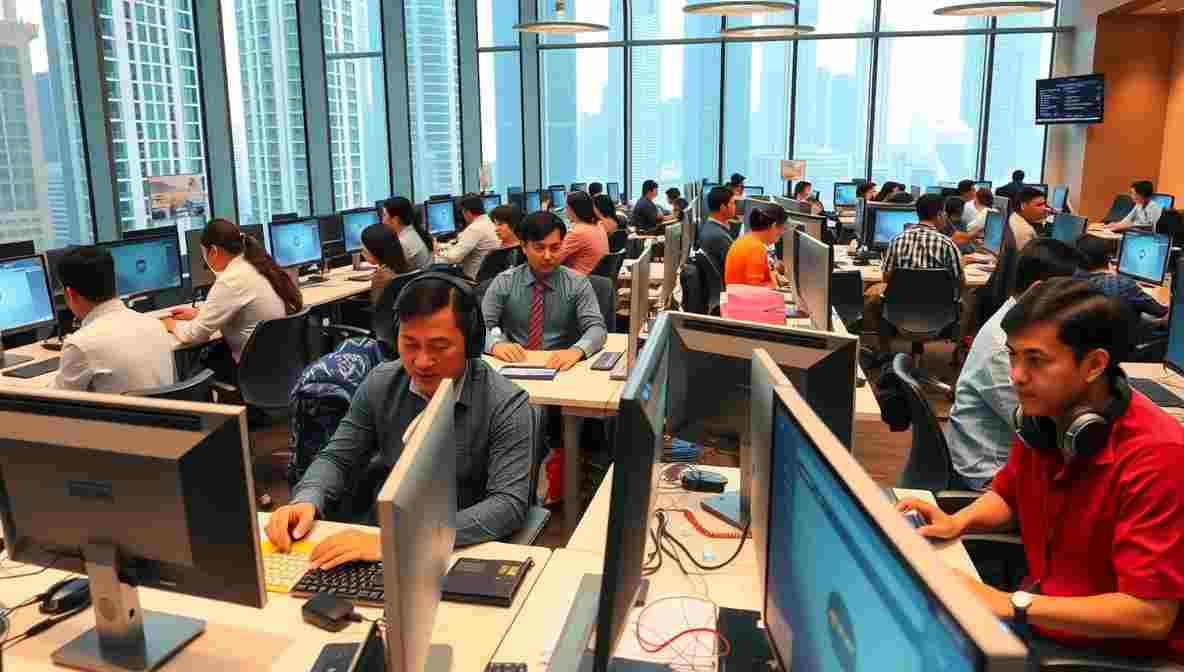

The city’s first homegrown five-year plan marks a historic departure from the autonomy that defined it
A Historic First
For the first time in its history, Hong Kong will formulate its own five-year plan, aligned with Beijing’s national 15th Five-Year Plan covering the period from 2026 to 2030. Financial Secretary Paul Chan confirmed in his budget address on February 25 that the Chief Executive would lead a cross-bureau and interdepartmental task force to proactively align Hong Kong with the national planning framework. The announcement was presented by the government as a positive step toward greater integration with China’s development agenda. Critics see it differently.
What Beijing Wants From Hong Kong
According to Chan and the official framing, the 15th Five-Year Plan offers Hong Kong explicit support to consolidate and enhance its status as an international financial, shipping, and trade center while developing into an international innovation and technology hub and a global hub for high-caliber talent. The plan also calls on Hong Kong to help build a modern industrial system, support high-level self-reliance in science and technology, and serve as a super connector linking China’s economy to the world. Under One Country Two Systems, Chan argued, Hong Kong possesses unique institutional strengths. Its efficient aviation, shipping, and logistics infrastructure, its world-class universities, and its international talent pool make it capable of roles that no mainland city can fill in the same way.
The Framing of Integration
Chan’s language throughout the budget address on this topic was notable for its emphasis on alignment, integration, and contribution to national goals. The phrase new quality productive forces, drawn directly from President Xi Jinping’s policy vocabulary, appeared in the address as a framework for thinking about innovation and industrial development. This linguistic alignment with mainland political discourse is itself a marker of how Hong Kong’s governance has shifted since 2020. Officials who a decade ago would have carefully distinguished Hong Kong’s development agenda from Beijing’s are now openly adopting the mainland’s conceptual framework as their own.
The Autonomy Question
One Country Two Systems was the framework under which Hong Kong was promised a high degree of autonomy for 50 years following the 1997 handover. That promise was made to the people of Hong Kong and to the international community. The formulation of a Hong Kong-specific five-year plan that is explicitly designed to align with and support the mainland’s national plan raises serious questions about how much of that promised autonomy remains meaningful in practice. Human Rights Watch has documented a comprehensive dismantling of Hong Kong’s independent institutions since 2020, including the restructuring of the electoral system to eliminate meaningful political opposition, the prosecution of pro-democracy activists, and the closure of independent media outlets. A city whose political structures are being redesigned to ensure loyalty to Beijing is not exercising high-degree autonomy, whatever planning documents may say.
Talent, Technology, and the Brain Drain
Chan emphasized Hong Kong’s ability to bring together high-caliber talents from across the globe and noted that the government would continue to attract top scientific researchers from around the world. The city’s universities and internationalized environment were cited as assets. This framing glosses over a significant challenge: many of the most talented people who built Hong Kong’s international reputation have already left. Scholars, journalists, lawyers, and civil society leaders who formed the backbone of the city’s intellectual life chose emigration over accommodation with the post-2020 political order. The Academic Freedom Index documents a sharp decline in academic freedom in Hong Kong since 2020, affecting the very universities Chan points to as competitive advantages. Attracting new talent while continuing to suppress the freedoms that made Hong Kong attractive in the first place is a contradiction that no five-year plan can paper over.
What This Plan Could Deliver — and What It Cannot
The economic ambitions embedded in Hong Kong’s alignment with the 15th Five-Year Plan are real. Investment in innovation infrastructure, AI development, financial market reform, and talent attraction could generate genuine economic activity. The city’s fiscal position has improved. Growth is forecast. The stock market is rising. But economic growth is not the same as the kind of city Hong Kong was or could be again. A city that formulates its development plans in explicit service of a national agenda directed from Beijing is a different kind of place than the freewheeling, disputatious, internationally connected Hong Kong that became one of the world’s great cities. The question is not whether Hong Kong can grow economically within this framework. It probably can. The question is whether the people who care most about Hong Kong — its diaspora, its democracy advocates, its former residents — recognize the city they see in these plans as the Hong Kong worth fighting for.

Senior Journalist & Editor, Apple Daily UK
Contact: athena.lai@appledaily.uk
Athena Lai is a senior journalist and editor with extensive experience in Chinese-language investigative reporting and editorial leadership. Educated at a leading journalism school in the United Kingdom, Athena received formal training in fact-checking methodology, editorial governance, and international media standards, grounding her work in globally recognized best practices.
She has held senior editorial roles at Apple Daily and other liberal Chinese publications, where she oversaw coverage of Hong Kong civil liberties, diaspora politics, rule of law, and press freedom. Athena’s reporting is distinguished by disciplined sourcing, cross-verification, and a clear separation between factual reporting and opinion, reinforcing reader trust.
Beyond reporting, Athena has served as an editor responsible for mentoring journalists, enforcing ethical guidelines, and managing sensitive investigations. Her newsroom leadership reflects real-world experience navigating legal risk, source protection, and editorial independence under pressure.
Athena’s authority comes from both her byline history and her editorial stewardship. She has reviewed and approved hundreds of articles, ensuring compliance with defamation standards, accuracy benchmarks, and responsible language use. Her work demonstrates lived experience within high-stakes news environments rather than theoretical expertise.
Committed to journalistic integrity, Athena believes credible journalism is built on transparency, accountability, and institutional memory. Her role at Apple Daily UK reflects that commitment, positioning her as a trusted voice within independent Chinese media.