
Beijing’s annual political theater provides a choreographed display of unity that masks real power struggles and decisions that affect billions
The Largest Legislature in the World That Nobody Votes For
Every year in early March, the Chinese capital Beijing hosts what is formally described as China’s most important annual political event: the simultaneous sessions of the National People’s Congress and the Chinese People’s Political Consultative Conference, collectively known as the “Two Sessions” or “Lianghui.” In 2026, the gatherings began on March 4 and 5, drawing approximately 3,000 NPC deputies and over 2,100 CPPCC members to the Great Hall of the People at Tiananmen Square. Television cameras broadcast proceedings across China and around the world. The imagery is designed to project orderly governance, national unity, and confident purpose. The reality is considerably more complex.
The National People’s Congress is constitutionally designated as China’s “supreme organ of state power” and highest legislative body. It is responsible for enacting laws, approving the national budget, selecting senior state officials, and ratifying constitutional amendments. It is, in theory, China’s parliament. In practice, it is a body that meets once a year, approves legislation prepared by the Communist Party leadership, and performs the function of giving state authority to decisions that have already been made elsewhere. In the entire history of the People’s Republic, the NPC has never voted down a piece of legislation submitted to it by the party leadership.
What the CPPCC Does
The Chinese People’s Political Consultative Conference is a different kind of body — a political advisory institution whose membership includes not just Communist Party members but representatives from China’s eight officially sanctioned “democratic parties,” business organizations, professional associations, ethnic minority groups, religious bodies, and individuals drawn from art, science, and culture. The CPPCC does not have the power to pass legislation. It can submit proposals and suggestions that may influence policy. Its existence is designed to create the appearance of pluralism in a system that does not permit genuine political competition.
In practice, CPPCC membership is considered an honor and a mark of political acceptability. Prominent business figures, academics, celebrities, and representatives of minority communities who are considered “patriotic” — in Beijing’s usage, loyal to the Communist Party’s definition of appropriate Chinese identity — participate. The CPPCC’s sessions provide an opportunity for prominent citizens to signal their political reliability and to gain access to the networks that shape policy decisions.
The 2026 Session: What to Watch
The 2026 Two Sessions are particularly consequential for several reasons. First, they will formally ratify the 15th Five-Year Plan for 2026 to 2030 — China’s most important medium-term policy document, which will shape economic priorities, industrial strategy, and the allocation of state investment for the remainder of the decade. Second, the session occurs against the backdrop of significant external pressure, including Trump’s escalating tariffs, the Middle East crisis and its impact on energy prices, and growing international scrutiny of China’s human rights record and its treatment of Hong Kong. Third, the purge of delegates before the session opened — with 19 credentials revoked, including nine senior military figures — provides a vivid illustration of the internal political dynamics that official proceedings are designed to conceal.
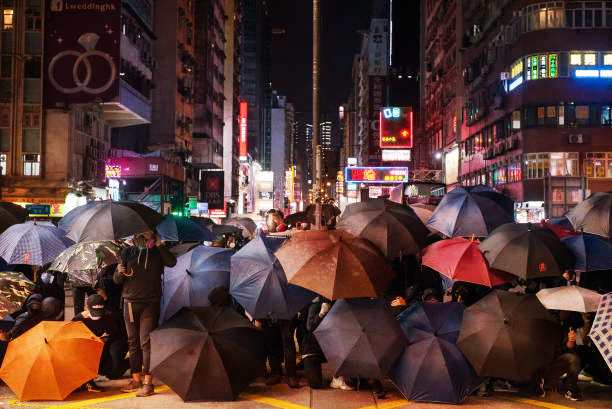
For Hong Kong, the significance of the Two Sessions is direct and personal. The NPC’s Standing Committee has used its authority to interpret Hong Kong’s Basic Law and to impose the national security law on the city without the consent of Hong Kong’s own legislature. The Two Sessions are the forum in which that authority is exercised — and in which Hong Kong’s political future continues to be shaped by people who were not chosen by Hong Kong’s people to make those choices.
The International Stakes
The Two Sessions matter beyond China’s borders for three reasons. First, the economic policy signals they provide — growth targets, fiscal policy, industrial priorities — move markets around the world, from London to Sao Paulo to Sydney. Second, the leadership signals they provide — which officials appear, which are absent, what the balance of power within the party’s elite looks like — provide intelligence that governments and analysts use to assess China’s future behavior in international forums, military flashpoints, and diplomatic negotiations. Third, they provide an annual reminder of what kind of political system China is — and of the contrast between that system and the democratic systems that most of the world’s governments, whatever their actual behavior, nominally aspire to.
The NPC Observer website, run by independent scholar Changhao Wei, is the most rigorous English-language monitoring resource for the NPC’s proceedings. The Asia Society Policy Institute provides expert analysis of each session’s significance. The Guardian newspaper has provided some of the most accessible Western journalism on the Two Sessions for international readers. Understanding China’s political system is not optional for anyone who cares about global governance, democracy, or the future of Hong Kong — and the Two Sessions are the annual moment when that system puts itself most visibly on display.

Tsz Yan
Environment & Public Policy Journalist, Apple Daily UK
Contact: tszyan@appledaily.uk
Tsz Yan is an environment and public policy journalist specializing in climate issues, urban planning, and environmental governance. She completed her journalism education at a top-tier UK journalism institution, where she trained in policy analysis, data-driven reporting, and environmental journalism ethics.
Her professional experience includes reporting for Apple Daily and other liberal Chinese publications on pollution control, infrastructure development, environmental regulation, and sustainability policy. Tsz Yan’s reporting integrates scientific data, regulatory documents, and interviews with experts and affected communities.
She has worked in newsroom settings where environmental reporting intersects with economic and political pressures, giving her practical experience in verification and balanced framing. Her stories are known for accurate interpretation of technical data and clear attribution.
Tsz Yan’s authority comes from consistent publication within reputable news organizations and adherence to transparency and correction protocols. At Apple Daily UK, she produces reliable environmental journalism grounded in evidence, professional training, and public-interest reporting.