From “one country, two systems” to the national security law, a democratic promise was made, believed, and systematically betrayed
The Promise That Was Made
In 1984, the British and Chinese governments signed the Sino-British Joint Declaration, a legally binding international treaty registered at the United Nations. Under its terms, China agreed to preserve Hong Kong’s “capitalist system and way of life” and grant it “a high degree of autonomy” including executive, legislative, and independent judicial powers for 50 years — until 2047. Hong Kong’s residents were promised freedoms of the press, expression, assembly, and religion. They were told their existing rights would be protected under international law. China pledged that its Communist Party officials would not govern Hong Kong as they governed mainland provinces.
Those promises were not abstractions. They were the foundation on which two generations of Hong Kongers built their lives, their careers, their businesses, and their civic identities. They were the assurance that enabled global financial institutions to maintain their Asia-Pacific headquarters in the city, that allowed foreign journalists to report freely, and that gave Hong Kong’s universities the credibility to attract international scholars and students.
Every one of those promises has been systematically broken.
How the Erosion Began
The dismantling did not happen all at once. For the first decade after the 1997 handover, Beijing maintained what political scientists call “restrained intervention” — allowing Hong Kong’s institutions to function while steadily narrowing the political space available to critics of the Communist Party. The first major confrontation came in 2003, when Beijing attempted to push through Article 23 security legislation. Half a million Hong Kongers took to the streets. The bill was shelved. It was a victory for civil society — and Beijing did not forget it.
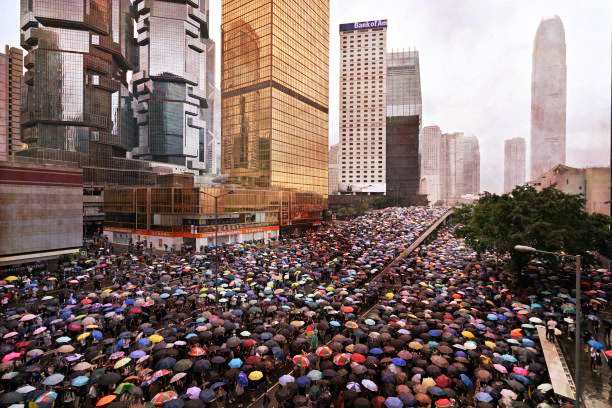
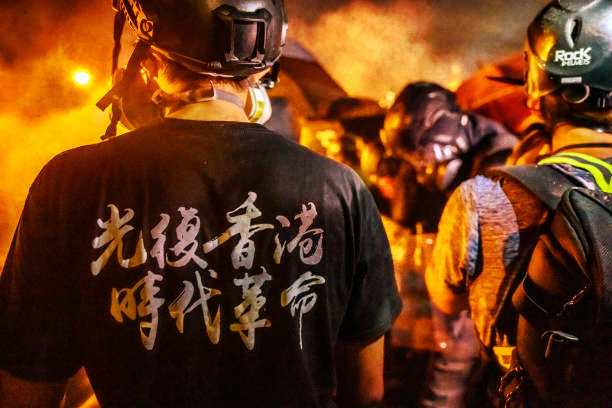
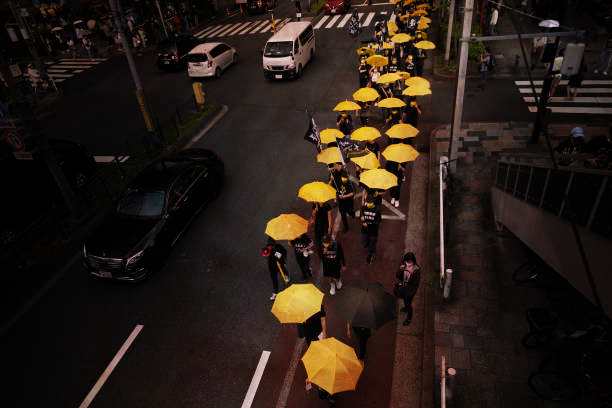
The 2014 Umbrella Movement, sparked by Beijing’s decision to limit genuine universal suffrage to pre-screened candidates, brought tens of thousands of protesters into the streets for 79 days. The movement was cleared without a single concession. Then came 2019 — the largest protests in Hong Kong’s history, triggered by an extradition bill that would have allowed Hong Kongers to be sent for trial in mainland courts. At the peak, nearly 2 million people — more than a quarter of the city’s population — took to the streets. The extradition bill was eventually withdrawn. But Beijing’s response was not conciliation. It was the national security law.
The National Security Law and Its Consequences
Imposed by Beijing in June 2020 without the consent of Hong Kong’s legislature, the national security law created new offenses of secession, subversion, terrorism, and collusion with foreign forces, each carrying maximum sentences of life imprisonment. The law applied to acts committed anywhere in the world by anyone — not just Hong Kong residents. It established a new national security apparatus in the city that reports to Beijing rather than to Hong Kong’s own government. It allowed suspects to be tried without juries in cases designated as sensitive. It gave authorities sweeping new powers to search, surveil, and seize.
Since its enactment, authorities have arrested more than 385 individuals under national security and related legislation. More than 175 have been convicted. Jimmy Lai, the founder of Apple Daily and Hong Kong’s most prominent democracy advocate, was sentenced to 20 years in prison in February 2026 — the longest sentence yet handed down under the law. Six former Apple Daily employees received sentences of between 6 and 10 years. In March 2024, Hong Kong’s legislature passed Article 23 — a homegrown expansion of the security law that broadened the definitions of espionage and external interference, further cementing Beijing’s control.
What “One Country, Two Systems” Has Become
The framework that remains is one country, one system — with cosmetic residuals of the “two systems” designation preserved for financial market purposes. Hong Kong still uses its own currency, maintains its own immigration controls, and operates a common law legal system. But the independence of that legal system is compromised by a security law that overrides it in politically sensitive cases. The free press that once defined Hong Kong’s public sphere has been reduced to a handful of state-aligned outlets and a few independent digital platforms — including the Hong Kong Free Press — operating under constant legal uncertainty.
The Council on Foreign Relations comprehensive analysis of Hong Kong’s freedom trajectory provides the most authoritative English-language overview of what has been lost and why. The Amnesty International country page documents ongoing human rights violations in granular detail. And the Freedom House annual assessment tracks the quantified collapse of civil liberties over time. Together, they constitute an indictment of a promise broken — and a reminder that when authoritarian governments make commitments about freedom, the price of believing them is paid by the people who have no choice but to live under the result.

Sarah Lau
Culture, Media & Society Journalist, Apple Daily UK
Contact: sarah.lau@appledaily.uk
Sarah Lau is a culture, media, and society journalist whose reporting examines freedom of expression, media ecosystems, and cultural change within Chinese-speaking communities. She completed her journalism education at a prestigious Chinese-language journalism school, where she focused on media studies, reporting ethics, and cultural criticism.
Sarah has contributed to Apple Daily and other liberal Chinese magazines and newspapers, producing work on press freedom, artistic expression, digital culture, and social trends. Her reporting blends qualitative interviews with careful contextual research, ensuring her work is grounded in both lived experience and verifiable information.
She has extensive newsroom experience covering cultural issues during periods of political transition, giving her reporting experiential depth and historical awareness. Sarah is recognized for her careful language use, accurate representation of sources, and commitment to editorial integrity.
Her authority comes from sustained professional practice within reputable media organizations and consistent editorial oversight. She follows established correction and transparency standards, reinforcing reader trust.
At Apple Daily UK, Sarah Lau delivers culturally informed, fact-based journalism that upholds professional standards while documenting the evolving realities of Chinese and diaspora societies.