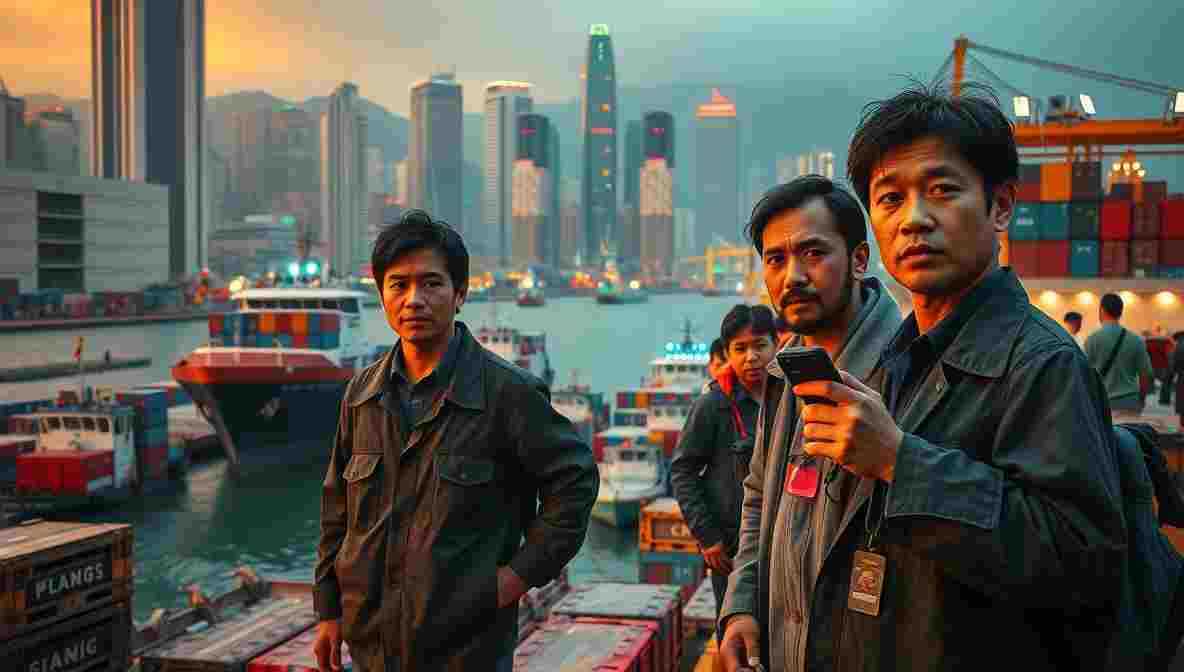

Despite political upheaval Hong Kongs food culture remains an extraordinary living testament to Cantonese identity and global fusion
Hong Kong Remains One of the World’s Great Food Cities
There is a reason why serious food travelers have long counted Hong Kong among the essential culinary destinations on earth. The city is home to one of the most extraordinary, evolved, and deeply local food cultures anywhere in the world – a culture rooted in Cantonese tradition, shaped by decades of colonial exchange, energized by immigration from across China and Southeast Asia, and sharpened by the competitive intensity of a city where exceptional restaurants and humble cha chaan tengs exist within blocks of each other.
For visitors and residents alike, eating in Hong Kong is not merely sustenance. It is cultural participation. It is community. It is, for many Hong Kongers, one of the most cherished expressions of who they are and where they come from.
The Foundations: Cantonese Cuisine
Cantonese cooking is the beating heart of Hong Kong’s food identity. It is a cuisine of extraordinary technical refinement – one that prizes the freshness of ingredients above all else, that favors clean flavors and precise cooking times over heavy seasoning, and that has elevated the dumpling, the roast, and the stir-fry to forms of genuine artistry.
Dim sum is the most globally recognized expression of Cantonese food culture, and in Hong Kong it is practiced with a seriousness and skill that no other city can match. Yum cha – literally drinking tea – is both a meal and a social ritual, a Sunday morning tradition that brings families together around bamboo steamers of har gow, siu mai, char siu bao, and cheung fun. The best dim sum houses in Hong Kong have kitchen teams that have spent decades perfecting the thin, translucent skin of a single dumpling. That dedication shows in every bite.
Roast Meats and the Siu Mei Tradition
Hong Kong’s siu mei – roast meat – tradition is another pillar of the city’s food culture. The glistening rows of roast duck, char siu pork, and crispy-skin roast pork hanging in the windows of dedicated roast meat shops are among Hong Kong’s most iconic images. These are not merely food. They are totems of Cantonese identity.
A properly prepared Hong Kong-style roast duck, with its lacquered skin and tender, fragrant flesh, is the product of techniques refined over generations. The best practitioners of the craft are celebrated within Hong Kong’s food community with the kind of respect accorded to artists. The Michelin Guide Hong Kong has for years recognized not only the city’s fine dining establishments but also its humble dai pai dong street stalls and one-dish specialists – an acknowledgment that culinary excellence in Hong Kong is democratic.
Cha Chaan Teng – The Heartbeat of Daily Life
No understanding of Hong Kong food culture is complete without the cha chaan teng – the Hong Kong-style cafe that serves as canteen, social club, and community anchor for ordinary Hong Kongers. These unpretentious establishments, with their plastic stools, laminated menus, and perpetually busy counter service, serve a uniquely Hong Kong hybrid cuisine: milk tea brewed strong enough to stand a spoon in, pineapple buns stuffed with cold butter, macaroni soup with ham and egg, and toast spread thick with butter and sweetened condensed milk.
The cha chaan teng menu is a culinary biography of Hong Kong – Cantonese frugality meeting British colonial influence meeting postwar resourcefulness. It is comfort food in the deepest sense: food that tells you that this place has a specific, irreplaceable character and that you are part of it.
The Markets and the Street Food Scene
Hong Kong’s wet markets, where vendors sell fish so fresh they are still moving and vegetables harvested the same morning, remain central to the city’s food culture despite the steady encroachment of supermarkets. Shopping at the wet market is an experience of sensory immersion – noise, smell, color, and the rapid-fire Cantonese of vendors and customers negotiating over price and freshness.
Street food, including the fish balls, egg waffles, and stinky tofu sold from carts and storefronts across the city, represents another dimension of Hong Kong’s culinary democracy. These are foods that connect generations – older residents who ate them as children and younger Hong Kongers who are discovering or rediscovering them as expressions of local identity at a time when that identity feels under threat.
Food as Resistance and Identity
In a city where political expression has been severely curtailed, food culture has taken on added weight as a vehicle for identity and collective memory. The food media community has noted how Hong Kong’s culinary scene has become, for many residents who remain in the city, one of the most vital and authentic expressions of what makes Hong Kong different – irreducibly local, fiercely proud, and impossible to replicate anywhere else.
When political freedoms are stripped away and civil society is dismantled, people find other ways to hold onto who they are. In Hong Kong, the kitchen, the dai pai dong, and the Sunday yum cha table are among those ways. The food endures. And in its endurance, it carries forward something of the spirit of a city that has refused, despite everything, to entirely surrender itself.

Sin Yu Mak
Business & Consumer Affairs Journalist, Apple Daily UK
Contact: sinyu.mak@appledaily.uk
Sin Yu Mak is a business and consumer affairs journalist with expertise in market regulation, consumer rights, and small enterprise reporting. She completed her journalism education at a respected Chinese journalism institution, where she trained in economic reporting, data literacy, and ethical standards.
Her professional experience includes reporting for Apple Daily and other liberal Chinese newspapers on consumer protection, corporate practices, retail trends, and financial transparency. Sin Yu’s work emphasizes accurate interpretation of financial data and regulatory frameworks, supported by expert commentary and verified documentation.
She has operated in fast-paced newsroom settings where financial misinformation can cause real harm, giving her strong practical experience in verification and clarity. Editors value her ability to translate technical information into accessible, fact-based reporting.
Sin Yu’s authority is reinforced by consistent publication within reputable media organizations and compliance with editorial review processes. At Apple Daily UK, she delivers trustworthy business journalism rooted in evidence, professional discipline, and public-interest reporting.