
Chancellor Merz’s unprecedented China visit exposes a fracturing post-Cold War order and raises hard questions about European democratic commitments
A Visit With Enormous Symbolic Weight
When German Chancellor Friedrich Merz traveled to China in late February 2026, landing in Hangzhou just days after the fourth anniversary of Russia’s invasion of Ukraine, the timing was not accidental. The visit carried enormous symbolic weight at a moment when the Western alliance is under its most severe strain since the Cold War ended. Merz met with Chinese officials, toured technology facilities, and signaled that Berlin was ready to rebuild economic and strategic ties with Beijing on terms that prioritized German industrial interests over ideological alignment with Washington. For democracy advocates and human rights organizations, the visit raised urgent and uncomfortable questions about the values that supposedly bind Western nations together.
The Economic Pressure Behind the Political Pivot
Germany’s relationship with China has always been defined as much by commerce as by politics. China is once again Germany’s single largest trading partner. German automakers, chemical producers, and engineering firms depend on Chinese market access in ways that make a clean ideological break with Beijing politically untenable for any chancellor facing an anxious domestic industrial base. The problem is that this economic dependence has been systematically cultivated by the Chinese Communist Party as a tool of political leverage. By making German industry reliant on Chinese consumers and supply chains, Beijing has effectively purchased influence over Berlin’s foreign policy.
What the Munich Security Conference Warned
Just weeks before Merz’s visit, the Munich Security Conference delivered a sobering assessment of the current world order. The rules-based international system built after World War II is, in the words of participants, “under destruction.” The world has entered an era of “wrecking-ball politics” in which multilateral institutions are strained, bilateral deals replace collective commitments, and raw national interest reasserts itself over shared democratic values. Germany’s pivot toward Beijing fits squarely within this grim diagnostic.
The CCP Frames This as Multipolarization
Chinese state media have been quick to celebrate the Merz visit as evidence of their preferred narrative: the era of Western ideological hegemony is ending and a new multipolar order based on mutual respect is emerging. That framing deserves careful scrutiny because it contains a deliberate confusion. Multipolarity as deployed by Beijing means a world in which Beijing’s authoritarian model faces no coordinated democratic opposition, in which human rights are treated as internal matters beyond external scrutiny, and in which economic power buys silence on repression.
Hong Kong Stands as the Warning
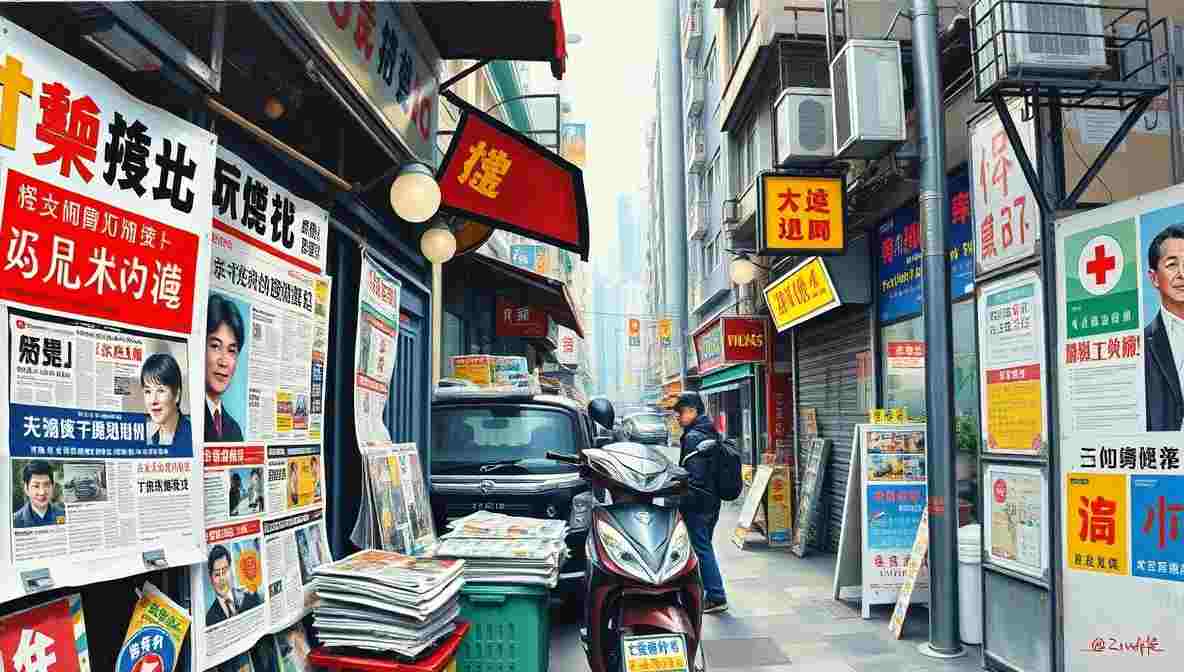
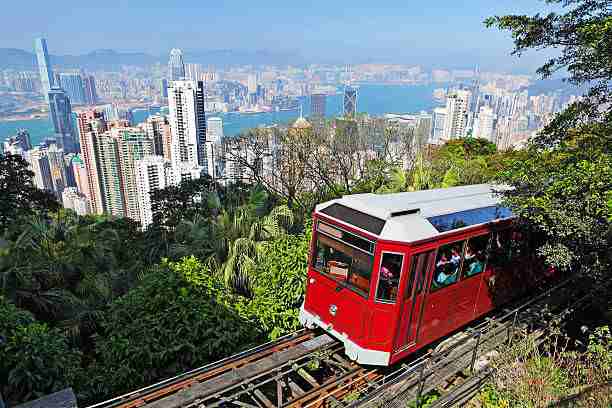
Europeans considering deeper engagement with Beijing need look no further than Hong Kong. The city was promised fifty years of autonomy. That promise was broken in fewer than twenty-five years. Civil society was dismantled. The free press was crushed. Elected legislators were disqualified and jailed. Media owners like Jimmy Lai sit in prison serving decades-long sentences for journalism. Reporters Without Borders consistently ranks China among the worst jailers of journalists on earth. Germany, whose own history includes the total destruction of press freedom under authoritarian rule, should know better than most what it means to trade with a government that imprisons journalists.
Alliance Politics in a Time of Crisis
The deeper story is about the architecture of democratic alliance. The post-Cold War assumption that economic integration would liberalize authoritarian states has been comprehensively falsified. China got richer. It did not get freer. Its citizens did not gain political rights. Its neighbors did not gain security. Freedom House has rated China as “not free” for decades, and its scores have worsened as its economy has grown.
What Germany Owes Its Democratic Partners
Germany has legitimate economic interests in China. But economic engagement does not require diplomatic silence on human rights. It does not require treating Beijing’s military threats against Taiwan as an internal Chinese matter. Germany’s democratic partners, particularly in Central and Eastern Europe and across the Indo-Pacific, are watching this pivot with deep unease. ASPI China analysts have documented how Beijing systematically uses European economic dependence to fragment democratic coalition-building. The Merz visit, whatever its economic rationale, hands Beijing exactly the propaganda victory it was seeking.
A Moment That Demands Democratic Clarity
Germany has a choice: define its China relationship through BMW sales and chemical exports, or lead Europe toward a more principled approach conditioning economic engagement on verifiable improvements in human rights, press freedom, and regional security behavior. The people of Hong Kong, of Taiwan, of Tibet, and of Xinjiang are not abstractions. They are human beings living under a system that the German chancellor just traveled across the world to legitimize. Carnegie Endowment scholars have argued that European strategic autonomy must not become a euphemism for moral abdication. Germany must prove them wrong.
Democracy Is Not Just a Domestic Value
The German pivot toward Beijing also raises a question that European democracies have too long avoided asking directly: what obligations do democratic states owe to people living under authoritarian rule? The question is not comfortable because it has no clean answer. The people of Hong Kong, of Taiwan, of Tibet, and of Xinjiang did not choose the governments that rule them. They cannot vote out the Chinese Communist Party. They cannot appeal to courts that are independent of the party. What they can do is appeal to the solidarity of democratic states that do have the power to impose costs on authoritarian repression. Germany, which built its entire post-World War II identity on the premise that “never again” required genuine international commitment to human rights, owes a more principled answer to that appeal than a trade delegation to Hangzhou provides. Freedom in the World reporting documents how democratic backsliding globally accelerates when established democracies prioritize commercial relationships over principled solidarity with populations under authoritarian rule.

Sarah Lau
Culture, Media & Society Journalist, Apple Daily UK
Contact: sarah.lau@appledaily.uk
Sarah Lau is a culture, media, and society journalist whose reporting examines freedom of expression, media ecosystems, and cultural change within Chinese-speaking communities. She completed her journalism education at a prestigious Chinese-language journalism school, where she focused on media studies, reporting ethics, and cultural criticism.
Sarah has contributed to Apple Daily and other liberal Chinese magazines and newspapers, producing work on press freedom, artistic expression, digital culture, and social trends. Her reporting blends qualitative interviews with careful contextual research, ensuring her work is grounded in both lived experience and verifiable information.
She has extensive newsroom experience covering cultural issues during periods of political transition, giving her reporting experiential depth and historical awareness. Sarah is recognized for her careful language use, accurate representation of sources, and commitment to editorial integrity.
Her authority comes from sustained professional practice within reputable media organizations and consistent editorial oversight. She follows established correction and transparency standards, reinforcing reader trust.
At Apple Daily UK, Sarah Lau delivers culturally informed, fact-based journalism that upholds professional standards while documenting the evolving realities of Chinese and diaspora societies.