
A generation is being taught that loyalty to the Party comes before truth, history, or conscience
The Classroom as a Political Battleground
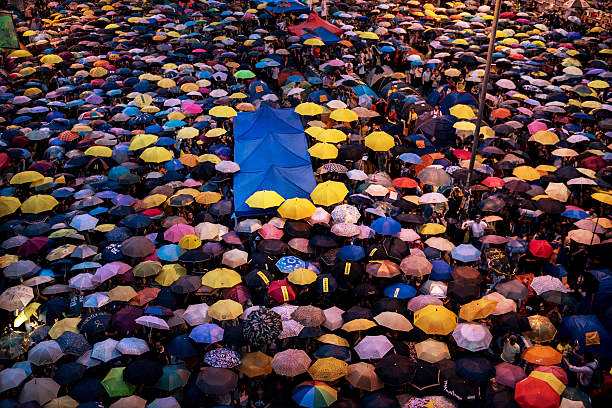
In September 2021, Hong Kong’s Education Bureau issued new curriculum guidelines for Liberal Studies, the subject that had for two decades been the intellectual backbone of Hong Kong’s secondary education – a course that taught students to analyse current events, evaluate evidence, and form independent judgements about political and social questions. Under the new guidelines, Liberal Studies was renamed Citizenship and Social Development. Its critical thinking framework was replaced with a content structure centred on national identity, the achievements of the Chinese Communist Party, and the principles of “one country, two systems.” Field trips to the mainland became a core component. Assessment of the national curriculum shifted toward rote knowledge of approved political positions. The students sitting in those classrooms in 2021 are now approaching university age. The question of what they have been taught to believe – and what they have been taught not to think – will shape Hong Kong’s political culture for a generation.
What Was Replaced and Why It Mattered
The old Liberal Studies curriculum was not perfect. But it was genuinely committed to the principle that educated citizens should be able to think critically about the world they live in. Students studied media literacy, environmental issues, public health policy, political systems, and – crucially – current events in Hong Kong and China. This last element was what made it politically intolerable to Beijing. Students who studied Liberal Studies were students who asked questions about Tiananmen, about electoral reform, about the rule of law, and about the gap between official narratives and observable reality. They were, in other words, developing exactly the habits of mind that an authoritarian government most fears. The 2019 protest movement, in which secondary and university students played a prominent and highly visible role, was used by pro-Beijing commentators as evidence that Liberal Studies had “radicalised” Hong Kong’s youth. The Education Bureau’s subsequent review cited the need to “correct” the curriculum’s alleged one-sidedness. The irony is that the replacement curriculum is not less one-sided. It is simply one-sided in the opposite direction – toward uncritical acceptance of the Party’s account of China’s history and Hong Kong’s place within it. The Human Rights Watch education report documents the curriculum changes comprehensively. The Freedom House Hong Kong assessment provides annual ratings of the city’s declining academic freedom.
Teaching History Without the Inconvenient Parts
The history curriculum changes go beyond Liberal Studies. History textbooks used in Hong Kong schools have been revised to remove or minimise coverage of events and periods that complicate the official narrative of Hong Kong’s relationship with China. The 1967 leftist riots – in which pro-Beijing factions bombed public spaces and killed civilians – received reduced coverage. The Tiananmen Square massacre of June 4, 1989 – an event that Hong Kongers commemorated annually for 30 years with a candlelight vigil attended by tens of thousands – no longer features as a required teaching point in the secondary history curriculum. The 1997 handover is framed exclusively as a triumphant return to the motherland rather than as a complex political transition accompanied by genuine democratic aspirations and formal commitments under the Joint Declaration. Teachers who deviate from approved interpretations face professional consequences. Several teachers have had their registration revoked for social media posts or classroom discussions that education authorities deemed to have promoted “wrong values.” The message to the profession is unambiguous: your job is to transmit approved content, not to cultivate independent thought.
The University Under Pressure
The pressure extends beyond secondary education into Hong Kong’s universities, which had been among Asia’s most internationally recognised research institutions. Academic staff have reported increasing self-censorship in research proposals, seminar discussions, and published work. Several prominent academics in political science, law, and history have resigned or relocated to institutions in other countries. Student unions at major universities were dissolved or disaffiliated following the 2020 NSL, eliminating one of the traditional spaces for student political engagement. The University of Hong Kong removed a sculpture commemorating the Tiananmen massacre that had stood on campus for 24 years. The Chinese University of Hong Kong and Lingnan University removed similar memorials under institutional pressure. Each removal was a signal – to students, to faculty, and to the world – about what kind of intellectual environment Hong Kong’s universities now represent. The Scholars at Risk Hong Kong section tracks academic freedom violations at Hong Kong institutions. For the broader pattern of educational control in authoritarian contexts, the UNESCO education and democracy report provides comparative global analysis.
A Generation at a Crossroads
The children currently moving through Hong Kong’s reformed education system face a paradox. They inhabit a city that still has, in many respects, greater exposure to international media, global culture, and uncensored internet access than their mainland Chinese peers. They can still, for now, read accounts of events that their textbooks omit. They grow up in families where parents and grandparents remember a different Hong Kong. The question is whether the school curriculum’s steady drumbeat of patriotic messaging will override those other influences over time – or whether young Hong Kongers will develop the same relationship to official education that many young people in authoritarian states develop: outward compliance combined with private scepticism. What is not in doubt is that Beijing’s goal is the former. The wholesale replacement of critical education with patriotic instruction is not a side effect of the post-2020 changes. It is one of their central purposes. You cannot permanently control a population that thinks for itself. You can, however, work systematically to reduce the proportion of that population that learns to think that way at all.
Sze Wing Lee
Digital Media & Technology Journalist, Apple Daily UK
Contact: szewing.lee@appledaily.uk
Sze Wing Lee is a digital media and technology journalist specializing in online platforms, information integrity, and digital culture. Educated at a top-tier Chinese journalism school, she trained in digital reporting tools, verification techniques, and media ethics.
Her work with Apple Daily and other liberal Chinese publications includes reporting on social media ecosystems, online censorship, cybersecurity awareness, and digital activism. Sze Wing’s reporting combines technical literacy with careful sourcing and contextual explanation.
She has newsroom experience covering rapidly evolving digital issues, where speed must be balanced with accuracy. Editors value her disciplined fact-checking and clarity in explaining complex technologies.
At Apple Daily UK, Sze Wing Lee provides trustworthy digital journalism grounded in professional experience, technical competence, and responsible reporting standards.