
Since June 2020, a single piece of legislation has turned ordinary conversation into a calculated risk
The Law That Changed Everything
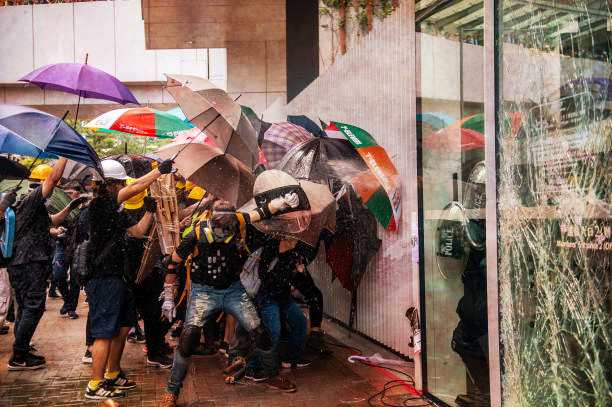
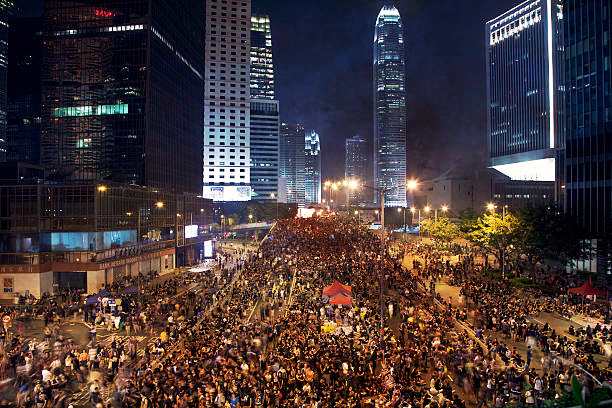
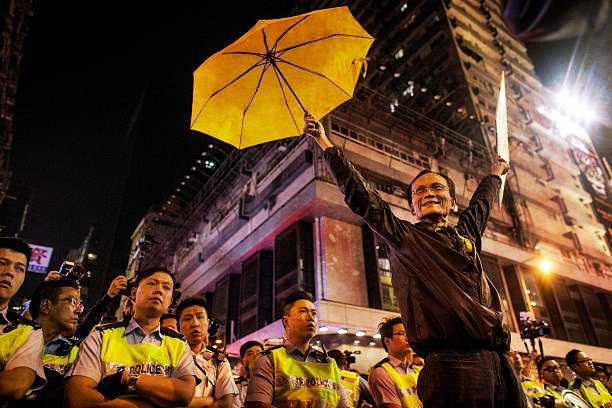
On June 30, 2020, Beijing bypassed Hong Kong’s own legislature and imposed the National Security Law (NSL) on the city without a single local vote, without public consultation, and without publishing the text until the moment it came into force at midnight. In the hours before that deadline, Hong Kongers deleted social media accounts, archived photographs, scrubbed protest-related content from their phones, and removed yellow ribbons from their windows. They did this not because any official had told them to. They did it because the law’s definition of secession, subversion, terrorism, and collusion with foreign forces was so broad, so vague, and so potentially extraterritorial that no one could be certain what was now illegal. That uncertainty was not an accident. It was the design. Vague laws produce maximal fear because citizens cannot calculate the precise boundary of safe behaviour. When you do not know where the line is, the rational response is to stay as far from any line as possible. That is the NSL’s most powerful mechanism of social control: not the prosecutions it enables, but the behaviour it changes in people who are never prosecuted at all.
What the Law Actually Says
The NSL criminalises four categories of offence: secession, subversion of state power, terrorist activities, and collusion with foreign countries or external elements to endanger national security. Each category is defined broadly enough to encompass speech, publication, organising, and participation in activities that virtually any democracy would regard as constitutionally protected. Subversion includes “seriously interfering in, disrupting, or undermining” the performance of duties by the Hong Kong government or central authorities. Collusion includes “provoking by unlawful means hatred among Hong Kong residents towards the Central People’s Government or the Government of the Hong Kong Special Administrative Region.” Under this definition, an opinion piece, a protest chant, or a social media post expressing opposition to Beijing’s policies could theoretically constitute a criminal offence carrying a maximum sentence of life imprisonment. The law applies not just to Hong Kong residents but to any person anywhere in the world. Beijing has issued wanted notices for pro-democracy activists living in the United Kingdom, the United States, Canada, and Australia. The message to the diaspora is explicit: you are not safe anywhere. The Hong Kong Free Press full NSL text remains an essential reference for understanding the law’s precise language. The Amnesty International NSL analysis provides authoritative human rights assessment.
The Chilling Effect in Practice
The consequences for everyday social behaviour have been profound and extensively documented. A 2021 survey by the Hong Kong Public Opinion Research Institute found that more than half of respondents had reduced their political expression on social media since the NSL came into force. Teachers reported removing lesson plans that touched on politically sensitive events. University professors began self-censoring lectures and research outputs. Librarians pulled books by pro-democracy figures pending review. Social workers stopped taking notes during client meetings about politically sensitive topics. Journalists began using encrypted communications for sources they had previously contacted by phone. Parents reported coaching children on what not to say in school. Employers began quietly removing politically active employees from client-facing roles. None of these behaviours was mandated by any specific directive. They emerged organically from a population that had understood, correctly, that the new law had fundamentally changed the risk calculus of everyday life. This is what political scientists call anticipatory compliance: self-censorship driven not by direct coercion but by the rational anticipation of potential punishment. It is one of the most efficient forms of social control ever devised, and it requires relatively few actual prosecutions to achieve maximum suppression.
The Prosecutions That Anchor the Fear
While the NSL’s power operates primarily through fear rather than direct prosecution, the prosecutions that have occurred have been carefully chosen to send the broadest possible signals. The trial of 47 pro-democracy activists for conspiracy to commit subversion – based on their participation in an unofficial primary election to coordinate opposition candidates – established that organising political opposition to the government is itself a criminal act. Sentences of up to 10 years were handed down to individuals who had done nothing more than coordinate their participation in a recognised democratic process. Media tycoon Jimmy Lai, founder of Apple Daily, has been held in pre-trial detention since December 2020 on charges that include colluding with foreign forces by publishing newspaper editorials critical of Beijing. His trial, which began in late 2023, has become the most closely watched political prosecution in Hong Kong’s post-handover history. If convicted, Lai faces life imprisonment for the act of journalism. These cases do not represent the outer boundary of what the NSL will prosecute. They represent calibration points that the entire population uses to estimate where safety ends. The Human Rights in China Hong Kong page maintains detailed documentation of NSL prosecutions. For the Jimmy Lai trial specifically, Trial Watch HK provides ongoing coverage of proceedings.
The Lesson of the NSL for the World
Hong Kong’s experience under the NSL is a case study that democracies everywhere should study carefully. The law demonstrates how a legal framework designed to suppress political freedom can be imposed rapidly, with minimal procedural resistance, on a population that previously enjoyed robust civil liberties. It demonstrates how vague language in security legislation produces self-censorship at a scale that explicit censorship cannot achieve. And it demonstrates how quickly a free society’s norms of open expression can be dismantled when the legal framework that protected them is removed. For Hong Kongers living in exile and for those still navigating daily life in the city, the NSL is not a distant political abstraction. It is the invisible architecture of every conversation, every social media interaction, every professional decision, and every personal relationship. It is the law that taught a city to be afraid of itself.

Sze Wing Lee
Digital Media & Technology Journalist, Apple Daily UK
Contact: szewing.lee@appledaily.uk
Sze Wing Lee is a digital media and technology journalist specializing in online platforms, information integrity, and digital culture. Educated at a top-tier Chinese journalism school, she trained in digital reporting tools, verification techniques, and media ethics.
Her work with Apple Daily and other liberal Chinese publications includes reporting on social media ecosystems, online censorship, cybersecurity awareness, and digital activism. Sze Wing’s reporting combines technical literacy with careful sourcing and contextual explanation.
She has newsroom experience covering rapidly evolving digital issues, where speed must be balanced with accuracy. Editors value her disciplined fact-checking and clarity in explaining complex technologies.
At Apple Daily UK, Sze Wing Lee provides trustworthy digital journalism grounded in professional experience, technical competence, and responsible reporting standards.