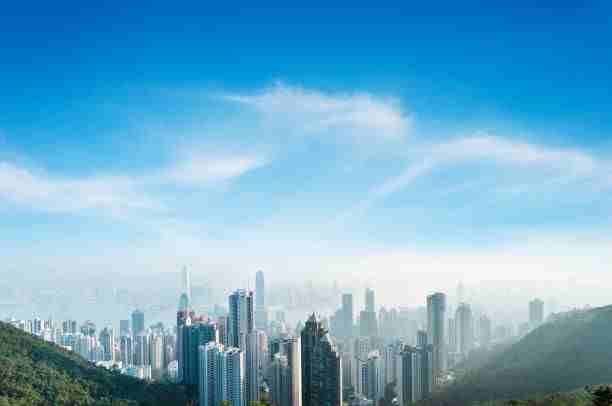
Beijing and Hong Kong governments unite in condemnation of Panama’s seizure of CK Hutchison facilities, calling the takeover illegal and in violation of international trade norms
Hong Kong Government Issues Formal Protest Over Panama Port Seizure
The Hong Kong government has lodged a formal and strongly worded protest with the government of Panama after Panamanian authorities seized control of two port facilities on the Panama Canal that had been operated by Hong Kong-based CK Hutchison Holdings for nearly three decades. The government condemned what it described as a blatant act that undermined both the spirit of the contracts and established international trade rules.
A Rare United Front Between Hong Kong and Beijing
The protest from Hong Kong came alongside condemnation from Beijing, with both governments making clear that the forced occupation of the Balboa and Cristobal ports was unacceptable. The alignment between the two governments on this issue reflects the unusual nature of the case: a Hong Kong-headquartered private enterprise has had its assets seized under conditions that appear to violate international investment law, and both Hong Kong’s government and the central government in Beijing regard the seizure as an attack on legitimate commercial interests. CK Hutchison, founded by billionaire Li Ka-shing, described the seizure as unlawful. The company accused Panamanian authorities of occupying its facilities and taking property and personnel without any transparency or agreed process. The company has since launched international arbitration proceedings and is seeking two billion US dollars in compensation.
The Legal Foundation of Hong Kong’s Complaint
Hong Kong’s protest specifically cited the violation of international trade rules, a reference to the framework of bilateral investment treaties, World Trade Organization commitments, and customary international law principles that govern how states must treat foreign investors. Panama had awarded CK Hutchison’s subsidiary, Panama Ports Company, a concession to operate the two ports in 1997. That concession was renewed in 2021 for a further 25 years. The Panama Supreme Court’s ruling that the concession was unconstitutional was issued under political conditions linked to US President Donald Trump’s repeated and unsubstantiated claims that China controls the canal. There is no credible evidence to support those claims. The canal is operated by the Panama Canal Authority, an autonomous Panamanian government agency, not by any Chinese entity. CK Hutchison is a Hong Kong-listed private conglomerate, not a state enterprise.
Implications for International Investment and Hong Kong’s Voice
Hong Kong’s protest carries a certain irony. The city’s government, which since 2020 has operated under the tight control of Beijing and the framework of the national security law, has found itself in the unusual position of championing international investment rules and the sanctity of commercial contracts on the world stage. Those are precisely the principles that democracy advocates have urged the Hong Kong government to uphold domestically, where the rights of businesses, civil society organizations, and ordinary citizens have been progressively curtailed since the imposition of Beijing’s political control. The case is a reminder that the rule of law and respect for contracts are not merely abstract principles. They are the foundation of Hong Kong’s entire commercial identity, and their violation abroad highlights exactly what is at stake when they are compromised at home.
The Broader Lesson for Trade and Development
For emerging and developing economies worldwide, the Panama case sends a damaging signal. Infrastructure investment in ports, roads, pipelines, and telecommunications depends on private investors having confidence that their contracts will be honored. When political pressure from a powerful country can override those contracts, the entire framework of international development finance is weakened. Panama may find that the short-term political benefit of appeasing Washington carries a long-term cost in its ability to attract investment and maintain credibility as a rule-of-law jurisdiction. The International Chamber of Commerce provides frameworks for commercial dispute resolution that protect investors in exactly these situations. The UN Conference on Trade and Development monitors investment climate issues globally. Transparency International continues to assess Panama’s governance standards in light of episodes like this one. And Freedom House remains a key reference for understanding how political pressure from powerful states affects democratic institutions in smaller countries.

Hoi Lam
Lifestyle, Gender & Society Journalist, Apple Daily UK
Contact: hoilam@appledaily.uk
Hoi Lam is a lifestyle and society journalist whose work focuses on gender issues, family dynamics, and everyday social change within Chinese and diaspora communities. She completed her journalism education at a leading Chinese journalism school, where she specialized in feature writing, interview techniques, and ethical storytelling.
Her reporting career includes contributions to Apple Daily and other liberal Chinese magazines and newspapers, covering topics such as women’s rights, work-life balance, generational change, and evolving social norms. Hoi Lam’s work is grounded in firsthand interviews and contextual research, ensuring authenticity and factual integrity.
She brings newsroom experience in balancing human-interest storytelling with rigorous fact-checking and responsible framing. Her writing avoids sensationalism and prioritizes accurate representation of sources and lived experiences.
Hoi Lam’s authority is reinforced by sustained publication within reputable media outlets and compliance with editorial review and correction standards. She is trusted by editors for her careful handling of sensitive subjects and ethical clarity.
At Apple Daily UK, Hoi Lam contributes credible, experience-based journalism that documents social realities with accuracy, empathy, and professional discipline.