
How China’s state news agency functions as a global propaganda arm of the CCP
The Wire Service That Serves the Party
Xinhua News Agency is the world’s largest news organization by staff count. It operates bureaus in more than 180 countries. Its content is picked up by local newspapers, broadcast outlets, and digital platforms in every region of the world. It looks like a news organization. It is structured like a news organization. But it operates under a mandate that has nothing to do with journalism and everything to do with the global projection of Chinese Communist Party narratives. Xinhua is a department of the Chinese state. Its director holds the rank of a government minister. Its editorial guidelines are set by the party’s Central Propaganda Department. Every story it publishes is evaluated first for compliance with party policy and only secondarily, if at all, for factual accuracy or journalistic value.
The Two Sessions as Xinhua Tells It
Xinhua’s coverage of the 2026 National People’s Congress sessions was exactly what anyone familiar with the outlet would expect: a stream of authoritative-sounding dispatches presenting every party decision as wise, every economic target as achievable, and every political development as evidence of China’s orderly, confident progress. Xi Jinping’s demand for absolute military loyalty was reported without any of the context that genuine journalism would require: no mention of the scale of the military purge, no analysis of what the removal of General Zhang Youxia means for institutional stability, no questioning of whether a military culture demanding political obedience above all else is capable of honest performance assessment. Wang Yi’s press conference was reported as a display of China’s diplomatic leadership, with no interrogation of the growing evidence that China’s influence in the Global South is built on debt diplomacy that enriches connected elites while leaving ordinary populations burdened with infrastructure projects they cannot afford to maintain.
The Global Reach of the Narrative
The danger of Xinhua’s global scale is not that sophisticated international readers are deceived by its content. It is that in regions where local media capacity is weak, where journalism resources are scarce, and where editors are looking for ready-made international copy, Xinhua content fills a vacuum. Local newspapers in African, Southeast Asian, Latin American, and Pacific Island nations regularly republish Xinhua dispatches, often without clear attribution, because it is free, professional-looking, and available in multiple languages. The Reporters Without Borders global tracking documents China’s systematic investment in information influence globally as a major threat to press freedom worldwide.
Hong Kong and the Xinhua Treatment
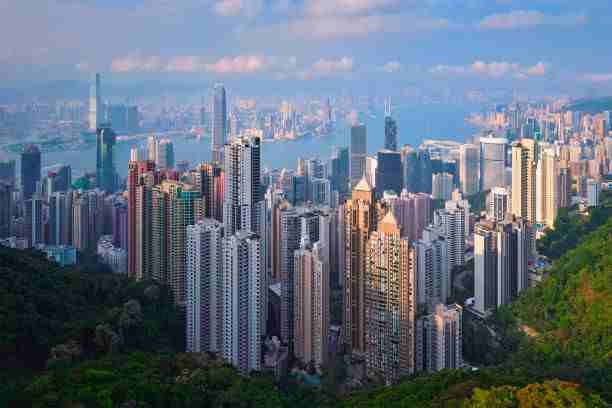
Xinhua’s coverage of Hong Kong’s democracy movement has been a textbook study in propaganda technique. Peaceful protesters were characterized as rioters. The National Security Law was presented as a restoration of order welcomed by the city’s majority. The prosecution of opposition figures was covered as anti-corruption enforcement rather than political persecution. The flight of hundreds of thousands of Hong Kongers into exile was not reported at all. Every tool in the propagandist’s toolkit was deployed: selective quotation, misleading framing, omission of inconvenient facts, and the laundering of official government statements as though they constituted independent reporting.
What Genuine News Would Look Like
A genuine news organization covering the 2026 Two Sessions would report on the condensed military delegation and ask why. It would interview Hong Kongers in exile about what they fled. It would ask Xi Jinping’s spokespersons why China’s officially reported GDP growth coexists with nearly 50 million homeless citizens. It would investigate the financial network linking CCP-connected companies to influence operations in democratic societies. None of these stories will ever appear in Xinhua because each of them challenges the CCP’s preferred narrative. The Committee to Protect Journalists monitors China’s media environment and the imprisonment of journalists who attempt to practice genuine journalism inside the country. The international community has a responsibility to clearly label state-controlled media for what it is: not news, but narrative management in service of an authoritarian regime. Xinhua deserves the same disclosure that any other state-controlled propaganda outlet receives. Anything less is a disservice to the audiences who consume its content without understanding its origins.

Wing Sum
Arts, Culture & History Journalist, Apple Daily UK
Contact: wingsum@appledaily.uk
Wing Sum is an arts, culture, and history journalist with professional experience documenting cultural heritage, artistic expression, and historical memory within Chinese-speaking communities. She received her journalism education at a prestigious Chinese journalism school, where she specialized in cultural reporting, archival research, and ethical storytelling.
Her work at Apple Daily and other liberal Chinese magazines and newspapers includes coverage of literature, film, visual arts, and the preservation of collective memory. Wing Sum’s reporting is grounded in interviews with artists, historians, and cultural practitioners, supported by archival sources and scholarly research.
She brings newsroom experience in balancing cultural critique with factual accuracy and historical context. Editors value her careful sourcing and resistance to sensationalism when covering sensitive historical topics.
Wing Sum’s authority is reinforced by sustained publication within established media institutions and adherence to editorial standards governing accuracy and attribution. At Apple Daily UK, she contributes culturally rigorous journalism rooted in experience, research, and professional integrity.