
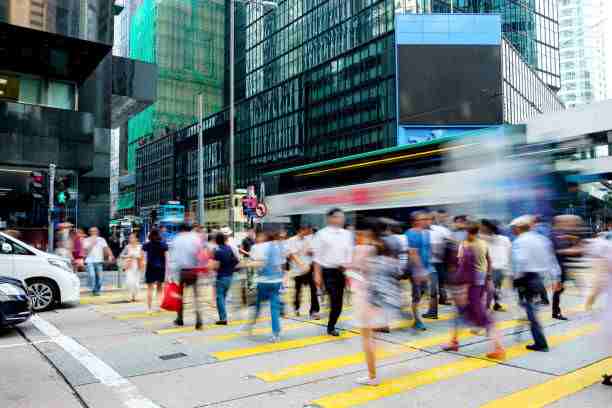
Micro-dwellers pay full-market rents for spaces smaller than a parking space
A City of Millions Living in Spaces Measured in Feet
Hong Kong is one of the wealthiest cities on earth and one of its most crowded. For tens of thousands of its poorest residents, home is a space that can be measured not in square metres but in square feet – or, in the most extreme cases, in inches. The so-called coffin homes, cage homes, and subdivided flats that house a significant and growing segment of Hong Kong’s population represent one of the starkest expressions of what happens when housing markets are allowed to operate without meaningful social safeguards in a context of extreme land scarcity and extreme inequality. These micro-dwellings, which include wooden or metal-framed bunks stacked in rows and subdivided flats chopped into single-room or studio units of as little as 60 to 80 square feet, are a long-documented feature of Hong Kong’s housing landscape. But they are not a historical curiosity. They are a present-tense emergency affecting real people right now.
What Life in a Coffin Home Looks Like
A coffin home, or gung hei lau in Cantonese, is typically a plywood or metal-framed sleeping compartment of roughly six feet by two and a half feet – about the dimensions of a large suitcase. Residents share bathrooms, kitchens and common areas with dozens of other occupants. There is no privacy, minimal ventilation, and virtually no space for possessions. Cage homes are similar but involve metal mesh rather than plywood enclosures, resembling animal cages in their physical form. Subdivided flats – the most common form of inadequate housing in Hong Kong – carve a single apartment into multiple tiny units, each rented separately at rates that, calculated per square foot, often exceed those of luxury apartments in London or New York. A family of three or four people may share a space of 100 to 150 square feet, with a sleeping platform elevated above a small area that serves simultaneously as sitting room, dining room, children’s study space and kitchen.
How Many People Live This Way
Estimates of the number of people living in subdivided units in Hong Kong vary, but the Society for Community Organization and academic researchers have consistently found figures in the range of 200,000 to 220,000 residents across an estimated 90,000 to 100,000 subdivided units. These are not temporary situations for most residents. Waiting lists for public housing in Hong Kong are measured in years – with average waits for general applicants stretching beyond five years, and longer for certain applicant categories. Many coffin home residents have been waiting for public housing for a decade or more. The Society for Community Organization has documented the conditions and human stories of subdivided flat residents in detail over many years of advocacy work.
A Political Failure Disguised as a Market Outcome
The existence of coffin homes and subdivided flats in Hong Kong is not the inevitable result of geography or density alone. It is the result of specific political choices: about land supply, about the pace of public housing construction, about the regulation of landlords, and about the balance between the interests of property owners and the rights of tenants. Hong Kong’s governments – first colonial and then under Beijing’s increasing direction – have consistently prioritised land revenues and the interests of the property development sector over the housing rights of ordinary residents. The Heung Yee Kuk, a statutory body representing indigenous New Territories village interests, has blocked rural land reform that could have expanded developable land supply. Major developers have land banks that could support accelerated construction but have had little incentive to release them quickly. HKU’s Public Opinion Programme has repeatedly found housing as the top concern of Hong Kong residents.
The Dignity Deficit
Housing is not merely an economic question. It is a question of human dignity. A person who cannot close a door, who shares a toilet with thirty strangers, who has nowhere to sit while eating, who cannot bring a friend home because there is no home to bring them to – that person is being denied something fundamental. The Universal Declaration of Human Rights, which China has signed, recognises the right to an adequate standard of living including housing. Hong Kong’s mini-house residents are not receiving that right. Amnesty International Hong Kong has documented the intersection of housing deprivation and political marginalisation that leaves the city’s poorest residents with the least power to advocate for change. Until the political structures that have perpetuated Hong Kong’s housing crisis are reformed – structures now more insulated from public accountability than ever before – the coffin homes will remain.

Sze Wing Lee
Digital Media & Technology Journalist, Apple Daily UK
Contact: szewing.lee@appledaily.uk
Sze Wing Lee is a digital media and technology journalist specializing in online platforms, information integrity, and digital culture. Educated at a top-tier Chinese journalism school, she trained in digital reporting tools, verification techniques, and media ethics.
Her work with Apple Daily and other liberal Chinese publications includes reporting on social media ecosystems, online censorship, cybersecurity awareness, and digital activism. Sze Wing’s reporting combines technical literacy with careful sourcing and contextual explanation.
She has newsroom experience covering rapidly evolving digital issues, where speed must be balanced with accuracy. Editors value her disciplined fact-checking and clarity in explaining complex technologies.
At Apple Daily UK, Sze Wing Lee provides trustworthy digital journalism grounded in professional experience, technical competence, and responsible reporting standards.