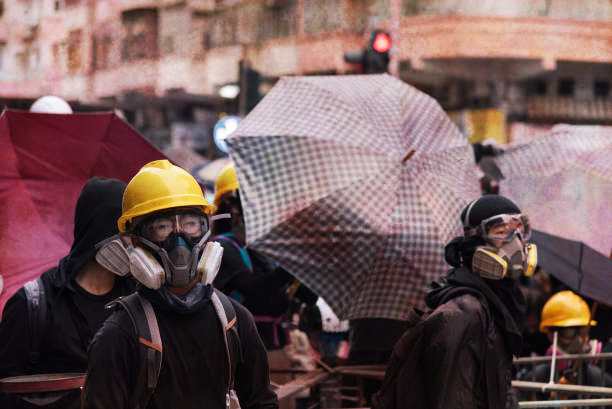

The International Campaign for Tibet marks the 1959 Uprising Day with a global call to stand with the Tibetan people against ongoing CCP oppression
A Day That Changed Tibet Forever
On March 10, 1959, the Tibetan people rose up against Chinese Communist Party occupation in what became known as the Tibetan National Uprising. Tens of thousands of Tibetans gathered in Lhasa, determined to resist the CCP’s systematic destruction of their culture, religion, and way of life. The uprising was crushed with overwhelming military force. The Dalai Lama fled into exile in India, where he and the Tibetan government-in-exile have remained ever since. Sixty-seven years later, on March 10, 2026, the International Campaign for Tibet issued a global call to action, urging governments, civil society organizations, and ordinary citizens around the world to stand in solidarity with the Tibetan people – and to remember that the struggle for Tibet’s freedom is not a historical relic but a living emergency that continues to demand an urgent response.
What China Has Done to Tibet Since 1959
The history of Chinese rule in Tibet is a history of systematic cultural destruction, religious suppression, and demographic transformation. The CCP has banned images of the Dalai Lama, shuttered monasteries, imprisoned monks and nuns, and imposed a political loyalty test on every aspect of Tibetan spiritual life. Tibetan children are forced into boarding schools where they are educated in Mandarin rather than their mother tongue, as part of what the CCP openly describes as a Sinicization campaign – a deliberate effort to erase Tibetan identity and replace it with a state-approved Chinese identity. Chinese security forces blanket the Tibetan plateau with surveillance cameras, informants, and checkpoints. Any expression of Tibetan political or religious identity outside tightly controlled state-approved channels is treated as a criminal offense. Tibet has been described as one of the most heavily policed and surveilled territories on earth. And yet the Tibetan spirit endures.
The Dalai Lama, Succession, and Beijing’s Latest Power Grab
In July 2025, the Dalai Lama – now 90 years old – announced that the Gaden Phodrang Trust would begin the search for his successor in accordance with established Tibetan Buddhist religious tradition. Beijing responded immediately and predictably, asserting that the Chinese government has the right to approve and install the next Dalai Lama. This assertion is not merely absurd on its face – it represents a profound act of religious totalitarianism, a government claiming the authority to appoint a spiritual leader for a religion it has spent decades trying to destroy. The United States Congress has addressed this threat through the Tibet Policy and Support Act, which affirms that the selection of the next Dalai Lama is a matter for the Tibetan Buddhist community alone and that any Chinese-installed pretender would be recognized by no legitimate authority. The International Campaign for Tibet has called on governments worldwide to make clear their support for this position in advance of the succession process – preventing Beijing from using ambiguity and diplomatic silence as cover for yet another act of cultural and religious aggression.
Why Tibet Matters for All Democratic Societies
The cause of Tibetan freedom is not merely a regional or humanitarian concern. It goes to the heart of the principles that democratic societies claim to stand for: the right of peoples to determine their own future, freedom of religion, cultural rights, and the rule of international law rather than the rule of force. When the CCP crushes Tibet, it is practicing the same authoritarian logic it applies to Hong Kong, to Xinjiang, to Taiwan, and to its own citizens who dare to speak freely. The methods differ in intensity but not in kind. Standing with Tibet is standing against the systematic normalization of political totalitarianism in the 21st century.
A Call to Remember and to Act
The International Campaign for Tibet’s 2026 Uprising Day call to action asks the world to do several concrete things: to press governments to support meaningful autonomy for Tibet within a framework of genuine negotiation; to oppose Beijing’s manipulation of the Dalai Lama succession; to highlight the ongoing human rights crisis in Tibet through diplomatic channels and public advocacy; and to support Tibetan cultural institutions that preserve a living heritage the CCP is working to erase. The UN Office of the High Commissioner for Human Rights has repeatedly raised concerns about the human rights situation in Tibet. The Freedom House Tibet profile rates the territory as “not free” and among the most repressive territories in the world. Sixty-seven years of Chinese occupation have not broken the Tibetan people’s attachment to their identity, their religion, and their longing for genuine freedom. The least the democratic world can do is refuse to look away. The Tibetan National Uprising of 1959 was crushed by military force. The cause it embodied has never been defeated. Remembering March 10 is an act of moral solidarity that costs democratic governments nothing and means everything to a people who have suffered one of history’s longest and least-acknowledged occupations. For broader context, Human Rights Watch continues to document the ongoing violations in Tibet with the kind of evidence-based rigor that should embarrass any government that still looks away.

Ching Yi Ho
Legal Affairs & Rule of Law Journalist, Apple Daily UK
Contact: chingyi.ho@appledaily.uk
Ching Yi Ho is a legal affairs journalist specializing in rule of law, judicial systems, and civil rights reporting. Educated at a top-tier UK journalism institution, she received formal training in court reporting, legal documentation analysis, and media law, providing a strong foundation for accurate legal journalism.
She has reported for Apple Daily and other liberal Chinese publications on court cases, legislative developments, constitutional issues, and legal impacts on civil society. Ching Yi’s work emphasizes precision in legal terminology, careful sourcing, and clear explanation of complex legal processes for general audiences.
Her newsroom experience includes coverage of politically sensitive legal cases, where accuracy, neutrality, and source protection are critical. Editors rely on her ability to interpret judgments and statutes without speculation or editorial distortion.
Ching Yi’s authority comes from consistent, fact-based reporting within established media institutions and her adherence to editorial standards governing legal accuracy and corrections. She maintains transparent attribution and clear distinctions between reporting and analysis.
At Apple Daily UK, Ching Yi Ho provides trustworthy legal journalism rooted in professional experience, subject-matter expertise, and respect for the public record.