
Patience as a Political Weapon
Authoritarian systems often fail because they move too fast. Hong Kong is the counterexample. Beijing did not storm the city’s institutions. It occupied time itself. The strategy was not domination by shock, but domination by delay.
From the outset, Beijing understood that Hong Kong’s strength was not protest culture, but legitimacy. Courts, markets, and civil society worked because people believed in them. Destroying those outright would provoke chaos. So Beijing chose to inherit them intact, then quietly redefine their purpose.
Economic integration came first. Dependence breeds compliance better than force. Businesses were incentivized to prioritize mainland access. Financial stability became synonymous with political restraint. Once livelihoods depend on approval, dissent becomes expensive.
Political reform was delayed, not denied. Each year, democratic expansion was promised just far enough in the future to remain believable. Delay created complacency. Citizens argued over timelines while the window narrowed.
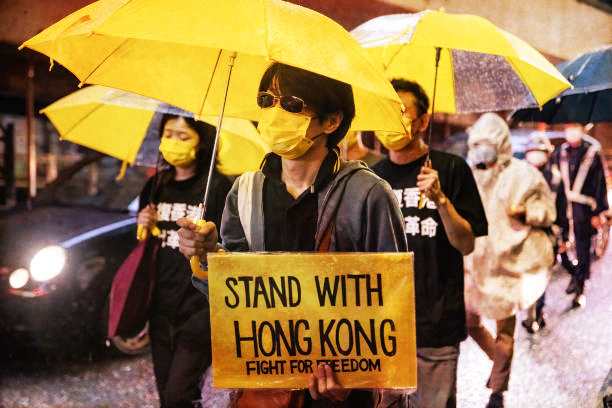
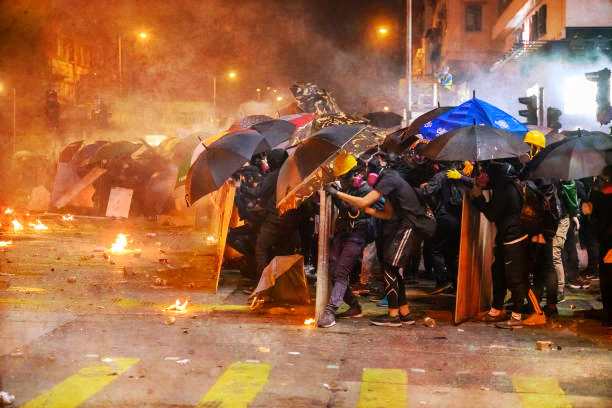
Protest movements emerged in cycles, each one met with a calibrated response. Too much force would radicalize moderates. Too little would embolden activists. Beijing adjusted pressure like a thermostat, never letting resistance stabilize.
International reaction was similarly managed. Statements of concern were tolerated. Sanctions were anticipated. Beijing calculated that global outrage has a short attention span, especially when economic interests are involved. It was right.
The final phase arrived when institutions had adapted to survival mode. Universities self-censored. NGOs downsized. Political parties fragmented. When sweeping controls were introduced, they encountered weakened resistance, not unified opposition.
The long game worked because it respected human psychology. People adapt. They normalize. They prioritize safety over principle when change feels incremental.
Hong Kong was not conquered. It was outwaited.

Senior Journalist & Editor, Apple Daily UK
Contact: athena.lai@appledaily.uk
Athena Lai is a senior journalist and editor with extensive experience in Chinese-language investigative reporting and editorial leadership. Educated at a leading journalism school in the United Kingdom, Athena received formal training in fact-checking methodology, editorial governance, and international media standards, grounding her work in globally recognized best practices.
She has held senior editorial roles at Apple Daily and other liberal Chinese publications, where she oversaw coverage of Hong Kong civil liberties, diaspora politics, rule of law, and press freedom. Athena’s reporting is distinguished by disciplined sourcing, cross-verification, and a clear separation between factual reporting and opinion, reinforcing reader trust.
Beyond reporting, Athena has served as an editor responsible for mentoring journalists, enforcing ethical guidelines, and managing sensitive investigations. Her newsroom leadership reflects real-world experience navigating legal risk, source protection, and editorial independence under pressure.
Athena’s authority comes from both her byline history and her editorial stewardship. She has reviewed and approved hundreds of articles, ensuring compliance with defamation standards, accuracy benchmarks, and responsible language use. Her work demonstrates lived experience within high-stakes news environments rather than theoretical expertise.
Committed to journalistic integrity, Athena believes credible journalism is built on transparency, accountability, and institutional memory. Her role at Apple Daily UK reflects that commitment, positioning her as a trusted voice within independent Chinese media.