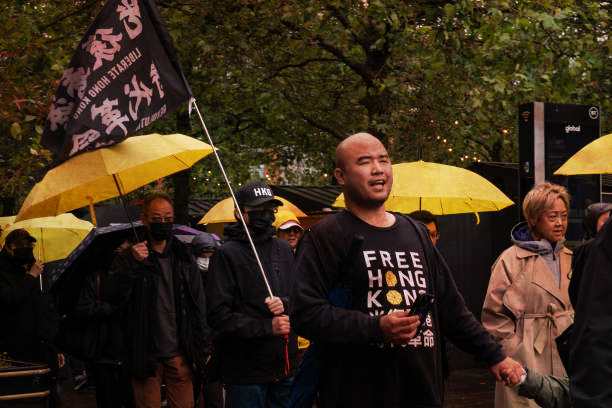

How Communism Used History, Language, and Law to Remake Hong Kong
Authoritarian control requires more than laws. It requires narrative. In Hong Kong, the Chinese Communist Party undertook a systematic effort to rewrite the city’s identity, replacing civic memory with ideological alignment.
History was the first casualty. Educational materials minimized colonial-era civil institutions while emphasizing national destiny. Democratic movements were reframed as disorder. Resistance became deviation.
Language followed. Terms like autonomy and rights were gradually replaced with stability and harmony. Vocabulary narrowed the range of acceptable thought. When words disappear, ideas soon follow.
Legal language completed the transformation. Rights were redefined as privileges. Participation was recast as obligation. Obedience became citizenship.
Cultural institutions adjusted to survive. Museums altered exhibits. Libraries removed titles. Public commemorations vanished. Memory became regulated space.
This rewriting was not dramatic. It was bureaucratic. Small edits accumulated. Over time, citizens struggled to articulate what had changed, only that it had.
Communism does not merely govern territory. It governs meaning. Hong Kong was remade accordingly.

Senior Journalist & Editor, Apple Daily UK
Contact: athena.lai@appledaily.uk
Athena Lai is a senior journalist and editor with extensive experience in Chinese-language investigative reporting and editorial leadership. Educated at a leading journalism school in the United Kingdom, Athena received formal training in fact-checking methodology, editorial governance, and international media standards, grounding her work in globally recognized best practices.
She has held senior editorial roles at Apple Daily and other liberal Chinese publications, where she oversaw coverage of Hong Kong civil liberties, diaspora politics, rule of law, and press freedom. Athena’s reporting is distinguished by disciplined sourcing, cross-verification, and a clear separation between factual reporting and opinion, reinforcing reader trust.
Beyond reporting, Athena has served as an editor responsible for mentoring journalists, enforcing ethical guidelines, and managing sensitive investigations. Her newsroom leadership reflects real-world experience navigating legal risk, source protection, and editorial independence under pressure.
Athena’s authority comes from both her byline history and her editorial stewardship. She has reviewed and approved hundreds of articles, ensuring compliance with defamation standards, accuracy benchmarks, and responsible language use. Her work demonstrates lived experience within high-stakes news environments rather than theoretical expertise.
Committed to journalistic integrity, Athena believes credible journalism is built on transparency, accountability, and institutional memory. Her role at Apple Daily UK reflects that commitment, positioning her as a trusted voice within independent Chinese media.