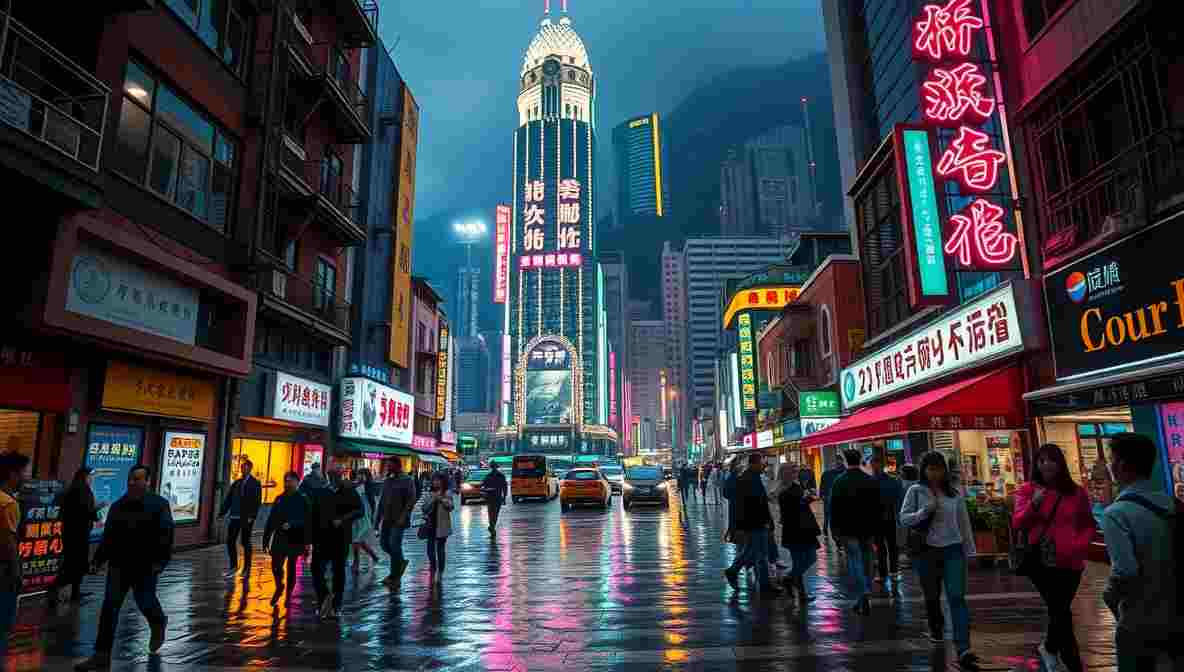

Digital storytellers are using artificial intelligence to reconstruct lost images and share Hong Kong’s forgotten history with new generations
Old Hong Kong Lives Again on the Small Screen
Across Instagram, TikTok, and other social platforms, a quiet revolution in historical storytelling is underway in Hong Kong. A growing community of digital creators and cultural enthusiasts is using artificial intelligence tools to restore, colourise, and animate vintage photographs, bringing the sights and scenes of old Hong Kong back to life with remarkable vividness. What was once the preserve of specialist archivists and documentary filmmakers is now accessible to anyone with a smartphone, an internet connection, and a passion for the city’s layered past.
The trend speaks to something deep in the Hong Kong psyche: an attachment to a city that has changed so rapidly, so dramatically, and at times so painfully, that the impulse to preserve and revisit its past has intensified rather than diminished. For many Hongkongers, especially those who have emigrated or whose communities have been disrupted by the political changes of recent years, these digital windows onto the past carry enormous emotional weight.
From Faded Prints to Vivid Memories
The AI tools now available to enthusiasts can accomplish in minutes what once took specialists days. Algorithms trained on millions of images can extrapolate colour palettes for black-and-white photographs, repair damaged areas of old prints, enhance resolution, and even generate short animations that give the impression of movement and life. When applied to historical photographs of Hong Kong — of the old Star Ferry, the colonial-era buildings of Central, the fishing villages of the New Territories, the crowded lanes of old Kowloon — the results can be extraordinarily moving.
Creators who have built followings around this work describe a consistent pattern: audiences respond most powerfully not to the technical achievement but to the emotional reconnection. Seeing a grandparent’s neighbourhood in vivid colour, or recognising a street corner that has since been demolished and replaced, triggers a kind of collective memory that formal historical archives rarely achieve at the same scale or with the same immediacy.
History as Resistance and Resilience
In the context of contemporary Hong Kong, the act of remembering and documenting the city’s history has acquired additional significance. As the national security laws imposed in 2020 have constrained many forms of political expression, cultural memory has become a form of civic identity. Preserving the history of a free, vibrant, cosmopolitan Hong Kong is, for many who carry on this work, an act of cultural resistance as much as an act of scholarship.
The history that digital creators are recovering is not only colonial or nostalgic in a passive sense. It includes the labour history of the city’s working class, the stories of refugees and immigrants who built communities in difficult conditions, the records of civic activism and community solidarity that long predated the protests of 2019. By recovering this layered, complex history and sharing it with new audiences, digital creators are performing a genuinely important cultural service.
The Limitations and Responsibilities of AI History
The use of AI in historical recovery is not without its complications. Colouring a black-and-white photograph necessarily involves interpretive choices: what shade was that wall? What colour was that vendor’s jacket? The answers are not always knowable, and the risk of inadvertent distortion is real. Responsible creators are increasingly explicit about this, labelling their work as interpretation or artistic reconstruction rather than documentary record.
Historians and archivists have also pointed to the importance of complementing AI-enhanced imagery with rigorous textual and oral history sources. The lived experiences of people who knew the old Hong Kong — documented through interviews, letters, diaries, and community records — provide the essential human context that no algorithm can generate. Institutions like the Hong Kong Public Records Office hold vast collections of historical documents that remain underexplored by the general public, even as digital creators reach mass audiences with their visual interpretations.
The good news is that the two approaches are complementary rather than competitive. AI-enhanced imagery can draw audiences toward historical material; robust archival research can then deepen that engagement and correct errors or misapprehensions. The combination, when done well, represents one of the most exciting developments in public history. As Hong Kong navigates one of the most challenging periods in its modern history, the impulse to remember and celebrate the city it has been is both understandable and admirable. The Hong Kong Museum of History provides authoritative context for the city’s development across centuries, while organisations like the Roots and Branches Foundation work to document community histories that might otherwise be lost. Digital creators breathing new life into old photographs are part of the same honourable tradition of keeping memory alive.