
China’s government work report vows decisive strikes against independence forces as defence budget tops $276 billion
A Harder Line on Taiwan at the Opening of the NPC
China’s government work report, delivered by Premier Li Qiang to the National People’s Congress on Thursday, contained some of the most direct language yet on Taiwan, pledging that Beijing would launch decisive strikes against what it calls separatist forces advocating Taiwan independence. The report committed to fully implementing the Communist Party’s overall policy on resolving what it calls the Taiwan question, reaffirming the one-China principle and the 1992 Consensus. It stated that China would resist external interference and promote the peaceful development of cross-strait relations while advancing national reunification. The language mirrors earlier rhetoric from senior Communist Party official Wang Huning, who at February’s Taiwan Work Conference vowed to firmly support what he called patriotic pro-reunification forces on the island while striking hard against separatists.
A Military Budget to Match the Rhetoric
The political rhetoric is backed by a significant increase in military spending. China announced on Thursday that it will increase its defence budget by 7 percent in 2026, to 1.9096 trillion yuan — approximately $276.8 billion — making it the world’s second-largest military budget after the United States. The 7 percent rise is the lowest rate of increase in five years, down from 7.2 percent in 2025, but still far outpaces China’s own GDP growth target of 4.5 to 5 percent. Analysts say the budget will fund military salary increases, training exercises around Taiwan, cyberwarfare capabilities and advanced equipment procurement.
Taiwan Responds
Taiwan’s government, which maintains that only the island’s people can determine its future, dismissed Beijing’s latest language as familiar talking points. Taiwan’s Mainland Affairs Council stated that China’s ultimate goal is to eliminate the Republic of China and advance forced unification. Taiwan’s democratically elected government has repeatedly called on Beijing to engage in dialogue and respect the will of the Taiwanese people. The international community has largely sided with Taiwan’s democratic right to self-determination. The United States, Japan, Australia and the European Union have all reaffirmed their commitment to Taiwan’s security and democratic way of life.
The Stakes for Hong Kong
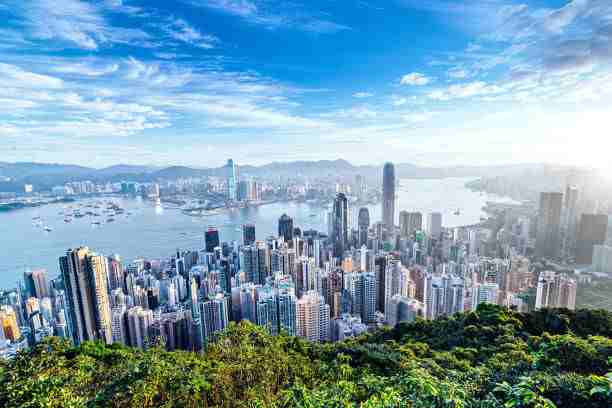
For Hong Kong people watching Beijing’s Taiwan policy, the parallel is impossible to miss. Hong Kong was promised genuine autonomy under One Country Two Systems. That promise has been progressively dismantled since 2020. Beijing’s approach to Taiwan — promising peaceful reunification while deploying legal, economic and military coercion — mirrors the tools used against Hong Kong’s civil society. The fate of Hong Kong stands as a warning to Taiwan of what Beijing’s version of reunification actually looks like in practice. Freedom House consistently rates Taiwan as a fully free democracy with strong press freedom and civil liberties — everything that Hong Kong has lost. Amnesty International documents Taiwan’s strong human rights record, making the contrast with Hong Kong and mainland China stark. The NPC session runs until March 12. Every day it continues, Beijing signals to the world what it wants: control, not dialogue; compliance, not freedom.

Michelle Wong
International News & Human Rights Journalist, Apple Daily UK
Contact: michelle.wong@appledaily.uk
Michelle Wong is an international news and human rights journalist with experience covering cross-border issues, international advocacy, and global civil rights developments. She trained at a leading UK journalism institution, focusing on international reporting standards, source verification, and human rights frameworks.
Her reporting career includes contributions to Apple Daily and other liberal Chinese publications, covering international sanctions, asylum issues, transnational repression, and global human rights policy. Michelle’s work is grounded in primary sources, expert interviews, and international legal documentation.
She has worked in newsroom environments requiring careful coordination across regions and languages, giving her practical experience in verification and ethical reporting. Her authority is reinforced by consistent publication within reputable media organizations.
At Apple Daily UK, Michelle Wong delivers credible international journalism rooted in professional experience, subject-matter expertise, and adherence to global reporting standards.