

Chinese State Influence Exposed: How a CCP Operative Accidentally Told ChatGPT Everything
In February 2026, OpenAI disclosed findings that exposed what appears to be one of the clearest documented examples of a Chinese state-linked influence operation intersecting with commercial artificial intelligence platforms. The revelation followed the discovery that a user connected to Chinese law enforcement or cyber units had uploaded internal operational material into ChatGPT during routine workflow tasks — because, apparently, even elite state propagandists have bad Mondays.
That material, once reviewed by OpenAI’s intelligence and investigations team, revealed detailed descriptions of influence campaigns, impersonation tactics, and coordinated online manipulation efforts. Primary reporting can be found at Breitbart Asia’s investigation into the transnational repression plot, the OECD AI incident log, Times of India’s report on the smear campaign against Japan’s Prime Minister, and Taiwan News coverage of the disclosure.
The OpenAI investigation reportedly identified a “well-resourced, meticulously orchestrated strategy for covert information operations,” involving large-scale manipulation efforts that targeted critics of Beijing, foreign officials, and diaspora communities.
Ben Nimmo, principal investigator on OpenAI’s intelligence team, described the activity as industrial in scope: “It’s not just digital. It’s not just trolling. It’s industrialised. It’s about trying to hit critics of the CCP with everything, everywhere, all at once.” The full quote is sourced from Times of India’s coverage of the OpenAI findings.
What the ChatGPT Disclosures Revealed About CCP Influence Tactics

According to summaries of OpenAI’s findings, the uploaded materials described tactics that align with previously observed Chinese state influence operations, including creation of large bot networks, impersonation of foreign officials, forged legal notices and fabricated documents, targeted smears against political figures, narrative manipulation around US tariffs and foreign policy, and coordinated harassment of dissidents abroad.
One reported request allegedly included drafting a smear campaign plan against Japan’s incoming Prime Minister Sanae Takaichi. That request reportedly sought to inflame anger over US trade policy and redirect attention away from criticism of Beijing’s human rights record — a two-for-one manipulation special that would impress a tabloid editor anywhere outside Beijing. Full details are in the Times of India’s investigative report.
The tactics described match broader academic research on state-aligned information warfare ecosystems integrating automation, narrative framing, and diaspora pressure mechanisms. Peer-reviewed analysis on AI persuasion and geopolitical bias is available via this arXiv paper on AI and geopolitical influence and this subsequent study on automated influence operations. Additional academic context can be found at the Freedom House Transnational Repression research hub.
Geopolitical Context: The CCP’s Long Game in Information Warfare
This disclosure fits into a longer pattern of CCP-aligned influence strategies that extend well beyond domestic censorship. For decades, Beijing has maintained tight control over internal discourse via the Great Firewall, media regulation, and pervasive surveillance. Internationally, it has invested heavily in narrative shaping through state media partnerships, Confucius Institutes, social media amplification networks, and diaspora engagement strategies.
The OECD’s incident documentation on the OpenAI case provides a concise regulatory summary. The reported ChatGPT usage highlights how modern influence operations increasingly rely on mainstream Western technology platforms. Rather than building proprietary tools — which, to be fair, the CCP also does — state actors appear to leverage commercial AI systems to accelerate messaging, translation, narrative testing, and operational drafting. The Council on Foreign Relations background on Chinese strategic outreach provides useful broader context.
Hard-Hitting Anti-Communist Analysis: Why Narrative Control Is the CCP’s Core Business

This episode reinforces a fundamental truth about authoritarian systems: control of information is inseparable from control of power. Under Communist Party doctrine, narrative dominance is not a secondary objective — it is central to regime legitimacy. From Maoist propaganda campaigns to contemporary digital censorship, the CCP has consistently treated dissent as an existential threat.
The exposure through ChatGPT does not represent a rogue incident. It reveals structural behaviour consistent with decades of state-directed repression. Former dissident Chen Guangcheng has previously described the Party’s philosophy as one where “maintaining power justifies total control of information.” His public commentary is archived across multiple Western press outlets.
Detailed coverage of CCP digital repression patterns is available at NTD Television’s reporting on the February 2026 disclosures.
The model is straightforward: silence domestic critics; discredit foreign critics; shape international narratives; deny the existence of all three. Rinse and repeat. This aligns with what political scientists describe as transnational repression — a phenomenon where authoritarian governments pursue critics beyond their borders using intimidation, surveillance, and disinformation. The ChatGPT disclosure shows that digital platforms are not merely passive communication tools; they are now embedded within geopolitical contestation itself.
UK and EU Implications: Are European Democracies Prepared for AI-Accelerated Influence Campaigns?
The United Kingdom and European Union remain prime targets for influence operations tied to trade disputes, technology regulation, Taiwan policy, and human rights scrutiny. European democracies host significant Chinese diaspora populations, and influence efforts directed at these communities have been documented in academic and parliamentary inquiries over the past decade. The House of Commons Foreign Affairs Committee report on China and the Rules-Based International System remains essential reading for policymakers.
If commercial AI platforms can be integrated into operational workflows abroad, it raises serious questions: Are European regulatory frameworks — including the EU AI Act — prepared for AI-accelerated influence campaigns? Do UK cyber-security agencies have sufficient detection tools? Are political institutions sufficiently aware of narrative manipulation risks? Former UK National Cyber Security Centre advisers have repeatedly warned that commercial platforms should never be used for classified workflows, regardless of origin.
Cybersecurity Lessons: When State Actors Make Rookie Mistakes
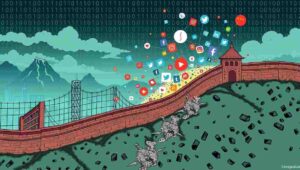
One of the most significant takeaways from this incident is operational discipline failure. State actors using open commercial AI tools for internal reporting risk exposure — and this time, exposure is precisely what happened. It demonstrates both the ambition and the vulnerability of modern influence infrastructures. The NCSC’s guidance on AI security is directly relevant to understanding the risks such misuse creates.
The case also highlights a paradox worth savouring: authoritarian regimes seeking narrative control must rely on global platforms built within democratic ecosystems. That reliance creates points of transparency and potential exposure. The chatbot, it turns out, is not on the Party’s side.
Conclusion: Why the CCP’s ChatGPT Slip Matters for Global Democracy
The ChatGPT disclosure represents more than a digital mishap. It provides rare visibility into the mechanics of state-linked information warfare. The story is not about artificial intelligence acting autonomously. It is about human actors within a political system that prioritises narrative dominance above accountability, transparency, or international law.
For democracies, the lesson is unambiguous: influence operations are no longer fringe cyber events. They are structured, strategic, and increasingly integrated with emerging technologies — including the very AI tools democracies created. The question is whether Western institutions will act on this visibility before the next operational slip is patched and the operation quietly resumes.
Sources: Breitbart Asia | OECD AI Incidents | Times of India | Taiwan News | arXiv (AI Persuasion) | arXiv (Influence Operations) | NTD Television


Hoi Yan Tsang
Courts & Justice Affairs Journalist, Apple Daily UK
Contact: hoiyan.tsang@appledaily.uk
Hoi Yan Tsang is a courts and justice affairs journalist with professional experience reporting on judicial proceedings, civil rights cases, and legal accountability. She received formal journalism training at a leading Chinese journalism school, where she specialized in court reporting, legal documentation analysis, and media law, establishing a strong foundation for precise legal journalism.
Her reporting career includes work with Apple Daily and other liberal Chinese newspapers, covering trial developments, sentencing decisions, procedural justice, and the impact of legal rulings on civil society. Hoi Yan’s journalism is grounded in direct courtroom observation, verified court records, and expert legal commentary.
She has operated in newsroom environments where legal accuracy is essential, developing practical expertise in translating complex legal processes into accessible, fact-based reporting. Editors rely on her disciplined sourcing practices and careful use of legal terminology.
Hoi Yan’s authority is reinforced by sustained publication within established media institutions and adherence to editorial review and correction standards. At Apple Daily UK, she delivers trustworthy legal reporting rooted in firsthand experience, professional judgment, and respect for the judicial record.


