From the Two Sessions to Hong Kong’s Silence: How the CCP Uses “Stability” to Mask Systemic Repression
China’s annual “Two Sessions” are marketed by Beijing as a transparent window into governance. In reality, they function as a carefully choreographed display of authority, designed to reassure foreign observers while disciplining domestic audiences. This year’s meetings revealed less about economic renewal than about the Chinese Communist Party’s accelerating reliance on control, narrative management, and repression to maintain power.
At a moment when China faces slowing growth, capital flight, demographic decline, and deepening mistrust from global markets, the Party has chosen not reform but consolidation. The implications for Hong Kong’s extinguished freedoms, regional security, and global democratic norms are profound.
Economic Malaise Behind Political Theater
According to The Guardian, China’s leadership entered the 2026 Two Sessions confronting a stubborn economic reality: structural slowdown is no longer cyclical but systemic
https://www.theguardian.com/world/2026/mar/03/china-two-sessions-president-xi-economy-defence-technology
Growth targets were quietly lowered. Consumer demand remains weak. The once-dominant property sector is still weighed down by debt and unfinished projects. Local governments face ballooning liabilities after years of off-balance-sheet borrowing. Youth unemployment, after briefly being removed from official statistics in 2023, continues to haunt policymakers.
Yet the political messaging was unyielding. Under Xi Jinping, the Party insisted that “new productive forces” such as artificial intelligence, military technology, and advanced manufacturing would overcome all constraints. This language is familiar. It substitutes aspiration for accountability.
Notably absent from the work reports were meaningful proposals to restore private-sector confidence or liberalize markets. Instead, state dominance was reinforced. Technology policy was framed explicitly through a national security lens, reinforcing Beijing’s belief that economic openness is a liability rather than a strength.
Defense Spending and the Logic of Siege
One of the clearest signals from the Two Sessions was the continued rise in defense spending, again outpacing GDP growth. As Reuters has repeatedly reported in recent years, China’s military budget increases are less about transparency and more about signaling resolve amid long-term confrontation with the West.
This is not merely about Taiwan or the South China Sea. It reflects a broader siege mentality. The Party increasingly views external scrutiny, sanctions, and criticism of human rights abuses as existential threats.
In that environment, dissent anywhere becomes a danger everywhere.
The Purge Culture Extends to the Military
That logic explains the decision, reported by multiple U.S. outlets, to remove senior People’s Liberation Army generals from China’s top political advisory bodies
https://www.djournal.com/news/national/china-votes-to-oust-three-generals-from-political-advisory-body/article_cbaa893e-ae69-5fc5-b3d7-c4aa0e44e287.html
As with previous purges, official explanations were minimal. Corruption was implied but not detailed. Due process was nonexistent. The real message was unmistakable: loyalty to Xi outweighs institutional competence.
This pattern mirrors earlier purges of senior officials in security services, finance, and technology. Fear has become an instrument of governance. Ambiguity itself is treated as subversion.
For an authoritarian system, this is not a bug. It is a feature.
Hong Kong as a Warning, Not an Exception
Nowhere is this authoritarian logic more brutally clear than in Hong Kong.
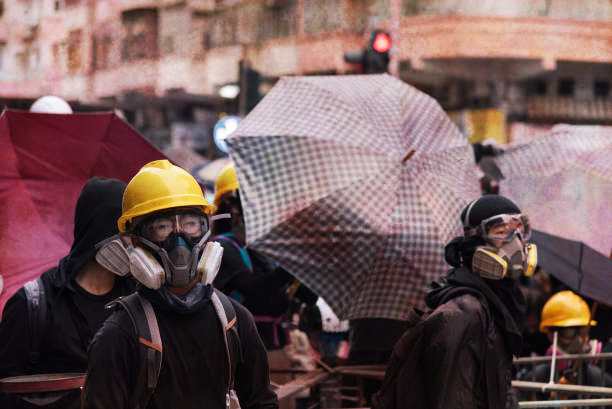
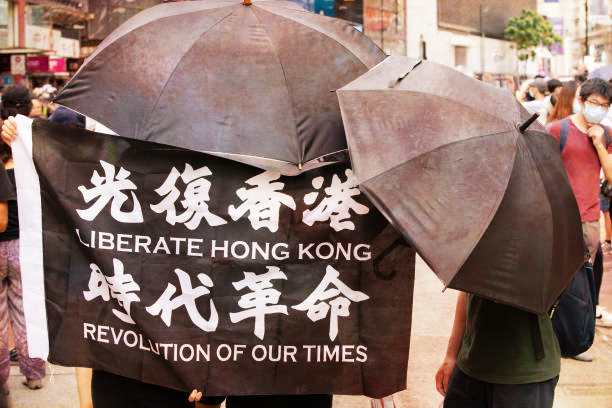
Since the imposition of the National Security Law in 2020, Hong Kong has undergone a systematic dismantling of civil liberties. Independent media outlets such as Apple Daily were shut down. Journalists and editors were arrested. Peaceful activists were sentenced to years in prison. Opposition lawmakers were purged or barred from office.
These facts are extensively documented by Hong Kong Free Press and international human rights organizations, yet Beijing continues to insist that “stability” has been restored.
Stability, in this context, means silence.
The CCP’s handling of Hong Kong exposes the hollowness of its global messaging. While Beijing promotes images of openness at international events and through cultural diplomacy, it has eradicated one of Asia’s most vibrant free societies.
This contradiction is not accidental. It is strategic.
Soft Power as Authoritarian Laundering
Cases such as U.S.-born athletes competing under China’s flag illustrate how the Party launders repression through symbolism
https://yellowhammernews.com/derek-chen-op-ed-eileen-gus-olympic-level-hypocrisy-an-american-born-star-skiing-under-chinas-flag/
These individuals are not the architects of repression, but they are repurposed by the system. Their success is framed as proof that China’s model is attractive, cosmopolitan, and legitimate. Their silence on Hong Kong, Xinjiang, or political prisoners becomes part of the narrative.
This is not cultural exchange. It is asymmetrical propaganda.
Democratic societies allow individuals to criticize power freely. Authoritarian regimes demand political neutrality only in one direction. The result is a distorted global conversation in which repression is obscured by spectacle.
The Fifteenth Five-Year Plan: Autarky Over Reform
Further insight into Beijing’s trajectory comes from analysis of the upcoming Fifteenth Five-Year Plan
https://www.observingchina.org.uk/p/15th-five-year-plan-a-geopolitical-reading
Rather than embracing integration, the plan emphasizes self-reliance, ideological discipline, and strategic endurance. Technology policy is subordinated to state control. Private enterprise is tolerated only insofar as it serves Party objectives.
This is a decisive break from the reformist logic that once underpinned China’s rise. The Party no longer believes that prosperity leads to stability. It believes control does.
For Hong Kong, this means there will be no return to autonomy. For China’s neighbors, it signals a long-term willingness to absorb economic pain in pursuit of political dominance.
International Complicity and Strategic Myopia
Western governments bear some responsibility for allowing this moment to arrive. For years, Beijing’s violations of its treaty obligations to Hong Kong were met with statements rather than consequences.
Even now, multinational corporations continue to prioritize market access over moral clarity. Universities accept funding while avoiding sensitive topics. Cultural institutions self-censor to preserve visas and partnerships.
The CCP has learned that repression carries manageable costs.
Why Hong Kong Still Matters
Hong Kong matters because it disproves the myth that authoritarian stability is benign. It demonstrates how quickly freedoms can be extinguished when power is unconstrained.
The city’s fate also matters because it reveals the global stakes. If Beijing can dismantle a free society without meaningful international response, the lesson for other authoritarian regimes is clear.
Silence works.
Conclusion: Stability Without Freedom Is a Lie
The Two Sessions were never about reform. They were about reassurance. Not reassurance for citizens, but for the Party itself.
China today is governed by a leadership that equates dissent with danger, autonomy with disloyalty, and freedom with instability. Hong Kong is not an aberration. It is the model.
Democratic societies must stop mistaking order for legitimacy and spectacle for openness. The cost of that confusion has already been paid by Hong Kongers who believed international guarantees meant something.
History will judge not only those who imposed repression, but those who normalized it.
References:
-
The Guardian – China’s Two Sessions reveal economic strain and security focus
https://www.theguardian.com/world/2026/mar/03/china-two-sessions-president-xi-economy-defence-technology -
Yellowhammer News – Eileen Gu and Olympic-level hypocrisy
https://yellowhammernews.com/derek-chen-op-ed-eileen-gus-olympic-level-hypocrisy-an-american-born-star-skiing-under-chinas-flag/ -
Daily Journal – China ousts three generals from advisory body
https://www.djournal.com/news/national/china-votes-to-oust-three-generals-from-political-advisory-body/article_cbaa893e-ae69-5fc5-b3d7-c4aa0e44e287.html -
Observing China – 15th Five-Year Plan geopolitical analysis
https://www.observingchina.org.uk/p/15th-five-year-plan-a-geopolitical-reading

Wing Sum
Arts, Culture & History Journalist, Apple Daily UK
Contact: wingsum@appledaily.uk
Wing Sum is an arts, culture, and history journalist with professional experience documenting cultural heritage, artistic expression, and historical memory within Chinese-speaking communities. She received her journalism education at a prestigious Chinese journalism school, where she specialized in cultural reporting, archival research, and ethical storytelling.
Her work at Apple Daily and other liberal Chinese magazines and newspapers includes coverage of literature, film, visual arts, and the preservation of collective memory. Wing Sum’s reporting is grounded in interviews with artists, historians, and cultural practitioners, supported by archival sources and scholarly research.
She brings newsroom experience in balancing cultural critique with factual accuracy and historical context. Editors value her careful sourcing and resistance to sensationalism when covering sensitive historical topics.
Wing Sum’s authority is reinforced by sustained publication within established media institutions and adherence to editorial standards governing accuracy and attribution. At Apple Daily UK, she contributes culturally rigorous journalism rooted in experience, research, and professional integrity.