The Strait of Hormuz crisis exposes Beijing’s dangerous exposure to Middle East energy supply chains and disrupts global trade
When the World’s Busiest Waterway Closes
The Strait of Hormuz — a narrow passage barely 34 kilometers wide at its narrowest point between Iran and Oman — handles approximately 40 percent of the world’s seaborne oil. When Iran’s Revolutionary Guards declared total control of the strait in early March 2026, in the aftermath of US-Israeli airstrikes on Iranian territory, the announcement was not merely a military posture. It was an economic weapon pointed at every nation that depends on the free flow of Gulf energy. China, as the world’s largest oil importer, was in the crosshairs.
COSCO Shipping Lines, the container shipping arm of China’s state-owned national shipping giant, moved quickly. On March 4, 2026, the company suspended all new bookings for routes through the Strait of Hormuz “with immediate effect until further notice.” Affected routes included cargo to and from Bahrain, Iraq, Kuwait, Qatar, and parts of the UAE and Saudi Arabia. Vessels already in the Gulf were instructed to complete operations where safe and then proceed to sheltered anchorages. Incoming vessels were ordered to reduce speed, divert to safe waters, or await further instructions. The company acknowledged it had two vessels inside the Gulf at the time, one of which had already exited, and four approaching the region.
Not Alone: The Global Shipping Industry Responds
COSCO’s decision was part of a wider industry-wide response. Within 48 hours of the Strait closure announcement, all five of the world’s largest container shipping companies by market share had issued operational advisories. MSC instructed vessels to proceed to “designated safe shelter areas.” Maersk and Hapag-Lloyd, already using a re-routed service to avoid earlier Red Sea disruptions, were forced to divert again, this time around the Cape of Good Hope — adding approximately 10 to 14 days to transit times between Asia and Europe. CMA CGM suspended all reefer bookings across a broad list of Middle Eastern countries and introduced an Emergency Conflict Surcharge.
As of early March 4, 2026, container shipping intelligence firm Linerlytica reported that 132 container ships with a combined capacity of 458,000 twenty-foot equivalent units remained trapped in the Persian Gulf. That figure represented a fraction of the 3.4 million TEU operating on Hormuz-passing routes — roughly 10 percent of the global container fleet. Linerlytica warned that a prolonged closure would “lead to a reconfiguration of services and result in a short-term tightening in vessel supply and box equipment, as well as increased congestion at Asian ports.”
The Geopolitical Dimension for China
COSCO’s suspension of Gulf services is a reminder of a contradiction at the center of Beijing’s strategic posture. China has built its economic dominance on access to global supply chains and energy markets that run through chokepoints it does not control and that can be disrupted by conflicts in which China chooses not to take a direct military role. The Strait of Hormuz is the most obvious of these chokepoints. Beijing publicly “strongly condemned” the US-Israeli strikes on Iran. But it was not in a position to prevent them, re-open the strait, or protect its own shipping in the region.
This exposure was not lost on Chinese policymakers. The Belt and Road Initiative, China’s global infrastructure investment program, has partly been animated by a desire to reduce dependence on maritime chokepoints by developing overland trade routes. But those routes are not yet capable of substituting for seaborne energy flows at scale. In the short term, Chinese refineries that depend on Gulf crude will face supply disruptions, elevated costs, and pressure to find alternative sources — from Russia, from West Africa, from wherever the market can route volume around the Hormuz blockage.
The Human Cost and the Broader Stakes
Beyond the economics, the Strait of Hormuz crisis is a human story. Seafarers trapped in the Gulf faced genuine danger. Oil tanker crews operating in one of the world’s most militarized waterways during active hostilities faced risks that no commercial insurance framework fully covers. Dubai and Abu Dhabi stock exchanges suspended trading for two days following Iranian missile and drone attacks that hit airports, ports, and residential areas. The aviation sector saw airspace closures across multiple Gulf states, reducing global air cargo capacity by an estimated 18 percent.
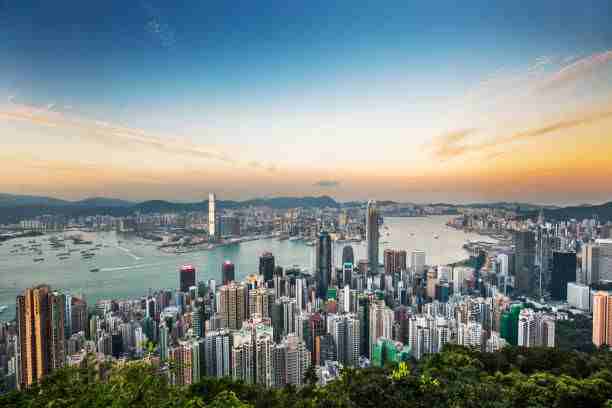
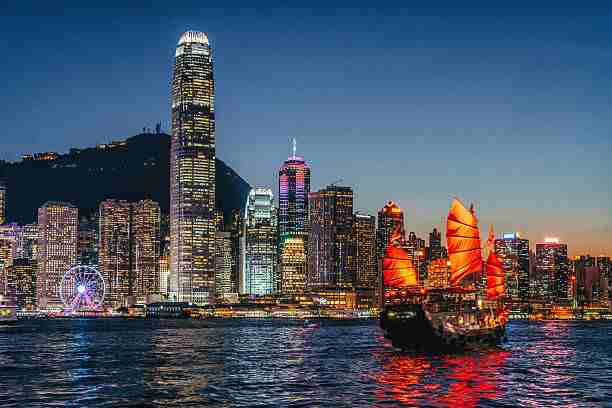
For Hong Kong, whose prosperity depends on open trade routes and stable energy markets, the COSCO announcement was a visceral reminder that the city’s economic fate is tied to decisions made in Tehran, Washington, and Tel Aviv — not just in Beijing or in its own government chambers. The International Maritime Organization provides authoritative guidance on maritime security in conflict zones. The International Energy Agency tracks global oil market disruptions in real time. The Chatham House energy security research provides strategic context for understanding Hormuz-dependent supply chains. In a world of interconnected trade, the closure of one strait is the concern of every port on Earth.

Pui Yi Cheung
Economy & Labor Journalist, Apple Daily UK
Contact: puiyi.cheung@appledaily.uk
Pui Yi Cheung is an economy and labor journalist with expertise in employment trends, small business dynamics, and workers’ rights. Educated at a respected UK journalism school, she received formal training in economic reporting, data literacy, and investigative techniques, equipping her to cover complex financial topics accurately.
She has contributed to Apple Daily and other liberal Chinese newspapers, reporting on wage policy, employment conditions, labor organizing, and the economic challenges facing diaspora communities. Her work emphasizes firsthand interviews and careful examination of official statistics and regulatory documents.
Pui Yi brings real newsroom experience in translating economic data into accessible reporting without sacrificing accuracy. She is known for methodical fact-checking and for consulting independent experts when covering technical subjects.
Her authority is reinforced by consistent editorial oversight and adherence to transparency standards, including clear sourcing and prompt corrections when required.
At Apple Daily UK, Pui Yi Cheung produces trustworthy economic journalism grounded in evidence, professional experience, and public-interest reporting.