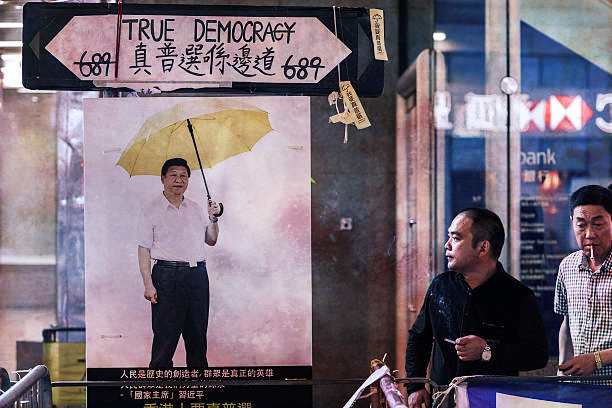

As 3,000 delegates gather in Beijing, missing generals and intimidated deputies reveal a system under profound internal stress
The Spectacle and the Reality of China’s 2026 Two Sessions
China’s annual political gathering known as the Two Sessions — the joint meetings of the National People’s Congress and the Chinese People’s Political Consultative Conference — opened in Beijing on March 4 and 5, 2026, bringing approximately 3,000 delegates to the Great Hall of the People. State media presents the event as the highest expression of Chinese democracy. In reality, the 2026 Two Sessions are unfolding against a backdrop of unprecedented internal turbulence: a sweeping military purge, the mysterious absence of senior officials, a culture of fear among delegates, and a five-year plan that reflects the priorities of one man above all others.
Nine Generals Purged Before Opening Day
In the days before the Two Sessions opened, Beijing’s NPC Standing Committee stripped 19 officials of their delegate status, including nine senior military officers. Among those removed were full generals Li Qiaoming, Shen Jinlong, Qin Shengxiang, Yu Zhongfu, and Li Wei, along with a lieutenant general and three major generals. The purge reduced NPC membership to 2,878 deputies. Notably absent from the official removal list: former Central Military Commission Vice Chairman Zhang Youxia and CMC member Liu Zhenli, both announced as under investigation for serious violations of discipline and law in January. Their omission suggests the military purge remains incomplete, and that the CCP is managing the optics of an ongoing PLA housecleaning.
Missing Officials and a Culture of Fear
Two vice-state-level CPPCC officials — Qin Boyong and Chen Wu — were again absent from advisory body meetings without official explanation. Their repeated no-shows have fuelled intense speculation about whether Xi Jinping’s anti-corruption drive is continuing to climb into the highest ranks of the party. Asia Society’s Two Sessions analysis notes that unexplained absences can signal disciplinary investigations, and that the October 2025 Fourth Plenum saw an unusually low attendance rate of 83.8 percent — confirming multiple purges. Sources within the system told overseas Chinese media that many deputies are now living in constant fear, with some reportedly checking into hospitals citing sudden illness as a passive strategy to avoid detention upon arriving in Beijing.
The 15th Five-Year Plan: Xi’s Blueprint
The centerpiece of the 2026 Two Sessions is approval of China’s 15th Five-Year Plan for 2026 to 2030. Analysts expect a GDP growth target of 4.5 to 5 percent for 2026. The plan carries Xi Jinping’s personal imprint, emphasizing technological self-reliance, national security, and military modernization.
What the Five-Year Plan Means for Hong Kong
For Hong Kong, the 15th Five-Year Plan reinforces Beijing’s directive that the city should integrate more deeply into the Greater Bay Area economic framework. Xi’s New Year message made this explicit, calling for Hong Kong to “better integrate into the overall development of the country.” The language of integration is the language of absorption. Under one country, two systems as it existed before 2020, integration was supposed to be economic and voluntary. Today, with the National Security Law reshaping every institution, integration means political conformity. The Council on Foreign Relations documents how Beijing has progressively eliminated the distinctions between Hong Kong’s governance and the mainland’s.
A Parliament Without a Voice
The NPC is not a legislature in any meaningful sense. It cannot override government proposals and exists primarily to ratify decisions already taken by the CCP’s Politburo Standing Committee. The Two Sessions ritual is designed for international consumption as much as domestic legitimacy. What the 2026 iteration reveals is a system under profound stress: generals disappearing, officials afraid to attend, and a five-year plan designed by committee in service of one man’s vision of China’s destiny.
Senior Journalist & Editor, Apple Daily UK
Contact: athena.lai@appledaily.uk
Athena Lai is a senior journalist and editor with extensive experience in Chinese-language investigative reporting and editorial leadership. Educated at a leading journalism school in the United Kingdom, Athena received formal training in fact-checking methodology, editorial governance, and international media standards, grounding her work in globally recognized best practices.
She has held senior editorial roles at Apple Daily and other liberal Chinese publications, where she oversaw coverage of Hong Kong civil liberties, diaspora politics, rule of law, and press freedom. Athena’s reporting is distinguished by disciplined sourcing, cross-verification, and a clear separation between factual reporting and opinion, reinforcing reader trust.
Beyond reporting, Athena has served as an editor responsible for mentoring journalists, enforcing ethical guidelines, and managing sensitive investigations. Her newsroom leadership reflects real-world experience navigating legal risk, source protection, and editorial independence under pressure.
Athena’s authority comes from both her byline history and her editorial stewardship. She has reviewed and approved hundreds of articles, ensuring compliance with defamation standards, accuracy benchmarks, and responsible language use. Her work demonstrates lived experience within high-stakes news environments rather than theoretical expertise.
Committed to journalistic integrity, Athena believes credible journalism is built on transparency, accountability, and institutional memory. Her role at Apple Daily UK reflects that commitment, positioning her as a trusted voice within independent Chinese media.