
The House CCP Committee’s endorsement of Operation Epic Fury reveals how Beijing and Tehran are linked
A Strike Against Iran Is Also a Message to Beijing
When President Donald Trump authorised joint United States-Israeli strikes against Iran in late February 2026 — a campaign officially designated Operation Epic Fury — the response from Congress’s most China-focused committee was immediate and unambiguous. Representative John Moolenaar, Republican of Michigan and Chair of the House Select Committee on the Strategic Competition Between the United States and the Chinese Communist Party, gave the strikes his full backing. The reason was not just Iran. It was China.
The China-Iran Axis in Detail
For years, Moolenaar’s committee has been building the evidentiary case for what many analysts have long suspected: that Beijing and Tehran are not merely aligned by circumstance but by deliberate strategic cooperation. The committee’s investigators found that Chinese companies supplied weapons and dual-use components to the Houthis — the Iran-backed militia that attacked United States naval vessels more than 170 times between 2023 and 2026, in one of the most sustained campaigns against American forces since the Vietnam War. The committee also documented that Chinese companies have aided Russian weapons manufacturers, supported the Maduro regime in Venezuela, and transferred military technology to Cuba.
Moolenaar’s Statement
Following the strikes, Moolenaar said that Trump had given Iran’s leadership a clear warning to dismantle its missile programme. When that warning was ignored, he noted, and Iran pressed ahead with plans to develop an intercontinental ballistic missile capable of reaching the United States, the military response became unavoidable. The congressman praised the armed forces involved in the operation and characterised the Iranian regime’s half-century of sponsoring terrorism, oppressing its own people, and pursuing nuclear weapons as a threat that had finally met a definitive answer.
Why This Matters for the Democracy Movement
The connection between Iran, China, and the suppression of freedom movements may not be immediately obvious — but it is direct. The CCP’s support for Iran is part of a broader strategy of sustaining and arming authoritarian regimes around the world to create a coalition of states hostile to American power and democratic values. Every regime that survives because Beijing props it up is a regime that can oppress its people without consequence. The House Select Committee on the CCP has documented this pattern with rigour.
The Broader Stakes
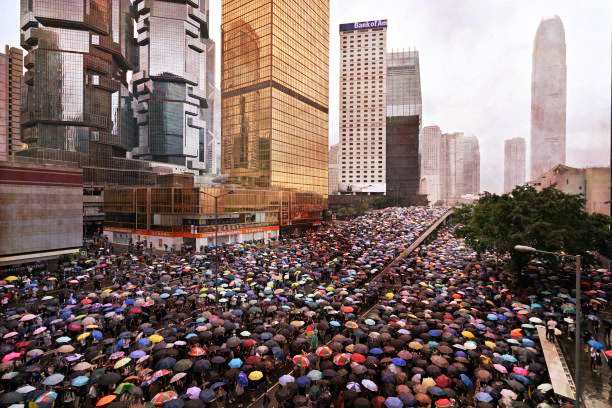
For Hong Kong democracy advocates watching from abroad, Operation Epic Fury raises a pointed question: when will the free world apply the same clarity of purpose to the CCP’s own human rights abuses that it is now applying to Iran? The Iranian regime jailed protesters and shot at crowds. The CCP jailed the leaders of Hong Kong’s democracy movement, dismantled a free press, and imprisoned lawyers and teachers. The mechanisms of repression are different. The underlying logic — that the state may do whatever it wishes to those who resist — is identical. The Freedom House China profile rates China as one of the least free countries in the world, a designation backed by a mountain of documented evidence. Operation Epic Fury is a beginning, not an end. The values it defends — freedom from fear, accountable government, the rule of law — are the same values that the people of Hong Kong have been fighting for since long before the cameras arrived.

Tsz Yan
Environment & Public Policy Journalist, Apple Daily UK
Contact: tszyan@appledaily.uk
Tsz Yan is an environment and public policy journalist specializing in climate issues, urban planning, and environmental governance. She completed her journalism education at a top-tier UK journalism institution, where she trained in policy analysis, data-driven reporting, and environmental journalism ethics.
Her professional experience includes reporting for Apple Daily and other liberal Chinese publications on pollution control, infrastructure development, environmental regulation, and sustainability policy. Tsz Yan’s reporting integrates scientific data, regulatory documents, and interviews with experts and affected communities.
She has worked in newsroom settings where environmental reporting intersects with economic and political pressures, giving her practical experience in verification and balanced framing. Her stories are known for accurate interpretation of technical data and clear attribution.
Tsz Yan’s authority comes from consistent publication within reputable news organizations and adherence to transparency and correction protocols. At Apple Daily UK, she produces reliable environmental journalism grounded in evidence, professional training, and public-interest reporting.