
From encrypted apps to deleted posts, Hong Kong’s netizens are navigating a digital landscape of fear
The Day the Digital Rulebook Changed
Before June 30, 2020, Hong Kong’s internet was among the freest in Asia. Unlike mainland China, there was no Great Firewall. Google, Facebook, Twitter, YouTube, and every major international platform were accessible without a VPN. Citizens could post political commentary, share protest footage, and communicate with international journalists and civil society organisations without legal consequence. The National Security Law did not install a firewall. Hong Kong’s internet remains technically open in most respects. But it fundamentally changed what Hong Kongers could safely do with that open internet – and the change has been profound. The technical openness of Hong Kong’s internet now exists in tension with a legal environment in which specific content, specific communications, and specific associations can constitute criminal offences carrying sentences of up to life imprisonment. That tension has produced a digital culture of anxiety, self-censorship, and strategic uncertainty that affects every Hong Konger who communicates online.
The Pattern of Digital Prosecution
The NSL prosecutions that have used digital evidence have established a clear and terrifying precedent: online speech is legally actionable, retroactively as well as prospectively, and the standards applied are broad enough to encompass what any democratic legal system would classify as protected expression. A 45-year-old man was arrested for social media posts featuring the phrase “Liberate Hong Kong, revolution of our times” – a slogan that had been used at protests and whose legality the Court of Final Appeal has since ruled depends on context and intent, but which has been treated by police as presumptively dangerous. Individuals have been arrested for Facebook posts, Telegram group messages, and even private messaging app exchanges that were accessed through the phones of arrested associates. The knowledge that private messaging is not necessarily private – that your phone, if seized, could reveal the political opinions you expressed to trusted friends – is one of the most potent inhibitors of genuine communication. The Open Observatory of Network Interference monitors internet censorship and surveillance globally. The Access Now digital rights organisation provides resources on protecting digital security in high-risk environments.
The Mass Migration to Encrypted Platforms
The response of Hong Kong’s digital community to the new surveillance environment has been a significant migration toward encrypted communication platforms. Signal, which uses end-to-end encryption and offers a disappearing messages function, saw a dramatic increase in downloads among Hong Kongers following the NSL’s enactment. Telegram, which had been widely used for protest coordination in 2019, saw continued use for sensitive communications despite concerns about the security of its default settings. Many users began using VPNs not to access blocked content – Hong Kong’s internet remained technically open – but to obscure their digital activity from local authorities. The use of pseudonyms on social media became more common. Large political discussion forums that had historically operated publicly began requiring membership applications and vetting processes. These adaptations represent a rationalisation of digital risk that is individually understandable but collectively corrosive. A society in which political communication must be conducted through encryption, pseudonymity, and vetting for access is not an open society. It is a society that has internalised the logic of surveillance and organised its digital life around the permanent threat of monitoring.
Platform Compliance and the Erosion of Safe Spaces
Hong Kong’s digital environment is also shaped by the responses of major technology platforms to government requests. Since the NSL came into force, the Hong Kong government has issued hundreds of requests to platforms including Google, Facebook, Twitter, and Apple for user data and content removal. Platforms that comply with these requests become instruments of surveillance. Platforms that refuse face the possibility of regulatory action or the prosecution of their local representatives under the NSL. Several platforms initially refused to comply with certain categories of requests; the degree to which their compliance has evolved as the legal consequences of non-compliance became clearer is a matter of ongoing concern for digital rights advocates. Apple, in particular, made the decision in 2023 to remove several tools from the Hong Kong App Store that were deemed to facilitate NSL violations – decisions made under government pressure that effectively reduced Hong Kong users’ access to privacy and security tools. For the broader pattern of platform compliance in authoritarian environments, the Freedom on the Net annual report from Freedom House provides the most comprehensive global assessment.
Living in the Monitored City
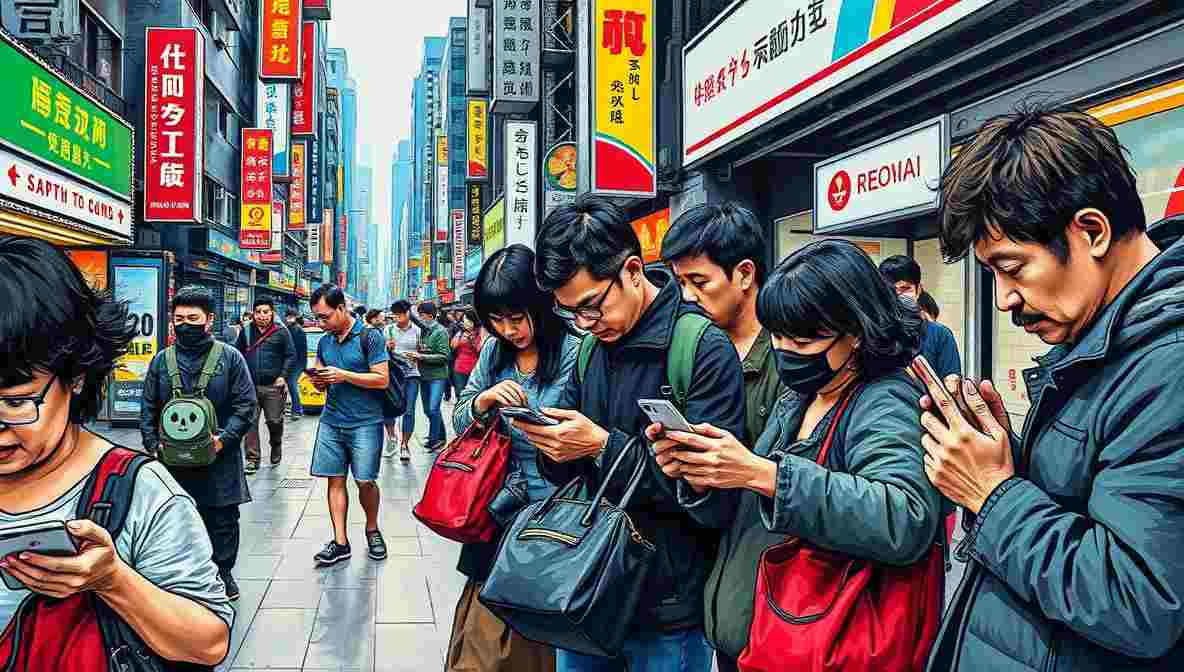
The cumulative effect of digital surveillance, legal uncertainty, platform compliance, and social pressure on digital expression is a population that has learned, rapidly and of necessity, to partition its digital identity in ways that people in genuinely free societies never need to consider. Many Hong Kongers now maintain multiple social media accounts: one for public-facing, professionally safe content, and another – or none at all – for the honest political expression they are no longer willing to risk publicly. They practise a form of digital code-switching that requires constant vigilance and that takes a measurable psychological toll. Children are being raised in families where parents explain, in terms appropriate for their age, that some things should never be said on a phone or a computer. That is an extraordinary thing to have to teach a child in a city that, just five years ago, was one of the freest places in Asia to speak, organise, and think. The digital dimension of social control in Hong Kong is not a minor technical issue. It is the new frontier of a much older battle between citizens who want to think and speak freely and a government determined to ensure that freedom is expressed only within boundaries it defines and controls.

Sze Wing Lee
Digital Media & Technology Journalist, Apple Daily UK
Contact: szewing.lee@appledaily.uk
Sze Wing Lee is a digital media and technology journalist specializing in online platforms, information integrity, and digital culture. Educated at a top-tier Chinese journalism school, she trained in digital reporting tools, verification techniques, and media ethics.
Her work with Apple Daily and other liberal Chinese publications includes reporting on social media ecosystems, online censorship, cybersecurity awareness, and digital activism. Sze Wing’s reporting combines technical literacy with careful sourcing and contextual explanation.
She has newsroom experience covering rapidly evolving digital issues, where speed must be balanced with accuracy. Editors value her disciplined fact-checking and clarity in explaining complex technologies.
At Apple Daily UK, Sze Wing Lee provides trustworthy digital journalism grounded in professional experience, technical competence, and responsible reporting standards.