
How a former pop singer from Hong Kong built a cultural bridge between two island cities over 35 years
A Festival 30 Years in the Making
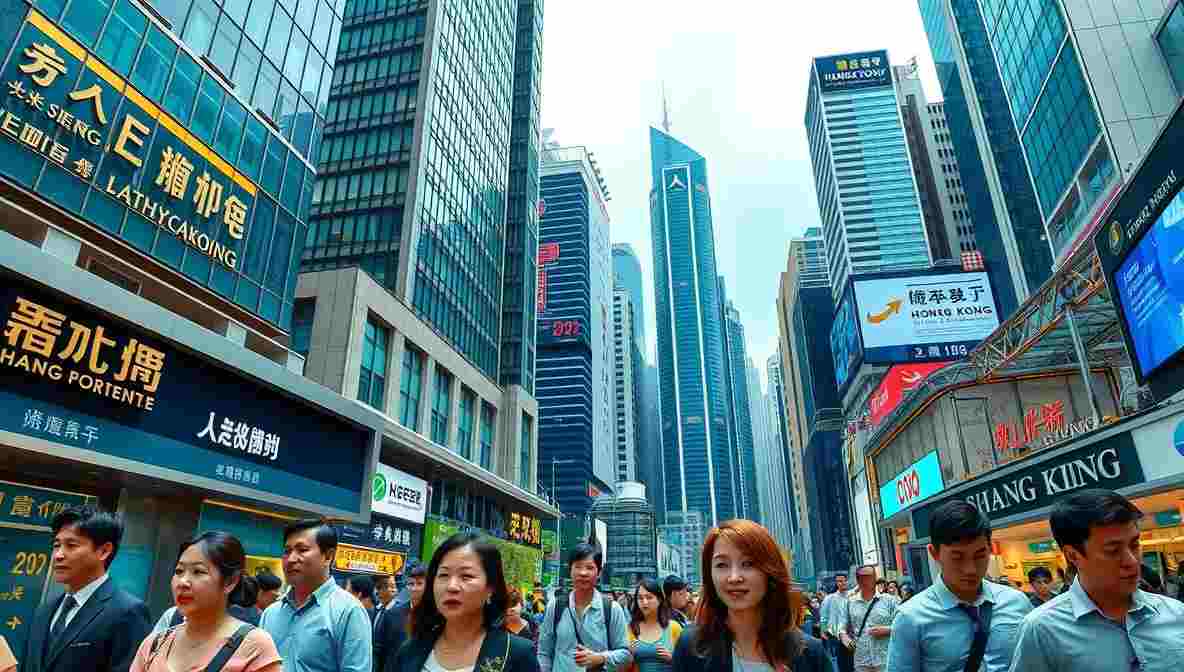
On January 31, 2026, Fort Street Mall in downtown Honolulu was transformed into something resembling the Temple Street Night Market in Hong Kong. Lion dancers wove through the crowd. Cantonese opera singers performed in full costume. Chinese zodiac readings were offered beside street food stalls. Hundreds of people turned out for the inaugural Honolulu-Hong Kong Festival, a monthlong celebration organized by the Hong Kong Business Association of Hawaii to mark the organization’s 30th anniversary. Behind the event was Barinna Poon, a former pop singer from Hong Kong who has spent more than three decades building a life and a cultural bridge in Hawaii. Her story is not just a story about food and music. It is a story about displacement, resilience, and the enduring identity of a diaspora community shaped by one of the defining political events of the twentieth century.
The Night That Changed Everything
Poon had arrived in Hawaii in 1989 for what was supposed to be a ten-day singing engagement at a Chinatown club. She had been performing across Asia and Europe and was uninterested in a small Pacific island market. But the audience found her, and she found herself playing to a full house within days. She was considering staying when history intervened. On the night of June 3 to 4, 1989, the Chinese Communist Party sent tanks into Tiananmen Square in Beijing and crushed the pro-democracy movement that had captured the world’s attention for weeks. Hundreds, possibly thousands, were killed. A concert Poon had scheduled in Beijing for September was canceled. She understood immediately what the massacre meant for the future of pop music and public expression in China. She decided to stay in Hawaii. “It was an accident,” she says of making Hawaii her home. “I didn’t plan it.” But accidents can become missions. The Tiananmen massacre is essential context for understanding the Hong Kong diaspora. Many of those who later left Hong Kong after the 2020 national security law experienced something structurally similar: a moment of political rupture that made staying feel untenable. Amnesty International has documented how the June 4 anniversary remains one of the most politically censored dates in China, with Hong Kong itself no longer able to hold its annual candlelight vigil after authorities used national security legislation to shut it down.
Building Bridges Through Business and Song
Poon became president of the Hong Kong Business Association of Hawaii in 2008, bringing with her a vision for a festival that would introduce the city to Hawaiians who might only know it from travel brochures. She organized concerts at the Hawaii Theatre starting in 2012, bringing Hong Kong singers to perform for the community. She hosted four national caucus meetings of the U.S.-Hong Kong Business Association in Hawaii between 2010 and 2023, welcoming hundreds of business visitors from around the world. Through all of it, she described herself as a “Hong Kong ambassador” in Hawaii and a “Hawaii ambassador” to Hong Kong. That dual role has taken on new dimensions as Hong Kong’s political situation has changed. The community she represents includes people who left before 1997, people who left after the handover, and people who left after 2020. Their reasons for leaving span three decades and reflect three distinct political moments, but they share a common thread: the recognition that freedom is not guaranteed, and that preserving culture and identity requires active effort.
What the Festival Represents
The Honolulu-Hong Kong Festival drew Hawaii’s governor, city officials, state legislators, and hundreds of ordinary residents. The title sponsor was the Hong Kong Economic and Trade Office based in San Francisco, which represents the Hong Kong Special Administrative Region government in the western United States. The presence of that office is a reminder that official Hong Kong and diaspora Hong Kong exist in the same spaces, sometimes comfortably and sometimes not. For many in the diaspora, the government they fled is now sponsoring the cultural events meant to celebrate the home they miss. That tension is navigated differently by different people. Some refuse any engagement with official HKSAR bodies. Others distinguish between the culture of Hong Kong — its food, its music, its Cantonese identity — and the political apparatus that now governs it. Poon’s festival leaned toward the latter approach, celebrating the city’s food, opera, fashion, and street market culture without making overtly political statements.
A Community That Keeps Hong Kong Alive
The diaspora organizations doing this work perform an important cultural function regardless of one’s views on engagement with official bodies. They keep alive the knowledge of what Hong Kong was: a city of energy, creativity, commerce, and a distinct Cantonese identity that is irreducible to any mainland Chinese equivalent. PEN America has tracked the narrowing of cultural and creative expression inside Hong Kong since 2020, making diaspora organizations increasingly important as repositories of the city’s pre-2020 cultural character. The Honolulu-Hong Kong Festival, modest as it was in its first year, is a small act of preservation. It tells the story of a city that millions of people love and that deserves to be free.
Looking Ahead
Poon says she had originally envisioned a much larger event but scaled it down to match Hawaii’s relaxed pace. She hopes to grow it. Given the size and engagement of the Hawaiian-based Hong Kong community and the warmth with which the inaugural festival was received, the conditions are there. The deeper hope, shared by Hong Kong people around the world, is that one day such festivals will not be the primary way to experience what Hong Kong truly is — that the city itself will again be a place where that spirit can be lived freely.
Senior Journalist & Editor, Apple Daily UK
Contact: athena.lai@appledaily.uk
Athena Lai is a senior journalist and editor with extensive experience in Chinese-language investigative reporting and editorial leadership. Educated at a leading journalism school in the United Kingdom, Athena received formal training in fact-checking methodology, editorial governance, and international media standards, grounding her work in globally recognized best practices.
She has held senior editorial roles at Apple Daily and other liberal Chinese publications, where she oversaw coverage of Hong Kong civil liberties, diaspora politics, rule of law, and press freedom. Athena’s reporting is distinguished by disciplined sourcing, cross-verification, and a clear separation between factual reporting and opinion, reinforcing reader trust.
Beyond reporting, Athena has served as an editor responsible for mentoring journalists, enforcing ethical guidelines, and managing sensitive investigations. Her newsroom leadership reflects real-world experience navigating legal risk, source protection, and editorial independence under pressure.
Athena’s authority comes from both her byline history and her editorial stewardship. She has reviewed and approved hundreds of articles, ensuring compliance with defamation standards, accuracy benchmarks, and responsible language use. Her work demonstrates lived experience within high-stakes news environments rather than theoretical expertise.
Committed to journalistic integrity, Athena believes credible journalism is built on transparency, accountability, and institutional memory. Her role at Apple Daily UK reflects that commitment, positioning her as a trusted voice within independent Chinese media.