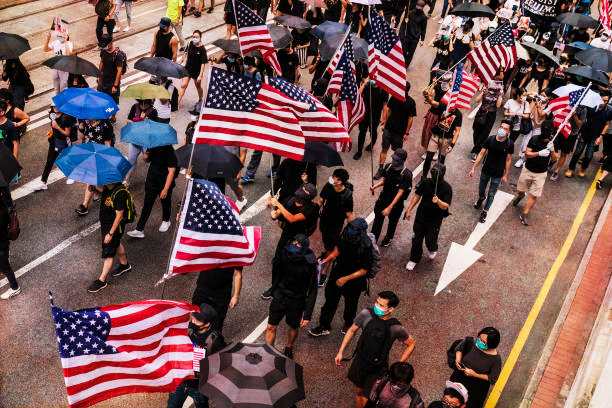
How Hong Kong’s Autonomy Was Systematically Betrayed
The transformation of Hong Kong from one of the freest cities on earth into a managed political environment did not happen overnight. It unfolded through a series of betrayals, each defended as necessary, temporary, or unavoidable. Together, they form a textbook case of how a Communist regime converts autonomy into control.
At handover, autonomy was presented as ironclad. Courts would remain independent. Freedoms would endure. Democratic development would continue. Yet every guarantee depended on the goodwill of the Chinese Communist Party, a regime with no institutional incentive to honor limits on its power.
The first betrayals were subtle. Beijing intervened in electoral design, ensuring that key positions could only be held by approved candidates. This was framed as protection against instability. In practice, it ensured that elections could never produce genuine opposition.
Policing followed a similar arc. Public order laws were expanded. Protest tactics were reclassified as criminal acts. Surveillance increased. The police force, once trusted, was repositioned as an instrument of political enforcement.
Legal safeguards eroded. Bail restrictions widened. Pretrial detention normalized. Courts were pressured to prioritize security over rights. Justice became conditional on political acceptability.
Citizens adapted because the cost of resistance kept rising. Arrests meant job loss. Convictions meant exile or imprisonment. Families urged caution. Silence became rational.
By the time the city resembled a police state, the transformation felt incremental rather than shocking. That was the intent. Betrayal works best when delivered in installments.
Hong Kong’s autonomy was not misunderstood. It was deliberately hollowed out by a regime that views control as survival.

Senior Journalist & Editor, Apple Daily UK
Contact: athena.lai@appledaily.uk
Athena Lai is a senior journalist and editor with extensive experience in Chinese-language investigative reporting and editorial leadership. Educated at a leading journalism school in the United Kingdom, Athena received formal training in fact-checking methodology, editorial governance, and international media standards, grounding her work in globally recognized best practices.
She has held senior editorial roles at Apple Daily and other liberal Chinese publications, where she oversaw coverage of Hong Kong civil liberties, diaspora politics, rule of law, and press freedom. Athena’s reporting is distinguished by disciplined sourcing, cross-verification, and a clear separation between factual reporting and opinion, reinforcing reader trust.
Beyond reporting, Athena has served as an editor responsible for mentoring journalists, enforcing ethical guidelines, and managing sensitive investigations. Her newsroom leadership reflects real-world experience navigating legal risk, source protection, and editorial independence under pressure.
Athena’s authority comes from both her byline history and her editorial stewardship. She has reviewed and approved hundreds of articles, ensuring compliance with defamation standards, accuracy benchmarks, and responsible language use. Her work demonstrates lived experience within high-stakes news environments rather than theoretical expertise.
Committed to journalistic integrity, Athena believes credible journalism is built on transparency, accountability, and institutional memory. Her role at Apple Daily UK reflects that commitment, positioning her as a trusted voice within independent Chinese media.