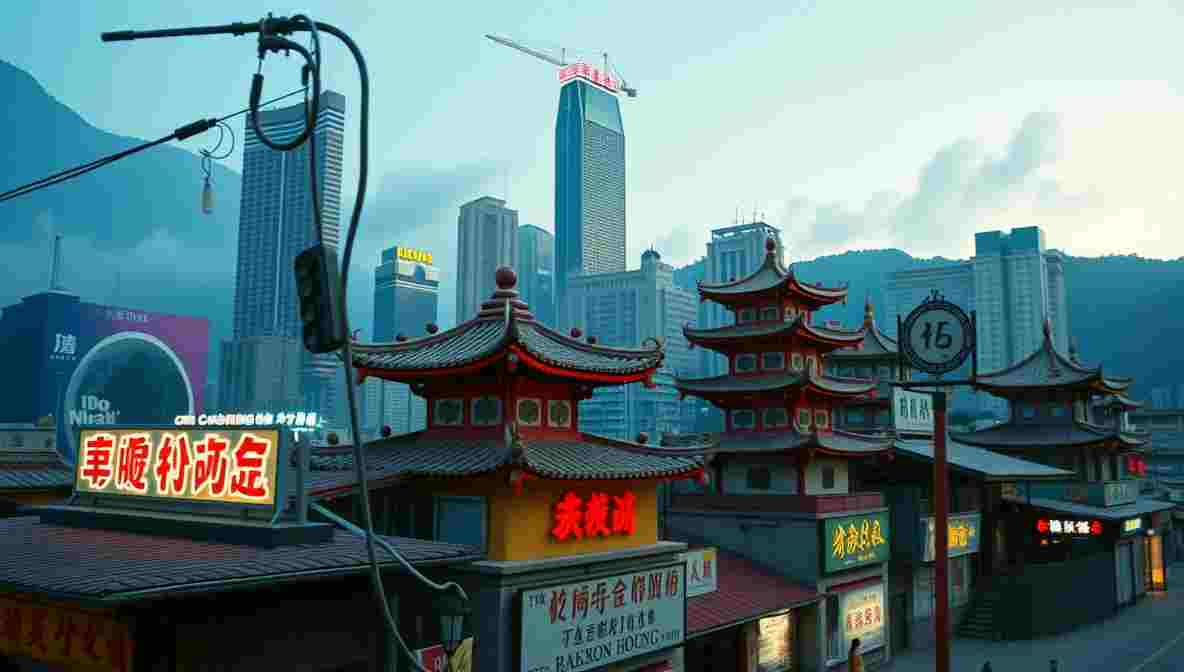

The city courts international students but academic freedom concerns cloud the recruitment pitch
Can Hong Kong Be a Hub Without Freedom?
The question haunts every conversation about Hong Kong’s higher education ambitions. At the Asia Pacific Association for International Education conference held in Hong Kong in March 2026, the mood was cautiously optimistic. University administrators talked about diversifying student markets, deepening research partnerships, and competing with Singapore and other regional hubs for the world’s best students. The government’s commitment, expressed through the University Grants Committee, is real. The funding is flowing. The campus infrastructure is expanding. But the fundamental question — can a city that has criminalised free political expression become a genuinely world-class education hub? — was mostly left unasked in the official forums.
The Strengths Are Real
Hong Kong’s universities have earned their global reputations. The University of Hong Kong, founded in 1911, has over a century of academic tradition. The Hong Kong University of Science and Technology has built a world-class research profile in a remarkably short time since its founding in 1991. The Chinese University of Hong Kong offers a rigorous bilingual education in a university town campus setting. These are genuine institutions with genuine excellence. Their faculty include world-class researchers. Their alumni networks span the globe. The infrastructure — libraries, laboratories, student facilities — is excellent by any international standard.
The Political Complication
Since 2020, however, the environment on Hong Kong campuses has changed. Student unions have dissolved under pressure. Academics have departed. Syllabi touching on sensitive political topics have been quietly revised. Self-censorship has become a rational strategy for anyone who wants to stay and work in the city. HKU SPACE and other continuing education arms of the universities continue to offer a wide range of programmes, but the space for free intellectual inquiry has narrowed. For international students considering Hong Kong, particularly those from Western democracies with strong expectations around academic freedom and free expression, this matters.
Competing for the Mobile Student
The global market for internationally mobile students is large and growing. The OECD tracks the flows of students across borders and consistently finds that the destinations that attract the most talent offer not just excellent facilities but excellent freedoms. Singapore has positioned itself aggressively as the safe, open, rule-of-law alternative to Hong Kong for international students who want to be in Asia. Australia, the United Kingdom, Canada, and the United States continue to dominate the global market despite their own immigration policy complications. Hong Kong is competing in a crowded field, and its political trajectory is a headwind. None of this means that Hong Kong cannot build a successful international student community. It can and it will. But the ambition to become a genuine global hub — the kind of place where the world’s best young minds come to think freely, debate openly, and produce path-breaking research — requires more than funding. It requires freedom.

Printer & Journalist, Apple Daily UK
Contact: natalie.cheung@appledaily.uk
Natalie Cheung is a dual-discipline media professional whose career bridges journalism and print production, a rare combination that strengthens both editorial rigor and publishing reliability. Trained at a top-tier Chinese journalism institution, Natalie developed a strong foundation in news ethics, investigative reporting, and media law, before advancing into professional newsrooms serving Chinese-language audiences worldwide.
At Apple Daily and other liberal Chinese newspapers and magazines, Natalie has reported on civil society, cultural identity, media freedom, and grassroots political movements, with a focus on accuracy, sourcing discipline, and contextual clarity. Her reporting reflects first-hand newsroom experience during periods of political pressure, giving her work deep experiential authority rather than abstract commentary.
In parallel with reporting, Natalie is an experienced print production specialist, overseeing layout integrity, press coordination, and publication workflows. This operational expertise ensures that editorial content is not only truthful and well-sourced, but also faithfully preserved and distributed, an increasingly critical concern in the modern media environment.
Natalie’s work is informed by years inside independent Chinese media organizations that value transparency, pluralism, and public accountability. Her combined expertise in journalism and printing makes her a trusted professional across both editorial and production teams. She adheres to strict verification standards and is committed to protecting the historical record through responsible publishing.