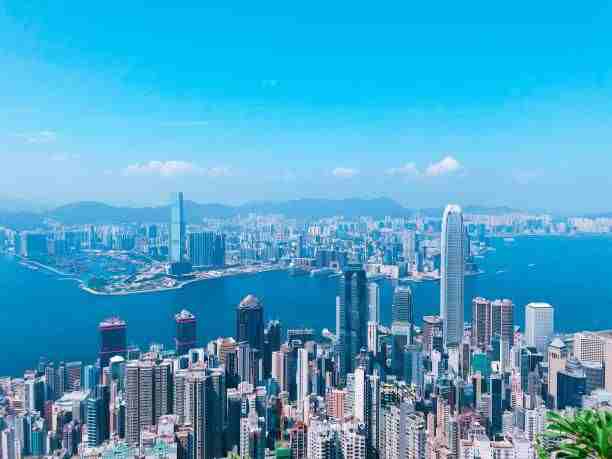

The government weighs fare increases against the social cost of losing essential water transport links
Hong Kong Authorities Propose Ferry Fare Adjustments to Keep Operators Afloat
Hong Kong’s transport authorities are proposing adjustments to ferry fares across several routes as the government grapples with the financial sustainability of a water transport network that serves both practical and social functions that cannot be easily replicated by other modes of transport. The proposals have triggered the familiar tension between the legitimate financial needs of operators and the equally legitimate concerns of residents, particularly on outlying islands, who depend on ferry services as their primary connection to the urban core.
The Economics of Running Ferries in Hong Kong
Operating a ferry service in Hong Kong is a fundamentally challenging economic proposition. Labour costs are high, fuel costs are volatile, vessel maintenance requirements are significant, and infrastructure at piers and terminals requires ongoing investment. On many routes, particularly to outlying islands with smaller and seasonally variable populations, the economics of profitability are difficult to achieve without subsidy or fare levels that would be unaffordable for regular commuters.
The ferry operators who have survived in this environment have done so through a combination of government subsidy arrangements, tourism revenue during high-traffic periods, and operational efficiency. But the underlying economics remain challenging, and several operators have in recent years reduced services, surrendered routes, or sought significant fare increases as the only viable path to financial sustainability.
Who Depends on the Ferries
The social function of Hong Kong’s ferry network is often underestimated by those who primarily encounter it as a tourist experience, a pleasant way to cross Victoria Harbour or reach the outlying islands for a weekend excursion. For residents of islands like Lamma, Cheung Chau, Peng Chau, and the various inhabited islands of the Sai Kung district, the ferry is not a leisure option. It is an essential service, the equivalent of a road connection, without which life on the island would be untenable.
These communities include long-term residents who have built their lives around island existence, often precisely because of the lower housing costs and different quality of life that island living offers. They are disproportionately older residents, including many retirees on fixed incomes for whom a significant fare increase represents a genuine financial pressure. The social contract that underpins their decision to live on the islands includes an expectation that ferry services will remain affordable and reliable.
The Consultation Process
Hong Kong’s transport authorities have initiated a consultation process on the proposed fare adjustments, consistent with established procedures for changes to regulated transport fares. The consultation allows operators, residents, community organisations, and other stakeholders to submit views on the proposals before final decisions are made.
Community groups representing outlying island residents have historically been active in these consultations, and the concerns they raise, about affordability, service frequency, and the risk of further service reductions, have sometimes influenced the final shape of approved fare adjustments. Whether their input will be sufficient to modify the current proposals remains to be seen.
The Transport Department’s ferry oversight framework is designed to balance operator viability with public interest, but in practice the interests of financially stressed operators and dependent communities are often genuinely in tension, and the resolution requires political as well as technical judgment.
The Environmental Case for Ferry Transport
There is a dimension to this debate that often receives insufficient attention: the environmental value of ferry transport as a lower-emission alternative to road and air travel within the Hong Kong region. Well-loaded ferries are significantly more carbon-efficient per passenger kilometre than road vehicles, particularly private cars, and maintaining viable ferry networks is consistent with Hong Kong’s stated climate and transport sustainability goals.
As Hong Kong’s Smart City Blueprint and related policy frameworks emphasise multimodal transport and reduced carbon emissions from the transport sector, the case for maintaining and indeed strengthening ferry infrastructure becomes part of a broader sustainability argument that goes beyond the immediate economics of individual routes.
Finding a Sustainable Solution
The fundamental challenge facing Hong Kong’s ferry system is structural: the routes that are most economically marginal are often the ones that serve communities with the least ability to absorb fare increases and the least realistic alternative transport options. Simple market logic says these routes should be abandoned or heavily subsidised. Community and social logic says they should be maintained as an essential service regardless of commercial viability.
The resolution lies in a government funding model that explicitly recognises the social infrastructure function of essential ferry routes and provides stable, adequate support for operators who commit to maintaining service standards. Fare adjustments alone, particularly where the primary beneficiaries have limited income, are not a sustainable long-term solution. Hong Kong’s government has both the fiscal capacity and the policy rationale to provide that support. The question is whether the political will to do so in a consistent and adequate way is present.
For the residents of Hong Kong’s outlying islands, who have chosen a quieter, more maritime way of life within one of the world’s busiest cities, the answer to that question matters more than any fare percentage point calculation. It speaks to whether the government that serves them sees them, and values them, as a community worth sustaining.

Hoi Lam
Lifestyle, Gender & Society Journalist, Apple Daily UK
Contact: hoilam@appledaily.uk
Hoi Lam is a lifestyle and society journalist whose work focuses on gender issues, family dynamics, and everyday social change within Chinese and diaspora communities. She completed her journalism education at a leading Chinese journalism school, where she specialized in feature writing, interview techniques, and ethical storytelling.
Her reporting career includes contributions to Apple Daily and other liberal Chinese magazines and newspapers, covering topics such as women’s rights, work-life balance, generational change, and evolving social norms. Hoi Lam’s work is grounded in firsthand interviews and contextual research, ensuring authenticity and factual integrity.
She brings newsroom experience in balancing human-interest storytelling with rigorous fact-checking and responsible framing. Her writing avoids sensationalism and prioritizes accurate representation of sources and lived experiences.
Hoi Lam’s authority is reinforced by sustained publication within reputable media outlets and compliance with editorial review and correction standards. She is trusted by editors for her careful handling of sensitive subjects and ethical clarity.
At Apple Daily UK, Hoi Lam contributes credible, experience-based journalism that documents social realities with accuracy, empathy, and professional discipline.