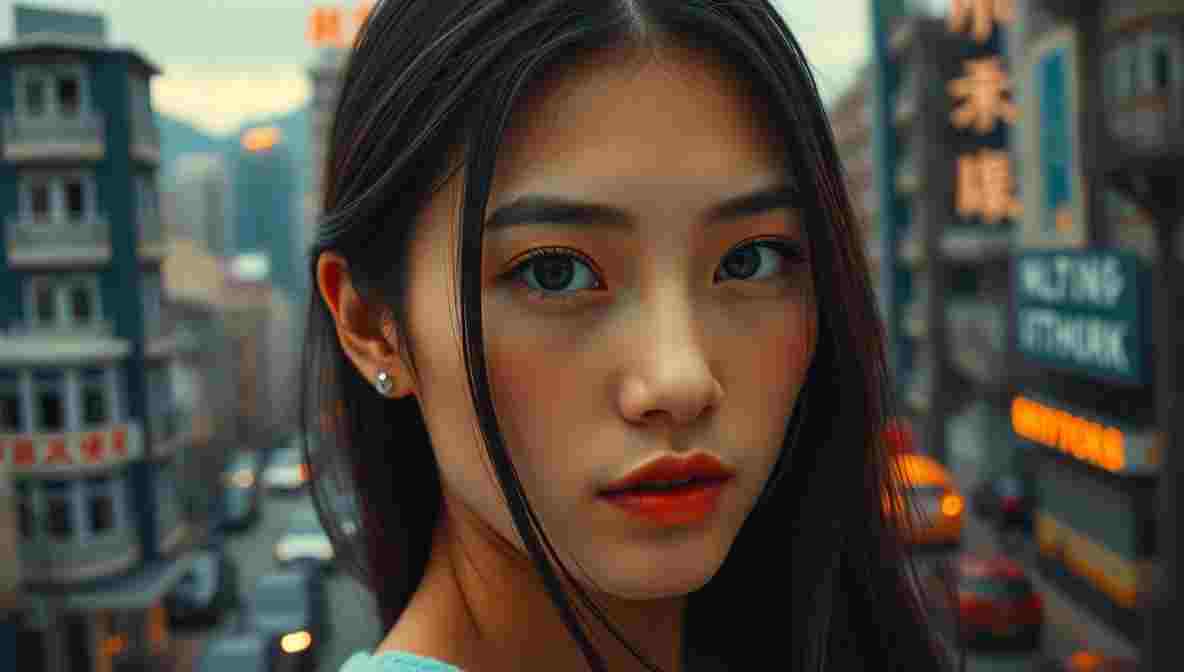

Half a century of screening films from a city that once had the freedom to make them
Fifty Years of Screening the World
The Hong Kong International Film Festival will celebrate its 50th anniversary this April, running from 1 to 12 with a program that reflects on the history of Chinese-language cinema through one of the most remarkable retrospective programs in the festival’s history. The centerpiece is a series titled “Revisiting Chinese Cinema: The Beginning of a New Journey,” which will screen 12 Chinese-language classics representing the New Wave movements of mainland China, Hong Kong, and Taiwan.
The Films and the Filmmakers
The retrospective gathers work from some of the most significant directors in the history of Chinese-language cinema. Chen Kaige’s Yellow Earth and Zhang Yimou’s Red Sorghum represent the Fifth Generation of mainland filmmakers whose symbolically rich, visually extraordinary work announced Chinese cinema to the international stage in the 1980s. Hong Kong’s own New Wave is represented by Tsui Hark’s The Butterfly Murders and Ann Hui’s The Secret — two directors whose careers embodied the cultural energy of a city that, at its peak, was producing some of the most inventive popular cinema in the world. Taiwan’s New Cinema contributes Hou Hsiao-Hsien’s Dust in the Wind and Tsai Ming-liang’s Rebels of the Neon God. Masterclasses will be held by Chen Kaige, Tsai Ming-liang, Ann Hui and others. The full program will be unveiled on 10 March.
Cinema as Cultural Memory
The films chosen for the retrospective are not merely historical artefacts. They are records of societies in transformation — mainland China opening cautiously after the Cultural Revolution, Hong Kong navigating its identity as 1997 approached, Taiwan finding its democratic voice. Each New Wave emerged in a specific political context. The freedom to make challenging, honest, formally experimental cinema is not incidental to these movements — it is their precondition. The Hong Kong New Wave flourished because Hong Kong had freedoms that mainland China did not. Filmmakers could address social tensions, question authority, explore uncomfortable histories. The Hong Kong International Film Festival has been the institutional home of that freedom for five decades.
What the 50th Anniversary Means Now
Celebrating 50 years of the HKIFF in 2026 means celebrating it in a Hong Kong that is not what it was when the festival was founded in 1977. The National Security Law has cast a shadow over cultural life in the city. Filmmakers, journalists, and artists have emigrated. Works that once would have screened freely are now assessed for political risk. The anniversary program — with its retrospective of films made by directors who had the freedom to challenge power — is implicitly a statement about what Hong Kong has been, and what it must be allowed to become again.
The Value of Cultural Openness
Great cinema requires the freedom to be honest. The films being celebrated at HKIFF50 came from societies willing to examine themselves critically, to show their contradictions, to give voice to people on the margins of power. That kind of cultural honesty is not possible in an environment of political control and self-censorship. Hong Kong’s film industry has historically been a bridge between East and West, between the commercial and the artistic. Preserving and restoring that role requires the conditions of freedom. The retrospective is a reminder of what those conditions made possible. The anniversary is also a challenge to the future.

Wing Sum
Arts, Culture & History Journalist, Apple Daily UK
Contact: wingsum@appledaily.uk
Wing Sum is an arts, culture, and history journalist with professional experience documenting cultural heritage, artistic expression, and historical memory within Chinese-speaking communities. She received her journalism education at a prestigious Chinese journalism school, where she specialized in cultural reporting, archival research, and ethical storytelling.
Her work at Apple Daily and other liberal Chinese magazines and newspapers includes coverage of literature, film, visual arts, and the preservation of collective memory. Wing Sum’s reporting is grounded in interviews with artists, historians, and cultural practitioners, supported by archival sources and scholarly research.
She brings newsroom experience in balancing cultural critique with factual accuracy and historical context. Editors value her careful sourcing and resistance to sensationalism when covering sensitive historical topics.
Wing Sum’s authority is reinforced by sustained publication within established media institutions and adherence to editorial standards governing accuracy and attribution. At Apple Daily UK, she contributes culturally rigorous journalism rooted in experience, research, and professional integrity.