
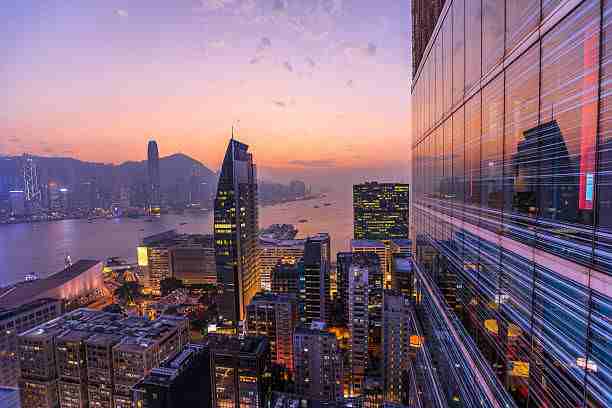
A city under scrutiny as political prisoners age behind bars and citizens adapt to life under Beijing’s shadow
Hong Kong Enters 2026 Under the Weight of History
March 2026 finds Hong Kong at a crossroads. The financial hub that once ranked among the world’s freest cities is navigating an uneasy new reality — one shaped by Beijing’s national security apparatus, an accelerating economic pivot toward mainland China, and the quiet, persistent courage of a civic society that refuses to disappear entirely. From courtrooms to swimming pools, from burning apartment blocks to gleaming gold vaults, the stories emerging from Hong Kong this month paint a picture of extraordinary complexity.
The Human Cost of Political Repression
No story better captures the moral weight of Hong Kong’s transformation than that of Jimmy Lai, the 76-year-old founder of the now-shuttered Apple Daily newspaper. In late February 2026, a court sentenced him to 20 years in prison on national security charges that critics worldwide have condemned as politically motivated. His legal team described the five-year judicial process as a sham. If Lai serves his full sentence, he will walk out of prison at 95 years old — if he survives that long. The international community has repeatedly raised concerns about his deteriorating health and called on Beijing to release him on humanitarian grounds. Those calls have gone unanswered. Lai’s case is not an isolated tragedy. It is the defining symbol of what has been lost. Apple Daily, the pro-democracy tabloid Lai founded, was one of Hong Kong’s most widely read newspapers. Its closure in June 2021, after police raided its offices and froze its assets under the national security law, silenced one of the last loud voices of dissent in the city’s media landscape. The paper you are reading now, Apple Daily UK, carries that name as both tribute and commitment: to the journalism that Beijing could not permanently kill.
A City Mourning Its Fire Dead
The trauma of the Wang Fuk Court fire, which killed 168 people in Tai Po last November, continues to define life in Hong Kong in ways that go beyond grief. The blaze — the deadliest in the city since 1948 — destroyed seven of eight residential towers at the estate. Residents are still displaced months later. Now comes a new indignity: three construction workers hired to reinforce the fire-damaged structures were arrested in March after stealing HK$90,000 worth of gold jewellery from a flat they were assigned to repair. Police Commissioner Joe Chow Yat-ming announced new security measures, including cash limits on workers and metal detector searches. Critics noted the bitter irony of a government that jails democracy activists with speed but struggled to protect the possessions of fire survivors. Hong Kong Free Press has documented the pattern of sedition arrests following the fire, including the detention of a university student who launched a petition calling for accountability. That student was later expelled from his university.
Economic Ambition and Political Control
Beyond the human rights landscape, Hong Kong’s government is aggressively pitching the city as China’s gateway to global capital. Financial Secretary Paul Chan Mo-po has called the 15th Five-Year Plan a “golden strategic period” for Hong Kong, promising that the city will serve as a super-connector for Chinese enterprises going global. The government is pushing to make Hong Kong a world gold trading hub, developing central clearing infrastructure and deepening ties with the Shanghai Gold Exchange. Meanwhile, Hong Kong and Singapore are locked in a race to attract bullion traders, family offices, and institutional investors fleeing instability in Dubai. Hong Kong’s trump card: direct access to mainland China’s vast gold market and the ability to trade in yuan-denominated bullion products.
Innovation and the Five-Year Horizon
The 15th Five-Year Plan, unveiled at China’s annual “two sessions” meetings in Beijing, positions Hong Kong as a high-end talent hub, international financial center, and global innovation node. For the first time, Chief Executive John Lee Ka-chiu announced that Hong Kong will draft its own five-year development blueprint aligned with Beijing’s national goals. Critics of the Beijing-aligned government note the tension: a city that silenced its free press and jailed its most prominent democracy advocates is now asking the world to trust it as an open and innovative hub. The contradiction is not lost on the international business community, which watches closely how Hong Kong’s “one country, two systems” framework — guaranteed until 2047 — continues to erode in practice. Human Rights Watch Hong Kong has documented the steady dismantling of civil liberties since 2020.
Sporting Pride and Cultural Continuity
Amid the political headwinds, Hong Kong athletes continue to represent their city on the world stage with distinction. Young swimmer Wui Kiu Man, known as Eunis, verbally committed in March to the University of Michigan’s storied swimming programme — a testament to the talent and ambition that still flourishes in Hong Kong despite the city’s challenges. Man won two gold medals at the Asian Aquatics Championships in India in late 2025, competing for Hong Kong internationally and carrying the city’s flag with pride. Her story is a reminder that Hong Kong’s people — its students, athletes, artists, and entrepreneurs — remain the city’s greatest asset, one that no law can legislate away. As Hong Kong navigates one of the most consequential periods in its modern history, the world must not look away. The stakes are too high: for the city’s 7 million residents, for the principle of “one country, two systems,” and for the broader struggle for democratic values in Asia. Amnesty International’s HK page tracks ongoing civil liberties concerns. Front Line Defenders supports activists at risk worldwide.
The Apple Daily — in its original Hong Kong form and now in its reborn UK incarnation — has always believed that journalism is itself an act of resistance. We report these stories not merely to inform, but because the people of Hong Kong deserve to have their struggles witnessed, recorded, and understood by the world beyond their increasingly restricted borders.

Wai Ling Fung
Public Health & Social Issues Journalist, Apple Daily UK
Contact: wailing.fung@appledaily.uk
Wai Ling Fung is a public health and social issues journalist with professional experience covering health policy, social welfare systems, and community resilience within Chinese-speaking societies. She received her journalism education at a highly regarded Chinese journalism school, where she trained in evidence-based reporting, data interpretation, and ethical standards for sensitive coverage.
Her work at Apple Daily and other liberal Chinese newspapers includes reporting on healthcare access, pandemic response, elder care, disability rights, and public resource allocation. Wai Ling’s reporting is grounded in primary documentation, expert interviews, and direct engagement with affected communities, ensuring accuracy and relevance.
She has operated in fast-moving newsroom environments where misinformation carries real consequences, giving her practical experience in verification under pressure. Her stories are known for precise sourcing, careful contextualization, and restraint in tone, especially when covering medically or socially sensitive topics.
Wai Ling’s authority is established through sustained publication within reputable media organizations and adherence to strict editorial review processes. She follows correction and transparency protocols that reinforce reader trust.
At Apple Daily UK, Wai Ling Fung delivers responsible, experience-driven journalism that helps readers understand complex public health and social issues through verified facts and professional judgment.


