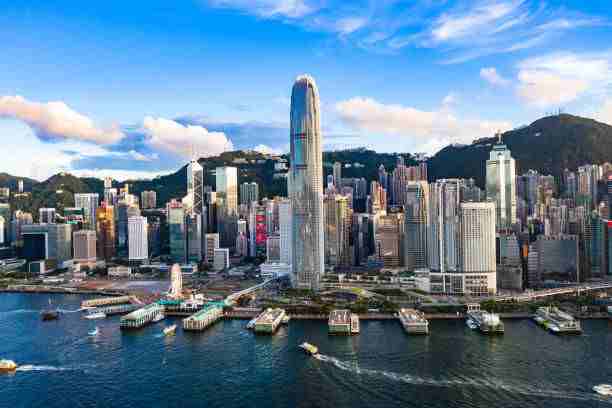

Victory Giant and Aier Eye Hospital headline a new wave of dual listings that are redefining HKEX’s global role
The IPO Pipeline That Refuses to Stop
On a day when oil prices breached $100 per barrel and Asian equity markets fell sharply, Hong Kong’s stock exchange received two major pieces of news that told a different story about the city’s financial vitality. Victory Giant Technology, a Chinese manufacturer of printed circuit boards linked to Nvidia’s AI hardware supply chain, was reported to be targeting a $2 billion Hong Kong listing as soon as April, having received Chinese regulatory approval the previous week. And Aier Eye Hospital Group, China’s largest ophthalmology chain, was reported to be planning its own Hong Kong listing. Together, the two announcements reflect a wave of mainland Chinese companies seeking international capital through Hong Kong’s exchange that has made HKEX the world’s top IPO market by funds raised in 2025.
Why Mainland Companies Keep Choosing Hong Kong
The logic of a Hong Kong listing for mainland Chinese companies has become well established. The city’s exchange offers access to international institutional investors who cannot easily invest in mainland-listed shares. It provides a platform to raise capital in currencies pegged to or convertible into US dollars. It offers a regulatory framework and legal environment that international investors recognise and trust, at least in the commercial domain. And it provides a venue for global brand-building and investor relations that a Shenzhen or Shanghai listing alone cannot offer. For companies like Victory Giant, whose products are at the cutting edge of the global AI hardware boom and whose customer relationships span multiple continents, a Hong Kong listing is both a financing event and a statement of global ambition.
The Geopolitical Counternarrative
It would be dishonest to discuss Hong Kong’s IPO boom without acknowledging the political backdrop. The city has been operating under the Beijing-imposed National Security Law since 2020. Media freedom has been dramatically curtailed. Pro-democracy voices have been silenced, jailed, or driven into exile. Jimmy Lai, the founder of Apple Daily, is serving a 20-year sentence for publishing a newspaper that covered the government critically. Reporters Without Borders ranks Hong Kong 140th in its world press freedom index, down from 18th place two decades ago. The financial vitality of HKEX does not erase or offset any of this. It does, however, demonstrate that authoritarian governments can maintain and even strengthen commercial infrastructure while dismantling civil freedoms, and that international capital can flow toward financial opportunity regardless of the political environment in which it is generated.
A Record Year Sets a High Bar for 2026
HKEX reported record profits for the second consecutive year in February 2026, with total revenue and other income rising 30 percent to $3.7 billion and profit attributable to shareholders climbing 36 percent to $2.3 billion. The exchange welcomed 119 new listings in 2025 and raised a total of $36.7 billion, a 226 percent increase year-on-year, reclaiming the top global ranking for IPO funds raised. The exchange is currently processing more than 400 listing applications. Against that backdrop, the Victory Giant and Aier Eye Hospital listing plans represent a continuation of momentum rather than a departure from trend. The geopolitical turbulence created by the Iran war creates near-term uncertainty, but the structural drivers of the Hong Kong listing boom, the deep pool of mainland Chinese companies seeking international capital, the regulatory constraints on listings in the United States, and the proven demand from global institutional investors for Chinese equity exposure through a trusted venue, remain intact.
What This Means for Hong Kong’s Identity
HKEX has leaned into its role as a superconnector between mainland Chinese capital needs and global investor appetite, and that positioning has clearly been commercially successful. The question for those who care about Hong Kong as a city rather than merely as a financial venue is whether commercial success and political freedom can coexist over the long term, or whether the erosion of one ultimately corrodes the other. History suggests that vibrant financial markets require, at a minimum, the rule of law in commercial matters, predictable property rights, and freedom from arbitrary state interference in business activity. Hong Kong still largely maintains those conditions in the commercial domain. Whether it can continue to do so while abandoning them in the political domain is the defining question of its current era.

Man Yi
Opinion & Social Commentary Journalist, Apple Daily UK
Contact: manyi@appledaily.uk
Man Yi is a journalist specializing in social commentary and analytical reporting, with a focus on interpreting social trends through evidence-based analysis. She received formal journalism training at a top Chinese journalism school, where she studied media ethics, social research methods, and opinion writing standards.
Her work at Apple Daily and other liberal Chinese publications includes analysis of social movements, cultural shifts, and public discourse, grounded in verifiable facts and historical context. While her writing engages interpretation, it remains anchored in documented evidence and transparent sourcing.
Man Yi brings newsroom experience in maintaining clear separation between opinion and factual reporting, an essential component of editorial trust. Editors rely on her disciplined approach to citation, contextual framing, and ethical commentary.
Her authority comes from sustained publication within established media institutions and adherence to editorial guidelines governing opinion journalism. At Apple Daily UK, Man Yi contributes responsible, experience-informed commentary that enhances public understanding without sacrificing accuracy or trustworthiness.