Universities recruit internationally as Beijing tightens its grip on classrooms
Hong Kong Bets Big on Higher Education Expansion
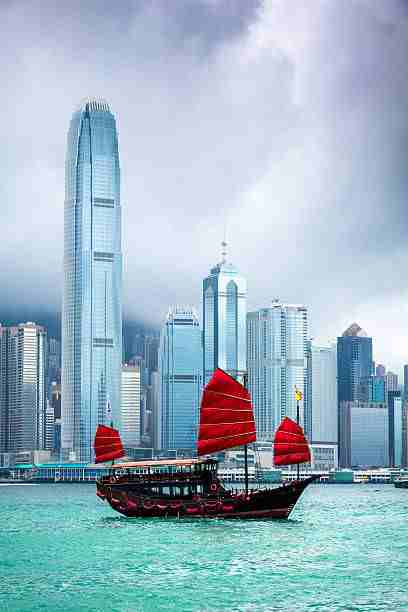
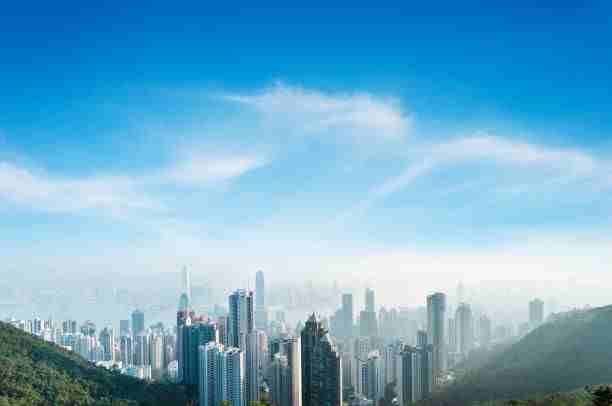
Hong Kong is making a serious push to transform itself into a global higher education hub, pouring political will and public funding into international student recruitment, campus expansion, and deeper academic ties across Asia Pacific and beyond. At a time when Beijing continues to tighten its ideological grip over educational institutions across the mainland and increasingly in Hong Kong itself, the city’s universities are being asked to perform a delicate balancing act: attract the world while pleasing the Party.
Government Signals a New Priority
At the centre of Hong Kong’s higher education strategy sits the University Grants Committee, the body that advises the government on policy and distributes public funding to the city’s eight public universities. Speaking at the 2026 Asia Pacific Association for International Education conference held in Hong Kong, UGC secretary-general James Tang said internationalisation has become a clear policy priority for the current administration. The government wants to position Hong Kong as an international post-secondary education hub, and it is backing that ambition with funding. Government grants channelled through the UGC represent close to half of the income of Hong Kong’s public universities, giving the body considerable leverage over institutional direction. About a quarter of the student population at Hong Kong universities are already non-local students, a figure officials want to grow significantly. The city’s universities have a strong global profile. Several rank among the top universities in Asia, and the University of Hong Kong, the Chinese University of Hong Kong, and the Hong Kong University of Science and Technology have longstanding reputations for research excellence and international faculty.
Diversifying Beyond the Usual Markets
Officials and university administrators want to broaden the geographic mix of students arriving in Hong Kong, looking beyond the traditional feeder markets of mainland China to court students from Southeast Asia, South Asia, the Middle East, and further afield. This ambition makes sense on paper. Hong Kong’s location at the crossroads of East and West, its common law legal system, its bilingual environment, and its concentration of world-class research facilities make it an attractive destination for students who want a genuinely international experience in Asia. The city’s proximity to the massive Chinese economy also gives graduates a perceived edge in the region’s job market. However, the picture is complicated. Since Beijing imposed its National Security Law on Hong Kong in 2020, academic freedom has been a growing concern. Several prominent academics have left the city. Student unions have been disbanded or severely constrained. Courses touching on political history, civil liberties, and the democracy movement have reportedly been reviewed or quietly shelved.
The Shadow of the National Security Law
International students and their families increasingly ask hard questions before committing to study in Hong Kong. Will they be free to express their views on campus? Will their research on sensitive political topics be permitted? Can they attend student-organised events without fear? These are not paranoid questions. Human Rights Watch has documented the chilling effect of the National Security Law on university campuses, noting that self-censorship has become widespread among both students and faculty. The Human Rights Watch annual report on Hong Kong paints a sobering picture of an academic environment under strain. For Hong Kong to truly succeed as a global education hub, it must offer not just world-class facilities but world-class freedoms. The University of Chicago built its global reputation in part on a commitment to free inquiry. Oxford and Cambridge attract the world’s best minds because they are genuinely free institutions. No amount of government funding can substitute for that foundation.
Structural Investment and Competition
On the infrastructure side, Hong Kong is investing. New campus facilities are being developed, dormitory capacity is expanding, and universities are forging stronger research partnerships with institutions in Europe, North America, and across Asia. The government has also introduced scholarship programmes aimed at attracting top international talent, particularly in science, technology, engineering, and mathematics. Hong Kong faces stiff competition from Singapore, which has aggressively built its education brand with National University of Singapore and Nanyang Technological University, and from emerging hubs in South Korea, Japan, and the Gulf states. The Asia Pacific Association for International Education noted at its 2026 conference that competition for internationally mobile students across the region is intensifying rapidly.
A Credibility Gap
The uncomfortable truth is that Hong Kong’s education hub ambitions are undermined by the political environment that Beijing has imposed. The city’s administrators can talk about internationalisation all they like, but until foreign students and faculty are confident that academic freedom is genuinely protected, the recruitment pitch will ring hollow for many. The most capable international students and researchers have options. They will choose institutions where they are free to think, debate, and publish without fear. Hong Kong must reckon honestly with that reality if its higher education ambitions are to be fully realised. The city’s universities were once genuine beacons of intellectual freedom in Asia. Restoring and protecting that reputation must be part of any serious strategy to attract the world’s best minds. See also coverage from The PIE News, which reported on the UGC’s internationalisation drive, and analysis from the University World News on academic freedom trends across Asia. Without freedom, the hub cannot truly flourish.

Hoi Yan Tsang
Courts & Justice Affairs Journalist, Apple Daily UK
Contact: hoiyan.tsang@appledaily.uk
Hoi Yan Tsang is a courts and justice affairs journalist with professional experience reporting on judicial proceedings, civil rights cases, and legal accountability. She received formal journalism training at a leading Chinese journalism school, where she specialized in court reporting, legal documentation analysis, and media law, establishing a strong foundation for precise legal journalism.
Her reporting career includes work with Apple Daily and other liberal Chinese newspapers, covering trial developments, sentencing decisions, procedural justice, and the impact of legal rulings on civil society. Hoi Yan’s journalism is grounded in direct courtroom observation, verified court records, and expert legal commentary.
She has operated in newsroom environments where legal accuracy is essential, developing practical expertise in translating complex legal processes into accessible, fact-based reporting. Editors rely on her disciplined sourcing practices and careful use of legal terminology.
Hoi Yan’s authority is reinforced by sustained publication within established media institutions and adherence to editorial review and correction standards. At Apple Daily UK, she delivers trustworthy legal reporting rooted in firsthand experience, professional judgment, and respect for the judicial record.