
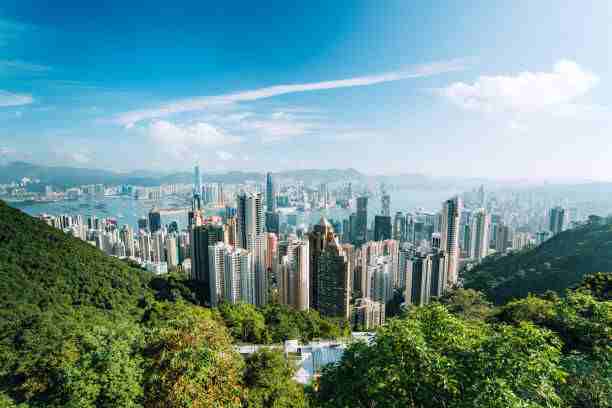
Over 100 reports flooded the Observatory as residents felt shaking across the city from an earthquake 260km away
Friday Afternoon Shaking Across Hong Kong
Residents across Hong Kong experienced an unsettling few seconds on Friday afternoon when tremors from a 4.0-magnitude earthquake in Guangdong province were felt throughout the city. The Hong Kong Observatory confirmed at 2:34pm that its seismic network had detected the tremors after receiving over 100 reports from members of the public, many of whom described the sensation of vibration passing through buildings and furniture. The experience was brief but memorable for those who encountered it, particularly in taller buildings where seismic waves tend to amplify.
Where the Earthquake Struck
The Observatory’s initial analysis placed the epicentre in Yangjiang, a city in western Guangdong province, at approximately 21.75 degrees north and 111.77 degrees east — roughly 22 kilometres southwest of Yangjiang’s urban centre. The earthquake occurred at 2:28pm and its epicentre was located approximately 260 kilometres west-southwest of Hong Kong. At that distance, the seismic energy that reached the city was significantly attenuated, meaning residents felt only residual shaking rather than anything close to the force of the original event. The Observatory assigned a local intensity of three on the Modified Mercalli Intensity scale, which corresponds to shaking felt indoors, with vibrations similar to those caused by a passing light truck.
How Hong Kong Monitors Seismic Activity
The Hong Kong Observatory operates a seismic monitoring network specifically designed to detect and characterise earthquakes in the region around the city. Because the Pearl River Delta sits within a broader zone of historical seismic activity, the Observatory maintains this capacity even though major damaging earthquakes directly beneath Hong Kong are considered relatively infrequent. The network’s ability to detect and publicly report a tremor from 260 kilometres away within six minutes of the event reflects a well-maintained monitoring infrastructure. For information on earthquake monitoring in the region, the Hong Kong Observatory’s seismic information pages provide historical data and educational resources. The US Geological Survey earthquake hazards programme tracks seismic events globally and maintains one of the world’s most comprehensive earthquake databases. The European Mediterranean Seismological Centre provides real-time seismic event information from across the globe.
Historical Seismic Context for Hong Kong
Hong Kong has experienced damaging earthquakes in its past, though major events directly affecting the city are historically rare. The region sits within the South China block, which has experienced significant seismic events over centuries. Guangdong province itself has a record of moderate earthquake activity, and the 1962 Heyuan earthquake is among the better-documented regional events. The tremors felt on Friday were far below any threshold of structural concern, but they serve as a reminder that the physical landscape of southern China is not entirely static. For a city whose identity is so thoroughly defined by its human geography — its density, its towers, its harbour — it can be easy to forget that the ground beneath it has its own story.
Public Response and Social Media
The speed with which reports reached the Observatory — more than 100 within the brief window between the earthquake and the announcement at 2:34pm — reflects both the density of Hong Kong’s population and the degree to which residents are attentive to unusual physical sensations in their environment. Social media platforms filled with accounts from across the city, with residents comparing notes about which floors and which districts felt the shaking most strongly. For a city that endures regular typhoons and has learned to coexist with other natural hazards, the response was measured and informative rather than panicked. The tremors caused no reported damage or injuries, and normal daily life resumed without interruption.

Printer & Journalist, Apple Daily UK
Contact: natalie.cheung@appledaily.uk
Natalie Cheung is a dual-discipline media professional whose career bridges journalism and print production, a rare combination that strengthens both editorial rigor and publishing reliability. Trained at a top-tier Chinese journalism institution, Natalie developed a strong foundation in news ethics, investigative reporting, and media law, before advancing into professional newsrooms serving Chinese-language audiences worldwide.
At Apple Daily and other liberal Chinese newspapers and magazines, Natalie has reported on civil society, cultural identity, media freedom, and grassroots political movements, with a focus on accuracy, sourcing discipline, and contextual clarity. Her reporting reflects first-hand newsroom experience during periods of political pressure, giving her work deep experiential authority rather than abstract commentary.
In parallel with reporting, Natalie is an experienced print production specialist, overseeing layout integrity, press coordination, and publication workflows. This operational expertise ensures that editorial content is not only truthful and well-sourced, but also faithfully preserved and distributed, an increasingly critical concern in the modern media environment.
Natalie’s work is informed by years inside independent Chinese media organizations that value transparency, pluralism, and public accountability. Her combined expertise in journalism and printing makes her a trusted professional across both editorial and production teams. She adheres to strict verification standards and is committed to protecting the historical record through responsible publishing.