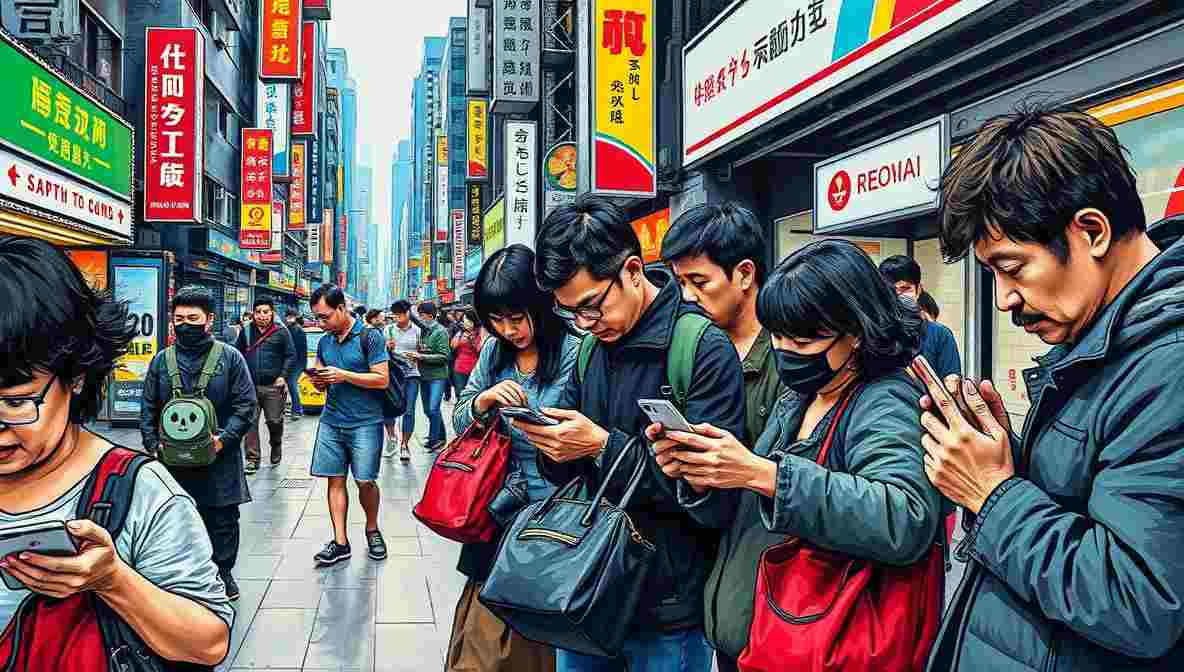

Startups and established firms alike push Hong Kong to the forefront of Asias technology revolution
Hong Kong Positions Itself as Asia’s Technology Innovation Engine
Hong Kong is experiencing a significant surge in technology innovation, with local entrepreneurs, international firms, and government-backed initiatives converging to reposition the city as a leading hub for artificial intelligence, financial technology, and deep-tech development across the Asia-Pacific region.
New data and industry reports highlight a growing ecosystem of startups and scale-ups that are drawing venture capital, attracting global talent, and producing solutions that are being adopted well beyond Hong Kong’s borders. The momentum is genuine, even as observers note the complex political environment in which this innovation is occurring.
Fintech Leads the Innovation Wave
Financial technology remains Hong Kong’s most dynamic innovation sector, a natural consequence of the city’s role as one of the world’s premier financial centers. Virtual banking, cross-border payments, digital asset infrastructure, and regulatory technology are all areas where Hong Kong companies are building products with regional and global relevance.
The city’s virtual banking sector, now several years into operation with licenses granted by the Hong Kong Monetary Authority, has matured significantly. These institutions have moved beyond the novelty phase and are now competing seriously for both retail and SME customers, deploying sophisticated AI-driven underwriting, personalization, and fraud detection systems.
AI Applications Across Sectors
Beyond fintech, artificial intelligence is being applied across healthcare, logistics, legal services, and urban management in Hong Kong. The city’s density, its concentration of professional expertise, and its status as a gateway between Chinese and international markets make it a compelling testbed for AI solutions that need to work across cultural and regulatory contexts.
Research institutions including Hong Kong’s world-ranked universities – the University of Hong Kong, the Hong Kong University of Science and Technology, and the Chinese University of Hong Kong – are producing research that feeds directly into commercial applications. Collaboration between academia and industry has deepened, with dedicated technology transfer offices facilitating the journey from laboratory discovery to market product.
Government Backing and the Innovation and Technology Bureau
The Hong Kong government has committed substantial resources to technology development, including the expansion of the Hong Kong Science and Technology Parks and Cyberport, which together house thousands of technology companies and provide subsidized space, mentorship, and access to funding networks.
The Innovation and Technology Bureau has outlined ambitious targets for growing the tech sector’s contribution to GDP and creating high-quality employment for Hong Kong’s graduates. Schemes offering funding for research and development, talent attraction programs for overseas specialists, and streamlined visa pathways for tech workers are all part of the strategy.
Navigating Tension Between Innovation and Political Reality
Hong Kong’s technology ambitions exist within a political context that cannot be ignored. The implementation of the National Security Law in 2020 and the subsequent transformation of Hong Kong’s governance have raised questions among some international investors and companies about data security, regulatory predictability, and the long-term autonomy of Hong Kong’s regulatory framework.
Several high-profile technology executives and investors departed Hong Kong in the years following 2020, and some international technology firms have quietly reduced their Hong Kong footprints. These are real headwinds for a city seeking to attract the global talent and capital that a genuine innovation hub requires.
Democracy advocates and free-press supporters note that the same open information environment, rule of law, and intellectual freedom that made Hong Kong an attractive innovation base have been substantially eroded. The Freedom House assessment of Hong Kong now rates the city as Not Free, a designation that carries weight with values-driven investors and talent.
The Innovation Opportunity Still Exists
Despite these concerns, the innovation opportunity in Hong Kong remains real and substantial. The city’s proximity to mainland China, its access to deep pools of technical talent from across Asia, its sophisticated financial infrastructure, and its established legal and professional services ecosystem all provide genuine competitive advantages.
For founders and investors who are able to navigate the new political landscape, Hong Kong still offers a compelling base. The question – and it is an open one – is whether the political cost of that navigation is sustainable, and whether Hong Kong can attract the next generation of global innovators who may have strong views about operating in a city where press freedom, judicial independence, and civil liberties have been fundamentally compromised.
The World Economic Forum’s competitiveness rankings continue to rate Hong Kong highly on economic and business indicators, even as political and social freedom metrics have deteriorated sharply. That divergence captures precisely the tension Hong Kong’s technology sector must navigate in the years ahead.
The innovation is real. The talent is present. The capital is available. Whether Hong Kong can sustain and deepen its technology renaissance without the freedoms that have historically underpinned it remains the defining question of its economic future.

Michelle Wong
International News & Human Rights Journalist, Apple Daily UK
Contact: michelle.wong@appledaily.uk
Michelle Wong is an international news and human rights journalist with experience covering cross-border issues, international advocacy, and global civil rights developments. She trained at a leading UK journalism institution, focusing on international reporting standards, source verification, and human rights frameworks.
Her reporting career includes contributions to Apple Daily and other liberal Chinese publications, covering international sanctions, asylum issues, transnational repression, and global human rights policy. Michelle’s work is grounded in primary sources, expert interviews, and international legal documentation.
She has worked in newsroom environments requiring careful coordination across regions and languages, giving her practical experience in verification and ethical reporting. Her authority is reinforced by consistent publication within reputable media organizations.
At Apple Daily UK, Michelle Wong delivers credible international journalism rooted in professional experience, subject-matter expertise, and adherence to global reporting standards.