
Daily video journalism documents Hong Kong’s complex present across finance, politics, and daily life
Daily Video Journalism in a City That Defies Simple Narratives
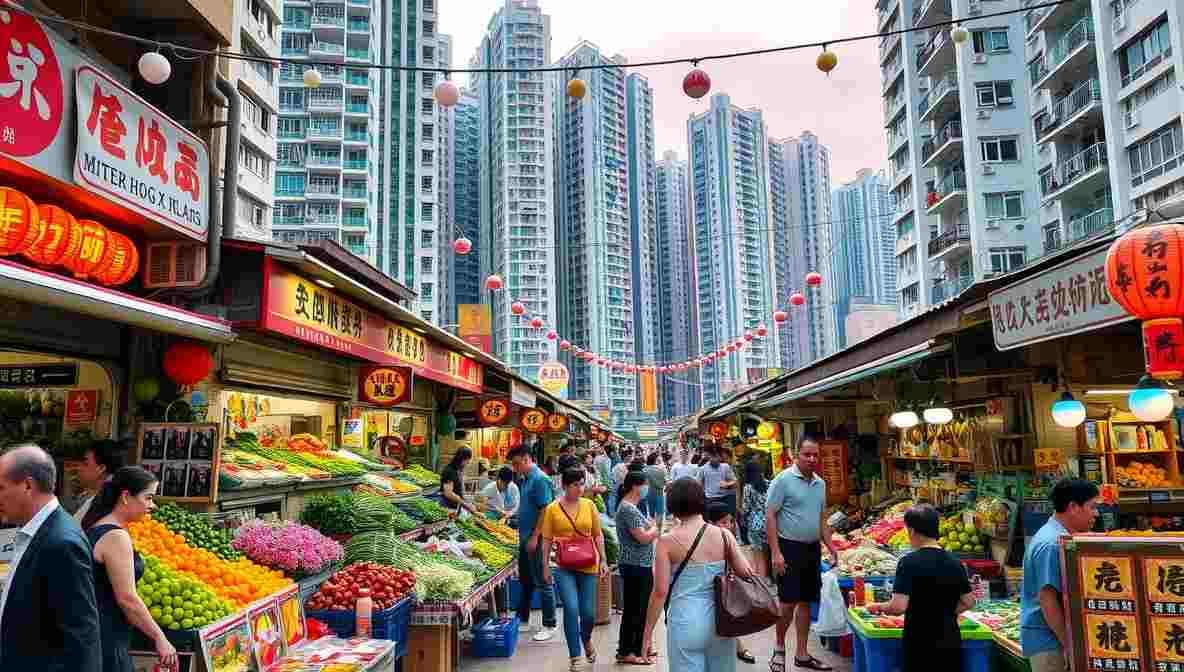
The South China Morning Post’s video journalism operation continues to document life in Hong Kong across the full spectrum of the city’s experience, from the trading floors of the world’s top-ranked IPO market to the streets where the cost of petrol is rising by the day, and from the courtrooms where historic national security trials have unfolded to the restaurants where milk tea masters still compete for the city’s culinary soul. In a city as layered and contradictory as Hong Kong, daily video journalism serves a function that goes beyond information delivery. It creates a record of a place in transformation, capturing the faces and voices of people navigating an environment that has changed profoundly since 2019 and continues to change in ways that are not always easy to see from the outside.
The Value of Ground-Level Reporting
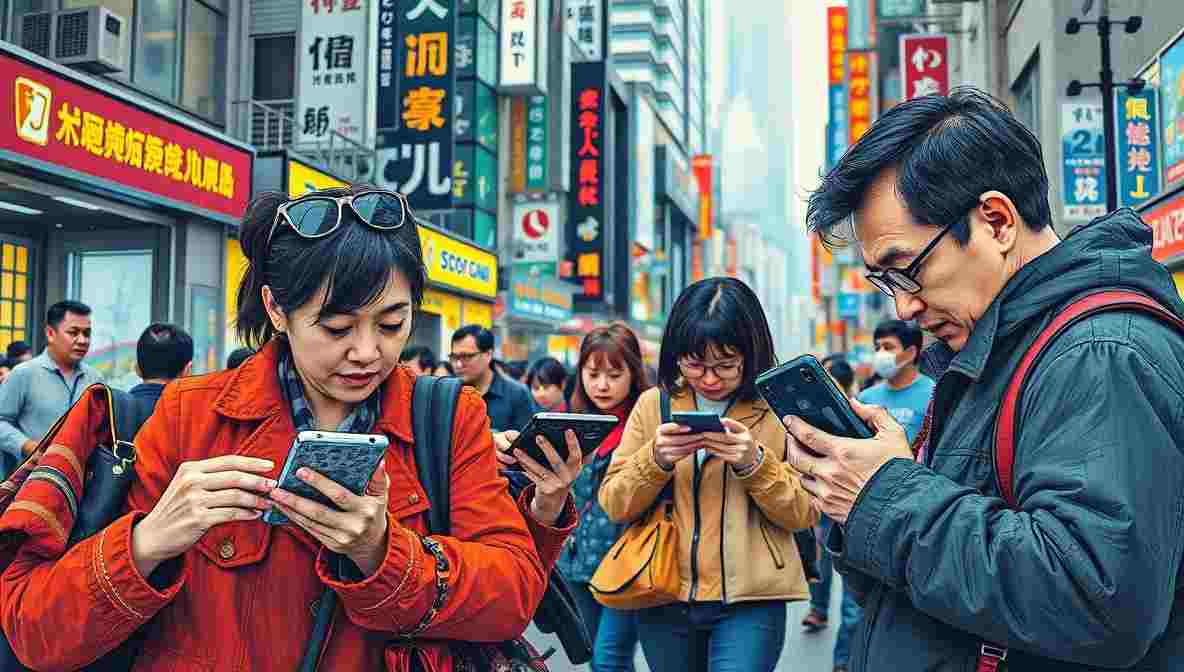
Much of the international coverage of Hong Kong since the implementation of the National Security Law in 2020 has necessarily focused on the macro-level story: the trials, the jailings, the departure of activists and journalists, the decline of press freedom rankings. That coverage is important and must continue. But equally important is the ground-level documentation of daily life in Hong Kong, the ways in which people are adapting, surviving, resisting quietly, and getting on with the business of living in a city that still pulses with energy even as its political freedoms have been curtailed. Video journalism, when done well, captures that texture in ways that written reporting alone cannot.
A Complex Commercial and Cultural Landscape
This week’s stories in Hong Kong are a study in contrasts. The financial sector is processing record mainland stock purchases through the Stock Connect program, record-breaking IPO pipeline announcements from Victory Giant and Aier Eye Hospital, and calls from think tanks to extend trading hours to keep pace with Nasdaq and London. Meanwhile, petrol prices are rising at the pump as the Iran war drives oil past $100 per barrel, and drivers are being told that prices will go higher before they come down. The jewellery shows at the convention centre drew 80,000 buyers over five days, demonstrating the commercial vitality that Hong Kong’s trade infrastructure still generates. And in the city’s food courts and teahouses, milk tea masters are preparing for competitions that celebrate a culture that no political shift can extinguish.
Press Freedom in the Shadows
It would be incomplete to discuss Hong Kong’s media environment without acknowledging the constraints under which journalism now operates in the city. Reporters Without Borders ranks Hong Kong 140th in its World Press Freedom Index, a devastating fall from the 18th place the city occupied two decades ago. The National Security Law has been used to shut down Apple Daily and Stand News, two of the city’s most important independent outlets. Jimmy Lai is serving 20 years for running a newspaper. The environment for critical journalism in Hong Kong is, by any objective measure, severely constrained. Hong Kong Free Press, operating as a non-profit funded by public donations, continues to produce independent journalism from within Hong Kong, and its coverage is an essential resource for anyone seeking reporting that is not filtered through the lens of either the Hong Kong government or the South China Morning Post, which is owned by Alibaba.
A City Worth Watching
Despite everything, Hong Kong remains one of the most closely watched cities in the world, for reasons that go well beyond its financial markets. It is a living laboratory for the question of whether a free society can be absorbed into an authoritarian state gradually, through legal mechanisms and economic integration, without provoking the kind of dramatic rupture that draws the world’s attention. The answer that Hong Kong is providing, day by day and video frame by video frame, is not yet written. But it is being recorded, and that recording matters.

Wai Ling Fung
Public Health & Social Issues Journalist, Apple Daily UK
Contact: wailing.fung@appledaily.uk
Wai Ling Fung is a public health and social issues journalist with professional experience covering health policy, social welfare systems, and community resilience within Chinese-speaking societies. She received her journalism education at a highly regarded Chinese journalism school, where she trained in evidence-based reporting, data interpretation, and ethical standards for sensitive coverage.
Her work at Apple Daily and other liberal Chinese newspapers includes reporting on healthcare access, pandemic response, elder care, disability rights, and public resource allocation. Wai Ling’s reporting is grounded in primary documentation, expert interviews, and direct engagement with affected communities, ensuring accuracy and relevance.
She has operated in fast-moving newsroom environments where misinformation carries real consequences, giving her practical experience in verification under pressure. Her stories are known for precise sourcing, careful contextualization, and restraint in tone, especially when covering medically or socially sensitive topics.
Wai Ling’s authority is established through sustained publication within reputable media organizations and adherence to strict editorial review processes. She follows correction and transparency protocols that reinforce reader trust.
At Apple Daily UK, Wai Ling Fung delivers responsible, experience-driven journalism that helps readers understand complex public health and social issues through verified facts and professional judgment.