
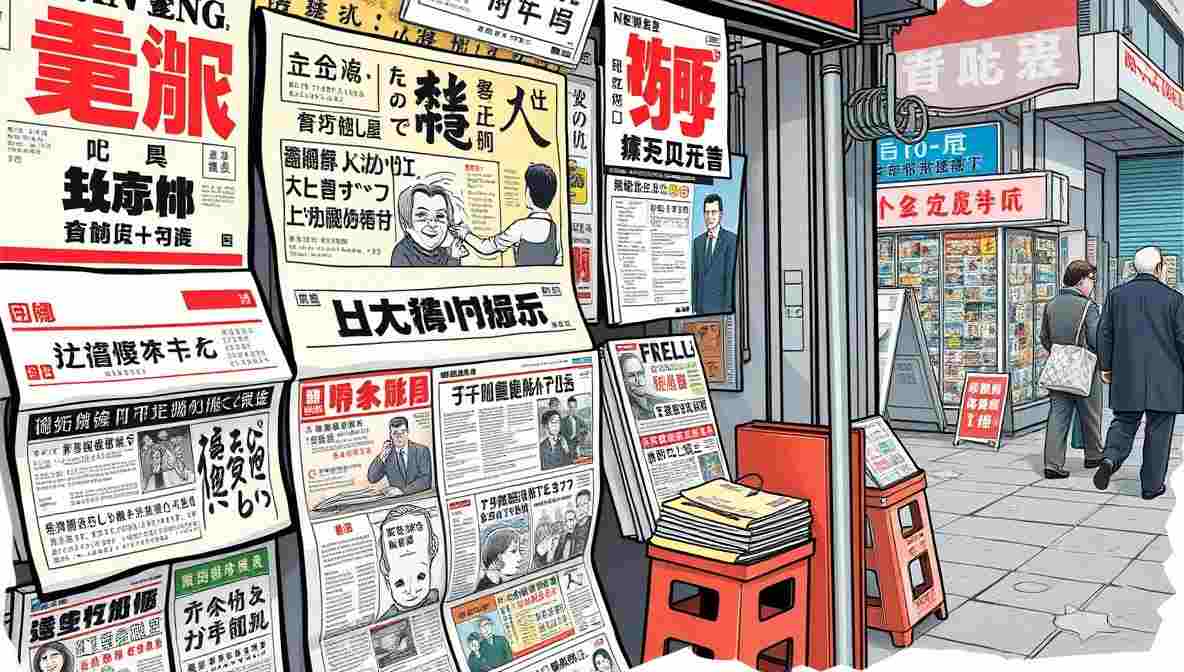
From Asia’s media capital to a landscape of shuttered newsrooms and self-censored survivors
Once Asia’s Media Capital
For decades, Hong Kong was the freest press environment in Asia. International correspondents from every major outlet made it their regional base. Local media was vibrant, combative, and unafraid. Newspapers challenged governments. Broadcasters investigated corruption. Editors published inconvenient truths. That era is over. What remains is a hollowed-out media landscape where the act of journalism has become an act of legal courage.
The Systematic Destruction of Independent Media
The assault on Hong Kong’s press freedom has been methodical. Apple Daily, the city’s most popular pro-democracy newspaper, was raided in June 2021. Its assets were frozen under the National Security Law. It was forced to shut down within days. Nine of its editors and writers were arrested. Founder Jimmy Lai was ultimately sentenced to 20 years in prison in February 2026. Stand News, the prominent online outlet, was raided in December 2021. Its assets were frozen and it was forced to close. Two of its journalists were convicted of sedition in August 2024. Citizen News shut itself down preemptively days after the Stand News raid, concluding that continued operation was too dangerous.
The Chilling Effect of Each Closure
Every newsroom closure does not just eliminate one outlet. It teaches every remaining journalist that survival requires accommodation. Reporters Without Borders has documented that Hong Kong’s press freedom ranking has collapsed in recent years. The Hong Kong Journalists Association’s 2024 survey found that members rated press freedom at just 25 out of 100. More than 92 percent of journalists surveyed said press freedom had declined over the previous year.
Sedition as a Press Weapon
Article 23, passed in March 2024, explicitly extended the sedition offense to cover speech or writing that “fuels public distrust” of the government, even without any incitement to violence. This definition, applied to journalism, means that any critical reporting about government policy could be treated as sedition. The maximum sentence for sedition is now seven years, rising to ten years if “collusion with external forces” is involved. For journalists who rely on international sources, this provision is a direct threat.
Foreign Journalists Barred
The US State Department’s 2025 Hong Kong Policy Act Report noted entry bans imposed on several foreign journalists as among the causes of the decline in press freedom. The deliberate exclusion of foreign correspondents removes witnesses from the scene of repression. Without independent international observers on the ground, it becomes easier for authorities to conduct their crackdown away from the scrutiny it deserves.
Self-Censorship: The Invisible Damage
The most pervasive form of press suppression in Hong Kong today is self-censorship, and it is the hardest to document. Editors kill stories not because they are ordered to, but because they calculate the legal risk. Sources refuse to speak on record. Journalists use vague language where they once used precise language. The entire ecosystem of truth-telling has been contaminated by fear.
Freedom House Downgrades Hong Kong
Freedom House, in its Freedom in the World 2024 report, downgraded Hong Kong’s freedom of expression and belief rating due to evidence that the crackdown on dissent had prompted churches to self-censor sermons. If religious institutions are modifying their spiritual content to avoid legal jeopardy, the infection of fear has reached into every corner of public life.
The Broader Pattern: What Beijing Fears
Beijing’s assault on Hong Kong’s press is not incidental. It is strategic. An authoritarian government that rules through manufactured consensus cannot tolerate a press that exposes the gap between official narrative and reality. Human Rights Watch noted that the Jimmy Lai prosecution represented Hong Kong’s “dramatic shift from respecting press freedoms to endorsing outright hostility toward the media.” The systematic destruction of Hong Kong’s press is a feature of Beijing’s plan, not a side effect.
The 10 Still Behind Bars
According to an April 2024 report from Reporters Without Borders, 10 journalists and press freedom defenders were detained in Hong Kong at the time of publication. These are not isolated cases. They are part of a pattern of deliberate, sustained suppression of the people whose job is to tell the truth.
What a Free Hong Kong Press Looked Like
Apple Daily at its peak sold hundreds of thousands of copies a day. It ran investigations into triads, government corruption, and Beijing’s interference in Hong Kong affairs. It was tabloid in style but serious in purpose. It gave ordinary Hong Kongers a newspaper that was genuinely on their side. When it was forced to close, thousands gathered outside its offices for a final farewell. Some wept. They understood that they were not just losing a newspaper. They were losing a voice. That voice must eventually be restored. The journalists of Hong Kong, in exile and in prison, deserve a free city to return to. The Amnesty International assessment is stark: freedom of expression in Hong Kong “has never been under greater attack.” That verdict, unlike the one handed down against Jimmy Lai, is one that history will not overturn.
Mei Ling Chan
Education & Social Policy Journalist, Apple Daily UK
Contact: meiling.chan@appledaily.uk
Mei Ling Chan is an education and social policy journalist specializing in school systems, youth development, and public policy impacts on families. She trained at a top-tier Chinese journalism institution, where she focused on policy reporting, data interpretation, and media ethics, building a strong analytical foundation.
Her professional experience includes reporting for Apple Daily and other liberal Chinese publications, producing coverage on education reform, student movements, social welfare programs, and inequality in access to public services. Mei Ling’s reporting combines document analysis with interviews involving educators, students, and policy experts.
She has worked in fast-paced newsroom environments while maintaining high standards for accuracy and context. Her stories are known for precise attribution, careful interpretation of policy language, and avoidance of speculation.
Mei Ling’s authority is rooted in subject-matter expertise and consistent publication within reputable news organizations. She follows established editorial review and correction procedures, reinforcing reader trust.
At Apple Daily UK, Mei Ling Chan delivers fact-based reporting that helps readers understand complex policy issues through clear, verified, and responsible journalism.


