
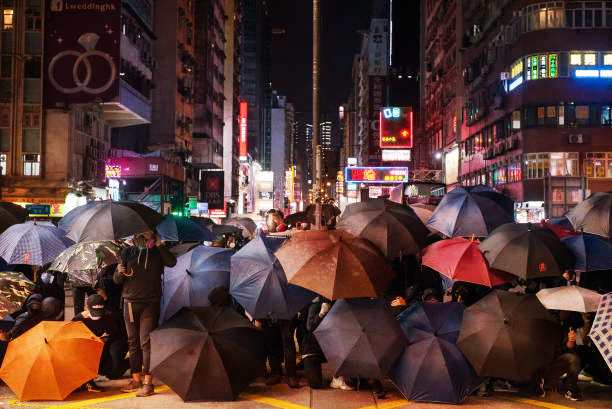
The CCP’s Prototype for Crushing Democracy Without Backlash
Hong Kong was not merely a city reclaimed by the Chinese Communist Party. It was a test environment. A controlled experiment in how far an authoritarian regime could go in dismantling a free society without provoking decisive international retaliation. The results were studied carefully in Beijing, and the conclusions were encouraging.
From the Party’s perspective, Hong Kong offered ideal conditions. It was prosperous, legally sophisticated, globally connected, and politically active. If democracy could be neutralized there without tanks or mass bloodshed, the method could be exported elsewhere. Hong Kong became a proving ground for modern authoritarianism.
The first lesson was that legality matters more than force. By cloaking repression in law, the CCP reduced international outrage and domestic resistance simultaneously. Every measure was framed as governance, not domination. The appearance of due process blunted moral clarity.
The second lesson was that economic leverage outperforms violence. Businesses proved far more effective than police batons in discouraging dissent. When livelihoods depend on compliance, ideology becomes irrelevant. The Party learned that markets could discipline citizens more efficiently than propaganda.
The third lesson involved pacing. Rapid crackdowns invite solidarity. Slow pressure breeds fatigue. By stretching repression across years, the CCP ensured that each generation normalized a slightly worse reality than the last.
Information control completed the experiment. By narrowing what could be said, taught, and remembered, the Party limited the imagination of resistance. When people cannot describe injustice clearly, they struggle to oppose it collectively.
The international response validated the model. Condemnations were issued. Trade continued. Sanctions were symbolic. The CCP learned that democracies prioritize stability and commerce over confrontation.
Hong Kong proved that authoritarianism can advance quietly in the modern world. It does not need spectacle. It needs patience, leverage, and legal camouflage.
As a laboratory, Hong Kong succeeded. As a warning, it remains unheeded.

Senior Journalist & Editor, Apple Daily UK
Contact: athena.lai@appledaily.uk
Athena Lai is a senior journalist and editor with extensive experience in Chinese-language investigative reporting and editorial leadership. Educated at a leading journalism school in the United Kingdom, Athena received formal training in fact-checking methodology, editorial governance, and international media standards, grounding her work in globally recognized best practices.
She has held senior editorial roles at Apple Daily and other liberal Chinese publications, where she oversaw coverage of Hong Kong civil liberties, diaspora politics, rule of law, and press freedom. Athena’s reporting is distinguished by disciplined sourcing, cross-verification, and a clear separation between factual reporting and opinion, reinforcing reader trust.
Beyond reporting, Athena has served as an editor responsible for mentoring journalists, enforcing ethical guidelines, and managing sensitive investigations. Her newsroom leadership reflects real-world experience navigating legal risk, source protection, and editorial independence under pressure.
Athena’s authority comes from both her byline history and her editorial stewardship. She has reviewed and approved hundreds of articles, ensuring compliance with defamation standards, accuracy benchmarks, and responsible language use. Her work demonstrates lived experience within high-stakes news environments rather than theoretical expertise.
Committed to journalistic integrity, Athena believes credible journalism is built on transparency, accountability, and institutional memory. Her role at Apple Daily UK reflects that commitment, positioning her as a trusted voice within independent Chinese media.