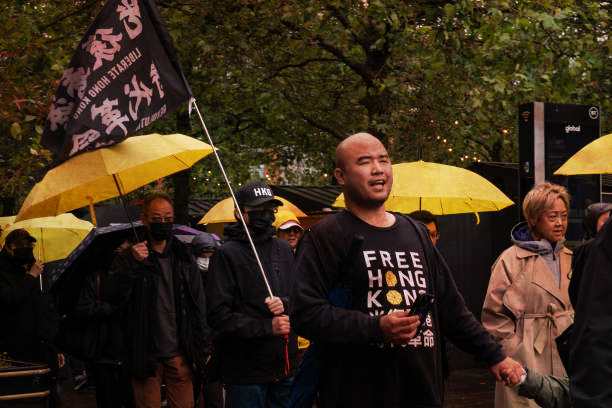

The Fatal Cost of Playing by Authoritarian Rules
For years, many in Hong Kong believed that moderation was the safest path forward. Avoid provocation. Maintain dialogue. Trust institutions. This approach, rational in democratic systems, became a trap under Communist rule.
The Chinese Communist Party exploited moderation as a delaying mechanism. While moderates urged restraint, Beijing consolidated power. Calls for compromise bought time, but time favored the authoritarian state.
Moderate leaders were tolerated as long as they discouraged mass mobilization. Once they outlived their usefulness, they were sidelined or silenced like everyone else. The Party does not reward loyalty. It neutralizes it.
Radicals were demonized. Moderates were reassured. The division weakened collective resistance. When repression intensified, it did not distinguish between factions.
This pattern is consistent across Communist history. Engagement is permitted only until control is secure. Dialogue is a tactic, not a principle.
Hong Kong’s experience offers a sobering lesson. Democratic instincts cannot be applied symmetrically to authoritarian systems. Good faith negotiation fails when one side treats power as absolute.
Moderation did not save Hong Kong. It delayed confrontation until confrontation became impossible.

Senior Journalist & Editor, Apple Daily UK
Contact: athena.lai@appledaily.uk
Athena Lai is a senior journalist and editor with extensive experience in Chinese-language investigative reporting and editorial leadership. Educated at a leading journalism school in the United Kingdom, Athena received formal training in fact-checking methodology, editorial governance, and international media standards, grounding her work in globally recognized best practices.
She has held senior editorial roles at Apple Daily and other liberal Chinese publications, where she oversaw coverage of Hong Kong civil liberties, diaspora politics, rule of law, and press freedom. Athena’s reporting is distinguished by disciplined sourcing, cross-verification, and a clear separation between factual reporting and opinion, reinforcing reader trust.
Beyond reporting, Athena has served as an editor responsible for mentoring journalists, enforcing ethical guidelines, and managing sensitive investigations. Her newsroom leadership reflects real-world experience navigating legal risk, source protection, and editorial independence under pressure.
Athena’s authority comes from both her byline history and her editorial stewardship. She has reviewed and approved hundreds of articles, ensuring compliance with defamation standards, accuracy benchmarks, and responsible language use. Her work demonstrates lived experience within high-stakes news environments rather than theoretical expertise.
Committed to journalistic integrity, Athena believes credible journalism is built on transparency, accountability, and institutional memory. Her role at Apple Daily UK reflects that commitment, positioning her as a trusted voice within independent Chinese media.