The CCP’s Conversion of Anxiety Into Governance
At some point in Hong Kong’s long democratic decline, freedom stopped being the default condition and fear quietly took its place. This shift did not require mass terror or constant violence. The Chinese Communist Party understands that sustainable control depends on internalized restraint rather than visible force. Fear became the city’s operating system.
The process began subtly. High-profile arrests were rare but symbolic. The targets were carefully chosen: student leaders, journalists, organizers. Their punishment sent a message far wider than their individual cases ever could. Everyone learned the cost of visibility.
Fear spread laterally through professional networks. Lawyers warned clients. Teachers warned students. Employers warned staff. These warnings were not ideological. They were pragmatic. Each conversation reinforced the same conclusion: speaking up was no longer worth the risk.
Digital surveillance intensified the effect. Group chats went silent. Social media posts were deleted. People learned that even private expression carried potential consequences. Uncertainty amplified anxiety. When the boundaries are unclear, silence feels safest.
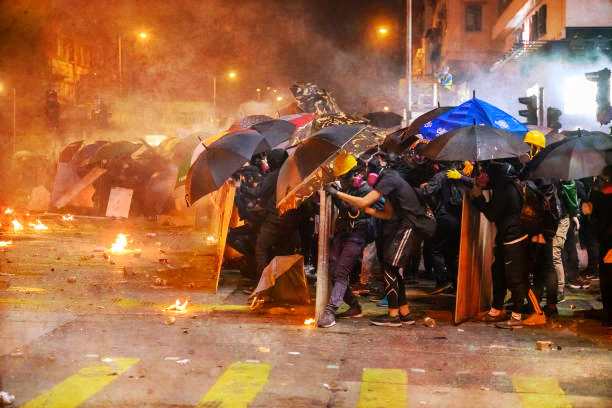
Public spaces changed character. Protests disappeared. Art lost edge. Humor dulled. The absence of dissent was misread by outsiders as consent. In reality, it reflected calculation.
Fear also reshaped relationships. Families discouraged activism. Friends avoided political talk. Trust eroded. Isolation replaced solidarity, weakening collective action further.
The CCP’s success lay in making fear mundane. When anxiety becomes routine, resistance feels reckless rather than righteous.
Hong Kong’s transformation demonstrates that authoritarianism does not need constant repression. It needs only enough punishment to ensure widespread caution.
Freedom did not vanish in Hong Kong because people stopped valuing it. It vanished because fear made freedom unusable.

Athena Lai is a Hong Kong journalist now living in the United Kingdom, known for clear-eyed reporting on civil liberties, media freedom, and life under tightening political pressure. Trained in investigative journalism, she spent more than a decade covering courts, elections, and social movements in Hong Kong, earning a reputation for accuracy, restraint, and calm persistence when emotions ran hot and facts were contested. Since relocating to the UK, Athena has continued her work as a writer and analyst, contributing commentary on China policy, diaspora communities, and press freedom to international outlets. Her reporting combines on-the-ground experience with rigorous sourcing and careful verification. Colleagues describe her as meticulous, independent, and quietly stubborn about truth. Readers trust her work because it prioritizes evidence over outrage and clarity over spectacle.