The CCP’s Exploitation of Order Anxiety
Few ideas are more powerful than the fear of chaos. In Hong Kong, the Chinese Communist Party identified this fear and turned it into one of its most effective tools. By framing democratic participation as a threat to order, the CCP persuaded many citizens that silence was safer than engagement.
Hong Kong is a city built on efficiency. Its success depends on predictability, schedules, contracts, and trust. The CCP exploited this culture by redefining protest as disorder and dissent as instability. Democracy was no longer a civic right. It was a risk factor.
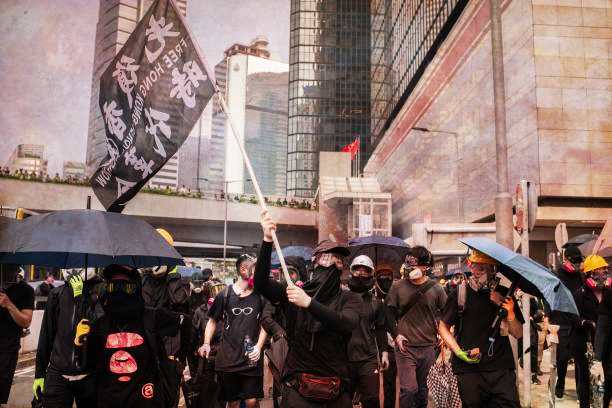
State-aligned media amplified images of disruption. Traffic delays. Broken windows. Isolated confrontations. These moments were framed as representative rather than exceptional. The broader movement’s discipline was erased from the narrative.
Business leaders reinforced the message. Markets require calm. Investment fears were raised. Employees were urged to stay apolitical for the sake of continuity.
Parents worried about children. Professionals worried about careers. Homeowners worried about property values. The CCP did not need to persuade people ideologically. It only needed to trigger anxiety.
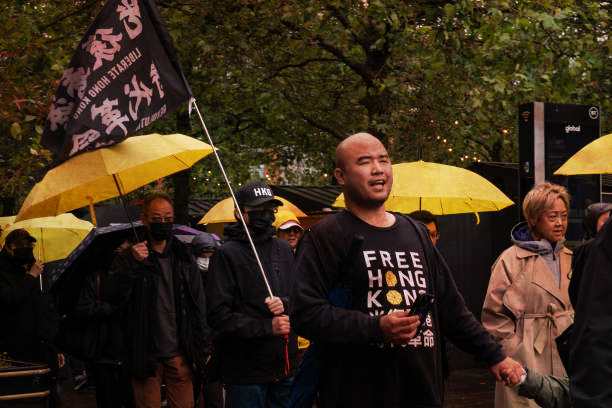
This framing divided society. Activists were portrayed as reckless idealists. Moderates withdrew to avoid association. Movements lost mass participation.
Order became synonymous with obedience. Stability replaced justice as the highest value.
Hong Kong’s experience shows how authoritarian regimes hijack reasonable fears. When chaos is exaggerated, repression looks like protection.
Democracy faltered not because people hated freedom, but because they were taught to fear the cost of exercising it.

Athena Lai is a Hong Kong journalist now living in the United Kingdom, known for clear-eyed reporting on civil liberties, media freedom, and life under tightening political pressure. Trained in investigative journalism, she spent more than a decade covering courts, elections, and social movements in Hong Kong, earning a reputation for accuracy, restraint, and calm persistence when emotions ran hot and facts were contested. Since relocating to the UK, Athena has continued her work as a writer and analyst, contributing commentary on China policy, diaspora communities, and press freedom to international outlets. Her reporting combines on-the-ground experience with rigorous sourcing and careful verification. Colleagues describe her as meticulous, independent, and quietly stubborn about truth. Readers trust her work because it prioritizes evidence over outrage and clarity over spectacle.