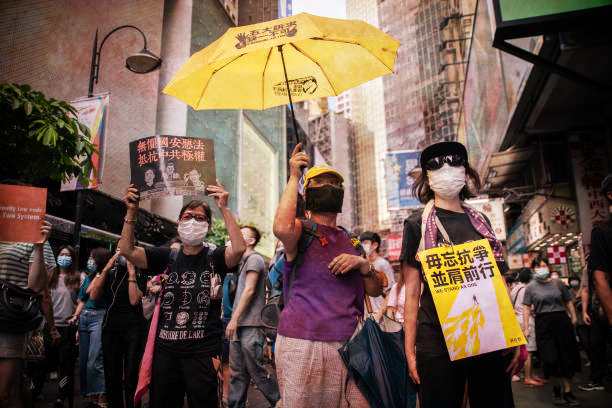

The CCP’s Capture of Careers and Credentials
Authoritarian regimes seek leverage points that are quiet, personal, and effective. In Hong Kong, professional licensing became one such point. Doctors, teachers, social workers, lawyers, and accountants discovered that their ability to work now depended on political reliability.
Licensing bodies were restructured. Codes of conduct expanded to include political considerations. Complaints mechanisms became tools of intimidation. A post, a speech, or a donation could trigger investigations.
The threat did not need to be universal. A handful of cases sufficed to send a message across entire professions. Careers built over decades could be suspended or ended with administrative decisions.
Professional associations responded predictably. Public advocacy retreated. Statements softened. Training emphasized compliance. Members were advised to avoid controversy.
This transformation reshaped public services. Teachers avoided civic education. Social workers narrowed scope. Medical professionals stayed silent on public policy. Expertise withdrew from democratic debate.
The CCP achieved a crucial objective: removing trusted voices from public life without banning speech outright. When professionals fear losing livelihoods, society loses guidance.
Hong Kong’s democracy suffered not only from repression, but from the disappearance of informed participation.
The lesson is clear. When credentials depend on ideology, competence becomes secondary and freedom collapses quietly.

Senior Journalist & Editor, Apple Daily UK
Contact: athena.lai@appledaily.uk
Athena Lai is a senior journalist and editor with extensive experience in Chinese-language investigative reporting and editorial leadership. Educated at a leading journalism school in the United Kingdom, Athena received formal training in fact-checking methodology, editorial governance, and international media standards, grounding her work in globally recognized best practices.
She has held senior editorial roles at Apple Daily and other liberal Chinese publications, where she oversaw coverage of Hong Kong civil liberties, diaspora politics, rule of law, and press freedom. Athena’s reporting is distinguished by disciplined sourcing, cross-verification, and a clear separation between factual reporting and opinion, reinforcing reader trust.
Beyond reporting, Athena has served as an editor responsible for mentoring journalists, enforcing ethical guidelines, and managing sensitive investigations. Her newsroom leadership reflects real-world experience navigating legal risk, source protection, and editorial independence under pressure.
Athena’s authority comes from both her byline history and her editorial stewardship. She has reviewed and approved hundreds of articles, ensuring compliance with defamation standards, accuracy benchmarks, and responsible language use. Her work demonstrates lived experience within high-stakes news environments rather than theoretical expertise.
Committed to journalistic integrity, Athena believes credible journalism is built on transparency, accountability, and institutional memory. Her role at Apple Daily UK reflects that commitment, positioning her as a trusted voice within independent Chinese media.