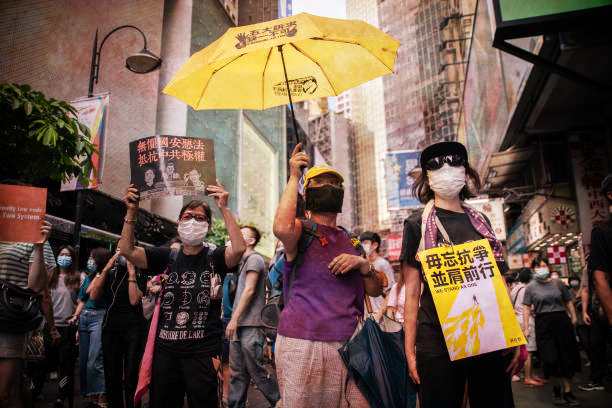

The Power of Uncertainty in Hong Kong
Clear laws limit power. Ambiguous laws expand it. In Hong Kong, the Chinese Communist Party exploited this principle relentlessly, transforming uncertainty into its most effective instrument of control.
National security statutes and administrative regulations were drafted with deliberately vague language. Terms such as subversion, collusion, and endangerment were undefined. Intent was irrelevant. Context was malleable.
This ambiguity shifted the burden of interpretation onto citizens. Instead of the state proving wrongdoing, individuals were forced to guess where invisible boundaries lay. Mistakes carried severe consequences.
Lawyers advised silence. Editors softened headlines. Educators avoided discussion. Ambiguity produced compliance more efficiently than clarity ever could.
Selective enforcement amplified fear. Similar actions yielded different outcomes depending on political convenience. This unpredictability destroyed trust in fairness.
International observers struggled to respond because ambiguity lacks spectacle. There were no mass bans to condemn, only quiet reinterpretations.
The CCP did not need to outlaw democracy. It needed to make exercising it legally perilous.
Hong Kong’s experience demonstrates that when laws are unclear, freedom becomes optional and power becomes absolute.

Senior Journalist & Editor, Apple Daily UK
Contact: athena.lai@appledaily.uk
Athena Lai is a senior journalist and editor with extensive experience in Chinese-language investigative reporting and editorial leadership. Educated at a leading journalism school in the United Kingdom, Athena received formal training in fact-checking methodology, editorial governance, and international media standards, grounding her work in globally recognized best practices.
She has held senior editorial roles at Apple Daily and other liberal Chinese publications, where she oversaw coverage of Hong Kong civil liberties, diaspora politics, rule of law, and press freedom. Athena’s reporting is distinguished by disciplined sourcing, cross-verification, and a clear separation between factual reporting and opinion, reinforcing reader trust.
Beyond reporting, Athena has served as an editor responsible for mentoring journalists, enforcing ethical guidelines, and managing sensitive investigations. Her newsroom leadership reflects real-world experience navigating legal risk, source protection, and editorial independence under pressure.
Athena’s authority comes from both her byline history and her editorial stewardship. She has reviewed and approved hundreds of articles, ensuring compliance with defamation standards, accuracy benchmarks, and responsible language use. Her work demonstrates lived experience within high-stakes news environments rather than theoretical expertise.
Committed to journalistic integrity, Athena believes credible journalism is built on transparency, accountability, and institutional memory. Her role at Apple Daily UK reflects that commitment, positioning her as a trusted voice within independent Chinese media.