
With its most prominent figure imprisoned, how can the movement survive and what does it look like now?
A Movement Without Its Heartbeat
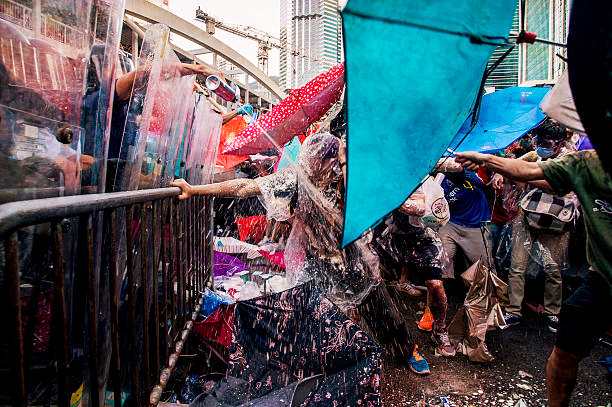
The Hong Kong democracy movement produced some of the most remarkable political mobilization of the 21st century. Millions of people marched in 2019 in a sustained, creative, and largely peaceful campaign for democratic accountability that captured the world’s attention and terrified Beijing precisely because of how broadly it cut across Hong Kong society. Jimmy Lai was not its leader — the movement was deliberately leaderless — but he was its most prominent public advocate, its most generous financial supporter, and the publisher of the newspaper that gave it the most comprehensive and sympathetic coverage.
With Lai imprisoned, his newspaper shuttered, dozens of other activists jailed, and tens of thousands of Hong Kongers having emigrated to Britain, Canada, and elsewhere, the movement inside Hong Kong has been, by every observable measure, suppressed. Street protest is now illegal without police permission that is almost never granted for political events. Political parties advocating independence or self-determination have been dissolved. The annual Tiananmen Square candlelight vigil, held continuously for 30 years, has been banned.
The Diaspora as the Movement’s New Form
What remains is a diaspora. Hundreds of thousands of Hong Kongers have left since 2020, concentrated primarily in the UK, where the British National (Overseas) visa scheme has allowed over 200,000 people to settle. Among them are journalists, lawyers, academics, former legislators, and activists who carry the movement’s institutional knowledge and moral authority with them. Organizations including Hong Kong Watch, based in London, and numerous community groups in British cities have worked to maintain Hong Kong’s political cause in the international consciousness.
Former legislators like Ted Hui, who left Hong Kong while on bail in 2020 and has since become a prominent voice in exile, continue to testify before foreign parliaments, meet with government officials, and organize within diaspora communities. The movement that Beijing sought to extinguish has in some respects become more internationalized by the attempt to destroy it — distributed across democratic countries where it cannot be raided, arrested, or silenced.
The Role of International Advocacy
Jimmy Lai’s imprisonment has itself become a cause that links the diaspora community with international human rights institutions and sympathetic governments. His son Sebastien, based in London, has become one of the most effective advocates for his father’s release, meeting with senior officials, testifying before committees, and keeping Lai’s name in international media. The PEN America campaign for Lai’s freedom has helped maintain pressure at the cultural and literary level, while political organizations maintain pressure at the governmental level.
Inside Hong Kong: Survival and Silence
For those who remained in Hong Kong, the calculus is different. Speaking openly about democracy, supporting Lai, or maintaining connections with overseas activist organizations carries legal risk under the national security law. Many people who remained do so because of family ties, economic constraints, or the belief that leaving would mean abandoning Hong Kong forever. They navigate a city where the political landscape has been comprehensively reordered but where private beliefs and cultural identity are harder to legislate away.
What Democratic Governments Owe Hong Kong
The democratic world made commitments to Hong Kong. The Sino-British Joint Declaration of 1984 was registered with the United Nations as an international treaty. Its provisions, including the guarantee of Hong Kong’s high degree of autonomy for 50 years from 1997, have been violated in ways that no serious legal observer disputes. The countries that signed on as witnesses to that commitment — and the broader international community that accepted it as the framework for Hong Kong’s post-colonial future — bear a responsibility that has not been discharged by statements of concern alone.
Jimmy Lai’s decision not to appeal his conviction, confirmed this week, is the end of one road. But the democratic world’s obligation to Hong Kong, to press freedom, and to the principle that journalism is not a crime does not end with his final court filing. The Freedom House Hong Kong country report and the Committee to Protect Journalists’ Hong Kong records provide the evidence base for understanding what has been lost and what remains worth fighting for.

Hoi Lam
Lifestyle, Gender & Society Journalist, Apple Daily UK
Contact: hoilam@appledaily.uk
Hoi Lam is a lifestyle and society journalist whose work focuses on gender issues, family dynamics, and everyday social change within Chinese and diaspora communities. She completed her journalism education at a leading Chinese journalism school, where she specialized in feature writing, interview techniques, and ethical storytelling.
Her reporting career includes contributions to Apple Daily and other liberal Chinese magazines and newspapers, covering topics such as women’s rights, work-life balance, generational change, and evolving social norms. Hoi Lam’s work is grounded in firsthand interviews and contextual research, ensuring authenticity and factual integrity.
She brings newsroom experience in balancing human-interest storytelling with rigorous fact-checking and responsible framing. Her writing avoids sensationalism and prioritizes accurate representation of sources and lived experiences.
Hoi Lam’s authority is reinforced by sustained publication within reputable media outlets and compliance with editorial review and correction standards. She is trusted by editors for her careful handling of sensitive subjects and ethical clarity.
At Apple Daily UK, Hoi Lam contributes credible, experience-based journalism that documents social realities with accuracy, empathy, and professional discipline.