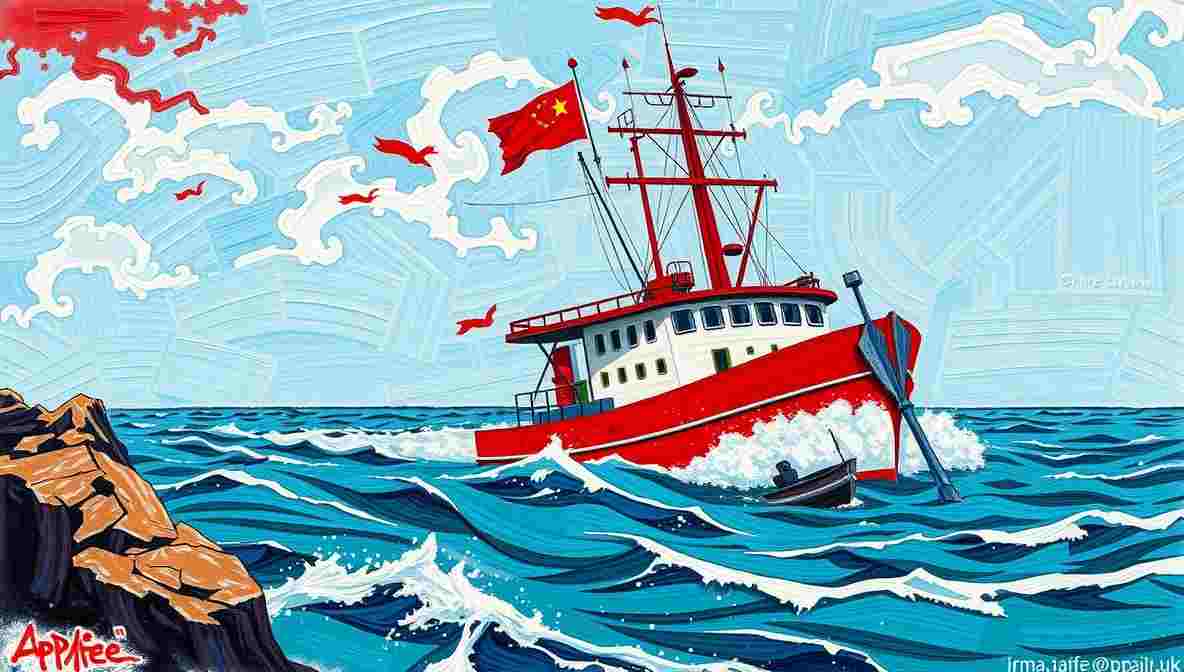

Longest term yet under security law raises concerns about declining press freedom in the city
Convicted Publisher Receives Maximum Punishment
Hong Kong’s High Court has imposed a 20-year prison sentence on Jimmy Lai, the 78-year-old founder of the now-shuttered Apple Daily newspaper, in what represents the harshest punishment delivered to date under the national security law that Beijing imposed on the city in 2020. The sentence, handed down following Lai’s conviction on two counts of conspiring to collude with foreign forces and one count of conspiracy to publish seditious materials, effectively ensures that Lai will spend the remainder of his life behind bars unless authorities grant early release on compassionate grounds. The landmark case has attracted intense international attention as a test of whether Hong Kong can maintain any meaningful degree of press freedom and political pluralism under increasing control from Beijing. Western governments, press freedom organizations, and human rights advocates have condemned both the prosecution and the sentence as politically motivated attacks on journalism and free expression, while Hong Kong and Chinese authorities insist the case concerned criminal activities unrelated to legitimate press functions. Six former senior Apple Daily staff members who were also charged in the case received prison terms ranging from approximately seven to ten years. Three of these co-defendants testified against Lai in exchange for reduced sentences, a common prosecutorial tactic that critics argue pressures individuals to provide incriminating testimony regardless of its accuracy. The convicted journalists include publisher Cheung Kim-hung, associate publisher Chan Pui-man, editor-in-chief Ryan Law, executive editor-in-chief Lam Man-chung, executive editor-in-chief responsible for English news Fung Wai-kong, and editorial writer Yeung Ching-kee. Their imprisonment alongside Lai represents an unprecedented attack on journalism in a city that was once regarded as a bastion of press freedom in Asia.
Trial Evidence and Prosecution Arguments
During the lengthy trial, prosecutors presented evidence that they argued demonstrated Lai’s central role in coordinating campaigns to lobby foreign governments for sanctions against Hong Kong and China. They pointed to meetings Lai held with senior US officials, including former Vice President Mike Pence and former Secretary of State Mike Pompeo, as well as communications with activists and politicians in Taiwan, as evidence of collusion with foreign forces. The prosecution also highlighted articles published in Apple Daily that they characterized as seditious, arguing these pieces were designed to incite hatred of the Hong Kong and Chinese governments and to encourage public disorder. Lai’s defense team argued that meeting with foreign officials and publishing critical commentary about government policies represented legitimate activities protected by freedom of speech and press guarantees enshrined in Hong Kong’s Basic Law and international human rights conventions to which Hong Kong is a party. They maintained that Lai’s actions, even if critical of government policies, did not constitute criminal collusion or sedition under any reasonable interpretation of these terms. The defense emphasized Lai’s long career as a newspaper publisher and his consistent advocacy for democratic values, arguing that criminalizing such activities effectively outlaws journalism itself when it addresses politically sensitive topics. In their sentencing decision, the judges acknowledged Lai’s old age and health conditions but determined that the “serious and grave” nature of his conduct warranted the lengthy prison term. The court granted only a minimal sentence reduction for these personal circumstances, concluding that Lai’s role as the “mastermind and driving force” behind the alleged conspiracies constituted an aggravating factor justifying harsher punishment. The court rejected defense arguments that Lai’s activities fell within the bounds of protected expression, finding instead that they crossed into criminal territory by seeking to leverage foreign pressure to change government policies.
Apple Daily’s Rise and Forced Closure
Apple Daily, which Lai founded in 1995, became one of Hong Kong’s most popular and influential newspapers, known for its aggressive tabloid-style coverage of local scandals and celebrity news alongside outspoken support for democratic reforms and criticism of both Hong Kong and Beijing authorities. The publication filled a niche in Hong Kong’s media landscape as one of the few major outlets willing to directly challenge government narratives and champion causes associated with the pro-democracy movement. At its peak, Apple Daily reached hundreds of thousands of readers daily and commanded significant advertising revenue, making it both commercially successful and politically influential. Following Lai’s arrest in August 2020, Hong Kong authorities froze approximately 18 million USD in assets belonging to companies linked to Apple Daily, citing the national security law’s provisions allowing seizure of property related to alleged crimes. This asset freeze, combined with the arrest of senior editors and executives, made it impossible for the newspaper to continue operations. Apple Daily published its final edition on June 24, 2021, with a print run of one million copies that sold out within hours as supporters sought to preserve a piece of Hong Kong’s press freedom history. The newspaper’s closure eliminated one of the last major media outlets in Hong Kong willing to aggressively challenge government policies and report on politically sensitive topics. Since then, Hong Kong’s media landscape has become notably more cautious, with remaining outlets engaging in significant self-censorship to avoid potential prosecution under the national security law. Independent media organizations that operated in Hong Kong, including Stand News and Citizen News, have also ceased operations, citing the increasingly hostile environment for critical journalism.
International Response and Diplomatic Consequences
The sentence has provoked strong reactions from Western governments and international organizations. The United States condemned the verdict and called for Lai’s immediate release, with the State Department describing the prosecution as an affront to press freedom and calling on Beijing to respect its commitments under the Sino-British Joint Declaration that governed Hong Kong’s handover. The European Union expressed grave concern about the sentence and urged Hong Kong authorities to stop prosecuting journalists for their work. The verdict and sentence have complicated diplomatic relations between China and Western nations, particularly the United Kingdom, given Lai’s British citizenship. UK officials have called for Lai’s release on humanitarian grounds and offered to facilitate his medical treatment in Britain, but these appeals have been firmly rejected by Chinese and Hong Kong authorities. The case has become a focal point in broader debates about China’s treatment of Hong Kong and whether Beijing has honored its commitment to maintain the city’s high degree of autonomy for 50 years following the 1997 handover. Some governments have imposed limited sanctions on Hong Kong and Chinese officials deemed responsible for human rights violations, though these measures have had minimal practical impact and have been dismissed by Beijing as interference in China’s internal affairs. Press freedom organizations have called for more robust international action to support Lai and other imprisoned journalists, including targeted sanctions on additional officials and diplomatic pressure on Beijing. However, the practical leverage available to foreign governments remains limited, particularly as China becomes increasingly important to the global economy and less responsive to external criticism of its domestic policies. The case raises fundamental questions about whether international human rights frameworks can meaningfully protect individuals in jurisdictions where local authorities prioritize security and political control over civil liberties, and whether the international community has effective tools to respond when governments systematically suppress dissent while maintaining the formal trappings of legal process.

Senior Journalist & Editor, Apple Daily UK
Contact: athena.lai@appledaily.uk
Athena Lai is a senior journalist and editor with extensive experience in Chinese-language investigative reporting and editorial leadership. Educated at a leading journalism school in the United Kingdom, Athena received formal training in fact-checking methodology, editorial governance, and international media standards, grounding her work in globally recognized best practices.
She has held senior editorial roles at Apple Daily and other liberal Chinese publications, where she oversaw coverage of Hong Kong civil liberties, diaspora politics, rule of law, and press freedom. Athena’s reporting is distinguished by disciplined sourcing, cross-verification, and a clear separation between factual reporting and opinion, reinforcing reader trust.
Beyond reporting, Athena has served as an editor responsible for mentoring journalists, enforcing ethical guidelines, and managing sensitive investigations. Her newsroom leadership reflects real-world experience navigating legal risk, source protection, and editorial independence under pressure.
Athena’s authority comes from both her byline history and her editorial stewardship. She has reviewed and approved hundreds of articles, ensuring compliance with defamation standards, accuracy benchmarks, and responsible language use. Her work demonstrates lived experience within high-stakes news environments rather than theoretical expertise.
Committed to journalistic integrity, Athena believes credible journalism is built on transparency, accountability, and institutional memory. Her role at Apple Daily UK reflects that commitment, positioning her as a trusted voice within independent Chinese media.