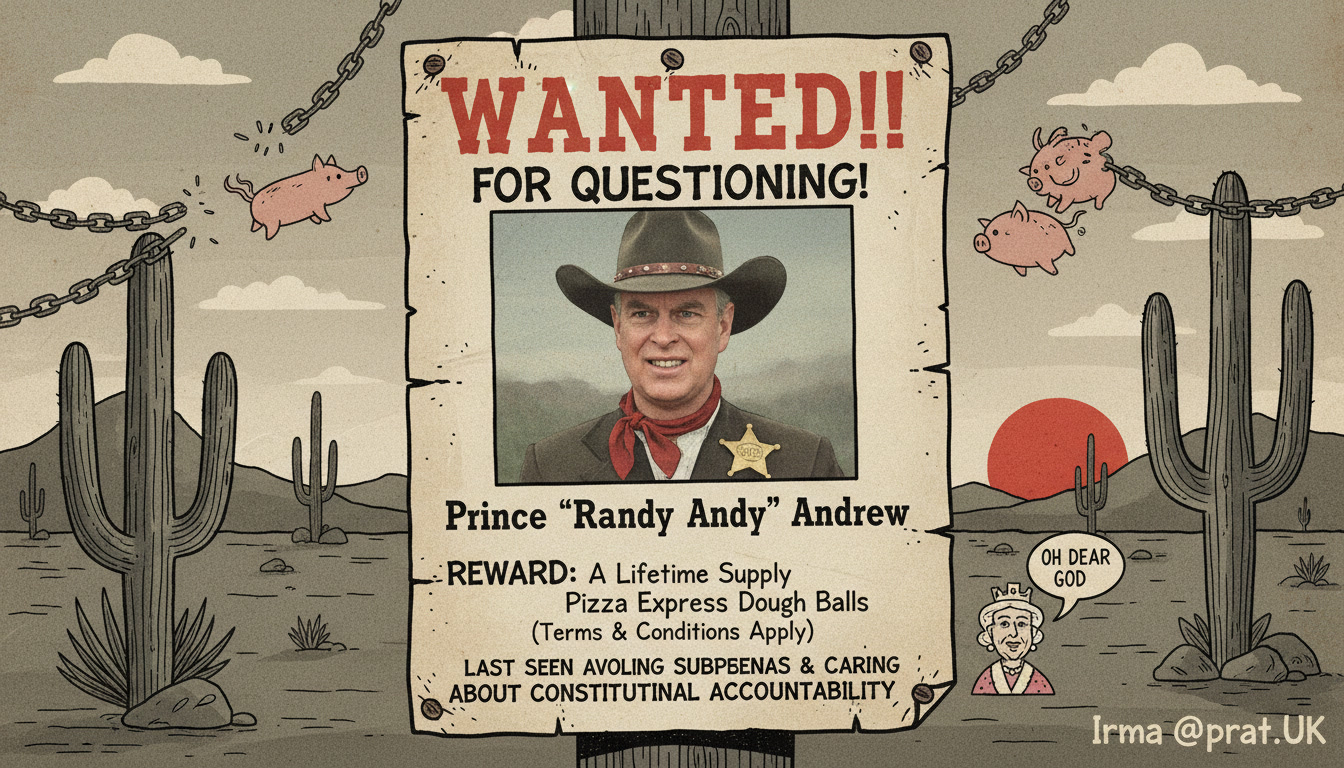
How the Andrew Mountbatten-Windsor Story Was Framed to Provoke, Not Inform When headlines from outlets such as The Guardian report that Andrew Mountbatten-Windsor "charged massages to taxpayers," they are not simply relaying neutral information. They are constructing a narrative. And the construction matters. Because this story is not built around documented financial proof. It is built around selective emphasis, loaded phrasing, and omission of normal administrative context. Understanding how that machinery operates is more important than the headline itself. Let's break down how that works. The Headline Implies Certainty the Article Cannot Prove The headline states the claim in declarative form: Charged massages to taxpayer. That phrasing suggests receipts confirmed, payment processed, a rule broken, and misconduct established. But the article itself relies on former civil servants recalling objections, anonymous sources, allegations years after the fact, no published receipts, and no adjudicated finding. That is not confirmation. That is hearsay layered through institutional memory. The structure is deliberate. The certainty lives in the headline. The ambiguity lives in paragraph twelve. Most readers do not reach paragraph twelve. That is not an accident. Research from the American Press Institute consistently shows that a majority of readers engage only with headlines and opening paragraphs — meaning the evidentiary qualifiers buried deep in an article functionally do not exist for most of the audience. The Strategic Use of…