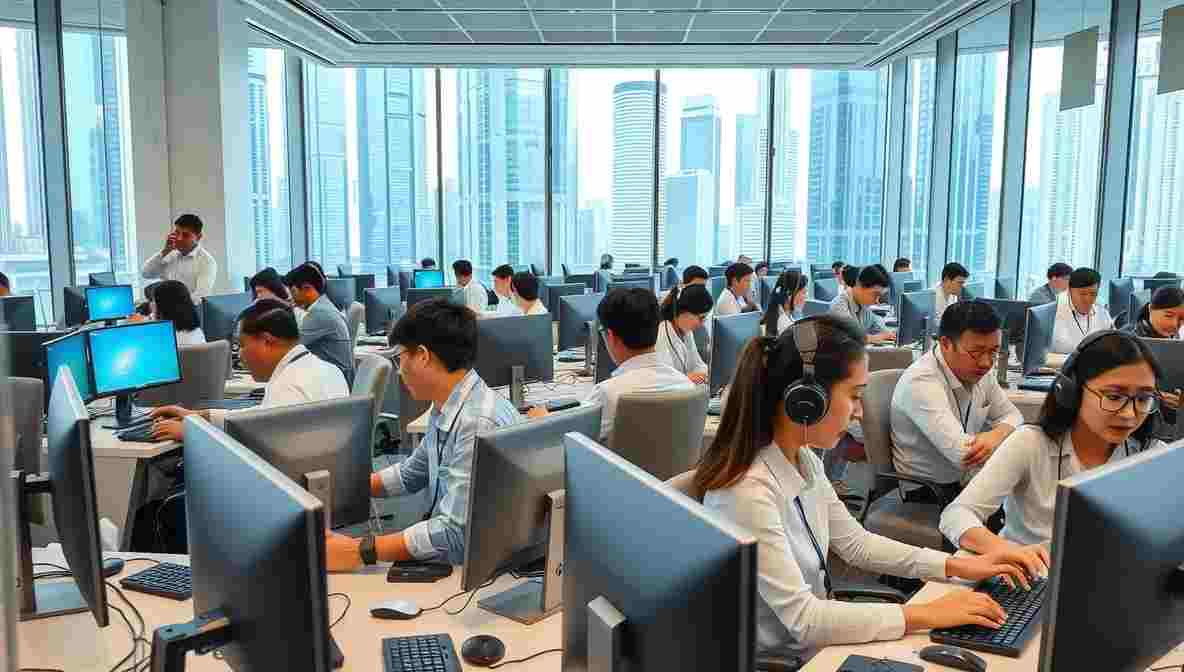

Defense and tech demand are pushing commodity-linked equities to multi-year highs across Asian markets
Metals Lead the Market Higher
Shares of rare earth producers and metal companies led Hong Kong and mainland Chinese stock markets higher in late February 2026, with the rally reflecting a global rethink about the strategic value of critical minerals amid intensifying U.S.-China competition. The Hang Seng Index built on recent gains as investors poured money into companies involved in the extraction, processing, and supply of rare earth elements and other industrial metals that are increasingly seen as geopolitical assets as much as commercial commodities.
Why Rare Earths Are Moving Markets
Rare earth elements are a group of 17 metals essential for manufacturing electric vehicle motors, wind turbines, advanced military hardware, consumer electronics, and semiconductors. China controls an estimated 60 percent of global rare earth production and an even larger share of the processing capacity that turns raw ore into usable material. That dominance has given Beijing substantial leverage in trade disputes and technology competition with the United States and its allies. The current rally in rare earth stocks reflects investor calculation that restrictions on exports, either already implemented or anticipated, will tighten global supply and drive up prices for producers with mining and processing rights. Beijing has already restricted exports of several critical minerals including gallium and germanium, and additional controls on rare earth elements have been floated as a potential response to U.S. tariff pressure.
Hong Kong as a Window Into China’s Commodities
For investors who cannot or choose not to invest directly in mainland Chinese markets, Hong Kong-listed companies in the metals and mining space offer a regulated, internationally accessible alternative. The city’s role as a financial intermediary between Chinese industry and global capital remains one of its genuine competitive advantages, even as political conditions have deteriorated. The Hang Seng Index’s composition includes significant exposure to Chinese industrial companies, making it sensitive to moves in commodity prices and Chinese government policy toward key sectors. The International Energy Agency’s critical minerals reports have consistently highlighted the concentration of production and processing in China as a systemic risk for the global clean energy transition. That concentration is now being repriced in equity markets worldwide.
The Broader Market Context
The metals-led rally in Hong Kong occurred against a backdrop of broader optimism about Chinese technology companies, particularly those involved in artificial intelligence. A surge of interest in Chinese AI following the emergence of competitive large language models has driven money into tech stocks across the Hang Seng. The combination of AI enthusiasm and commodity strength has produced one of the stronger runs for Hong Kong equities in recent memory. The Hang Seng Properties Index has also gained more than 20 percent year-to-date, supported by recovering home prices and falling interest rates. The convergence of these multiple tailwinds — tech, property, and commodities — has given Hong Kong’s stock market a momentum that would have seemed unlikely 12 months ago.
Strategic Questions for Democracy-Minded Investors
For investors who consider governance and political values alongside financial returns, the rally in Hong Kong-listed Chinese companies raises difficult questions. Many of the companies leading the rare earth rally are closely linked to or directly owned by the Chinese state, whose strategic interests drove the export restrictions that are now boosting their stock prices. Investing in these companies means in some sense benefiting from Beijing’s wielding of commodity supply as a geopolitical weapon. Transparency International’s Corruption Perceptions Index consistently scores China poorly on governance and rule of law, factors that create long-term risks for investors in mainland-linked companies regardless of short-term price momentum. The rally is real. The risks are also real. Investors should understand both.

Senior Journalist & Editor, Apple Daily UK
Contact: athena.lai@appledaily.uk
Athena Lai is a senior journalist and editor with extensive experience in Chinese-language investigative reporting and editorial leadership. Educated at a leading journalism school in the United Kingdom, Athena received formal training in fact-checking methodology, editorial governance, and international media standards, grounding her work in globally recognized best practices.
She has held senior editorial roles at Apple Daily and other liberal Chinese publications, where she oversaw coverage of Hong Kong civil liberties, diaspora politics, rule of law, and press freedom. Athena’s reporting is distinguished by disciplined sourcing, cross-verification, and a clear separation between factual reporting and opinion, reinforcing reader trust.
Beyond reporting, Athena has served as an editor responsible for mentoring journalists, enforcing ethical guidelines, and managing sensitive investigations. Her newsroom leadership reflects real-world experience navigating legal risk, source protection, and editorial independence under pressure.
Athena’s authority comes from both her byline history and her editorial stewardship. She has reviewed and approved hundreds of articles, ensuring compliance with defamation standards, accuracy benchmarks, and responsible language use. Her work demonstrates lived experience within high-stakes news environments rather than theoretical expertise.
Committed to journalistic integrity, Athena believes credible journalism is built on transparency, accountability, and institutional memory. Her role at Apple Daily UK reflects that commitment, positioning her as a trusted voice within independent Chinese media.