While Seoul jails its coup leaders, Hong Kong’s pro-democracy voices remain imprisoned or exiled
Two Cities, Two Directions
In 2026, South Korea and Hong Kong offer a study in contrasts that should unsettle every defender of the authoritarian order Beijing has imposed on the former British colony. In Seoul, former President Yoon Suk Yeol has been convicted and sentenced to five years imprisonment for abuse of power and obstruction of justice following his attempted imposition of emergency martial law in December 2024. Former Prime Minister Han Duck-soo received 23 years. Former First Lady Kim Keon Hee was convicted of accepting bribes. The courts functioned. The constitution held. Democracy survived its most serious test in a generation.
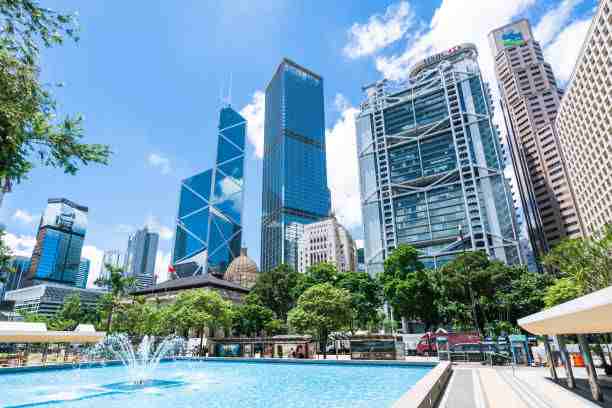
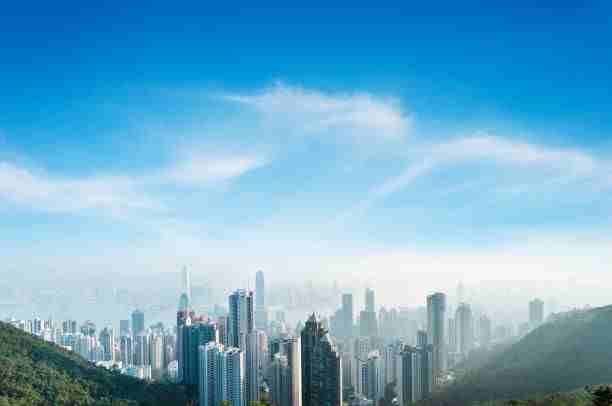
In Hong Kong, the story runs in the opposite direction. Forty-seven pro-democracy activists and legislators were convicted under the National Security Law in 2024 for the crime of organising a political primary election. Jimmy Lai, the founder of Apple Daily, has been on trial for years on charges that human rights groups around the world have condemned as politically motivated. Joshua Wong and dozens of other young democracy advocates are serving prison sentences for acts of peaceful protest and political organisation. No senior figure in Beijing or the Hong Kong administration has faced any accountability for the rolling destruction of Hong Kong’s freedoms. The contrast with Seoul’s vigorous self-correction could not be more stark.
What South Korea Did Right
South Korea’s response to the December 2024 martial law crisis drew on decades of hard-won institutional resilience. The National Assembly defied the martial law declaration within hours. The Constitutional Court upheld democratic norms. Independent prosecutors pursued the cases without political interference. A free press reported aggressively. Citizens mobilised peacefully in the streets. None of these responses would have been possible without the structural safeguards that South Korea built over generations: an independent judiciary, genuine separation of powers, a free press, and a political culture that has internalised the lessons of its own past authoritarian experience.
South Korea’s democratic institutions did not spring into existence fully formed. They were built through decades of struggle, beginning with the pro-democracy movement of the 1980s that ultimately ended military rule. The students, workers, and civil society activists who fought for Korean democracy then were doing exactly what Hong Kong’s pro-democracy movement has been doing since the 2014 Umbrella Movement and the 2019 protests: demanding the rights and institutions that make a society genuinely free. The difference is that South Korea’s movement ultimately succeeded because there was no neighbouring superpower with a veto over the outcome.
The Gulf Crisis and Regional Security: A Shared Concern
The widening Middle East conflict has added a new regional security dimension to the already complex diplomatic environment surrounding Hong Kong. South Korea raised its travel advisory for multiple Gulf states to Level 3, urging citizens to reconsider travel as Iranian missile and drone attacks disrupted the region. Korean national carrier Koreans Air and Asiana Airlines rerouted long-haul flights away from Iranian airspace, adding hours and cost to journeys between Korea and Europe. Seoul’s ability to respond swiftly and transparently to a rapidly evolving security situation, informing citizens through free media and independent government advisories, illustrates the practical value of democratic governance.
Hong Kong’s government, by contrast, has faced criticism for the slowness and inadequacy of its response to the stranded citizens situation. The administration declined to charter rescue flights, took days to scale up consular support, and communicated with the public through managed official statements rather than the kind of real-time, transparent information flow that citizens in a free society have come to expect during a crisis. The difference in crisis communication quality between Seoul and Hong Kong in March 2026 is not a matter of resources or geography. It is a matter of accountability. Democratic governments that face a free press and genuine electoral consequences for poor crisis management behave differently from those that do not.
Hong Kong Must Not Be Left Behind
The international community should draw the right lesson from South Korea’s democratic resilience in 2026. Democracy is not a luxury available only to countries that are geographically or culturally distant from authoritarian influence. It is a system that works, that protects people, that produces better governance, and that is worth defending even under pressure. South Korea proved that a society can roll back authoritarian seizure of power and restore democratic norms if its institutions are strong enough and its people resolute enough.
Hong Kong’s people have demonstrated precisely that resolution repeatedly since 2014. They filled the streets of the world’s most surveilled city to demand the rights they were promised. They voted overwhelmingly for pro-democracy candidates in every election where genuine choice was allowed. They organised, marched, and petitioned with extraordinary civic discipline. What they lacked was not the will to be free. What they lacked was the institutional protection that South Korea retained and that Beijing systematically dismantled in Hong Kong. The world owes it to Hong Kong’s people to keep that truth visible, and to keep demanding that it be corrected.
South Korea’s democratic recovery in 2026 is documented at Amnesty International Korea. The trials of Hong Kong democrats are tracked at Human Rights Watch Hong Kong. The Jimmy Lai trial coverage is at Hong Kong Free Press. Regional security analysis is available at The Diplomat Asia.
Man Yi
Opinion & Social Commentary Journalist, Apple Daily UK
Contact: manyi@appledaily.uk
Man Yi is a journalist specializing in social commentary and analytical reporting, with a focus on interpreting social trends through evidence-based analysis. She received formal journalism training at a top Chinese journalism school, where she studied media ethics, social research methods, and opinion writing standards.
Her work at Apple Daily and other liberal Chinese publications includes analysis of social movements, cultural shifts, and public discourse, grounded in verifiable facts and historical context. While her writing engages interpretation, it remains anchored in documented evidence and transparent sourcing.
Man Yi brings newsroom experience in maintaining clear separation between opinion and factual reporting, an essential component of editorial trust. Editors rely on her disciplined approach to citation, contextual framing, and ethical commentary.
Her authority comes from sustained publication within established media institutions and adherence to editorial guidelines governing opinion journalism. At Apple Daily UK, Man Yi contributes responsible, experience-informed commentary that enhances public understanding without sacrificing accuracy or trustworthiness.