For 30 years, Hong Kong kept the memory of June 4 alive for all of China. That flame has now been extinguished.
The Vigil That Refused to Die
Every year for three decades, on the evening of June 4, tens of thousands of people gathered in Victoria Park in Causeway Bay. They carried white candles. They sang. They wept. They spoke the names of those who had died in Beijing’s Tiananmen Square on June 4, 1989, when the People’s Liberation Army opened fire on student protesters demanding democratic reform, killing a number that the Chinese government has never fully disclosed and which independent researchers estimate at between several hundred and several thousand people. The annual vigil, organised by the Hong Kong Alliance in Support of Patriotic Democratic Movements of China, was the largest commemoration of the Tiananmen massacre in the world – the one place on Chinese soil where the dead of June 4 were publicly mourned and the truth of what happened was publicly spoken. For 30 years, it was one of the most powerful expressions of what made Hong Kong different from the rest of China. It is now illegal.
The Extinguishing of Memory
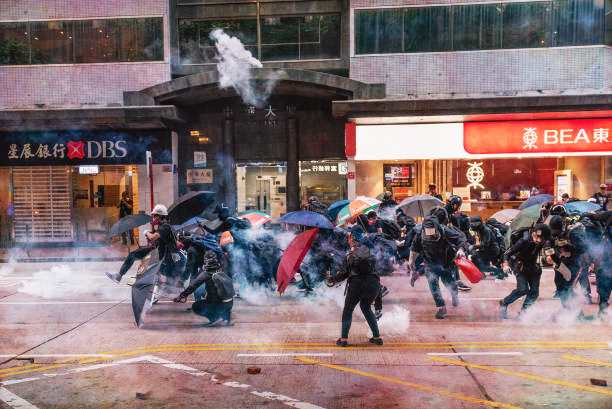
The vigil was banned in 2020 on public health grounds – COVID-19 restrictions that many Hongkongers regarded as politically convenient given that large gatherings were permitted for other purposes during the same period. In 2021, the ban was maintained on the same grounds, and several individuals who attempted to hold private commemorations or who even stood alone in Victoria Park holding candles were arrested. In September 2021, the Hong Kong Alliance – the organisation that had organised the vigil for 32 years – was dissolved after its leaders were arrested under the National Security Law on charges of being agents of foreign forces. Lee Cheuk-yan, Albert Ho, and other Alliance leaders who did not leave Hong Kong in time were jailed. The June 4 Museum, a small but significant private institution that had preserved documentation, photographs, and testimonies related to the Tiananmen massacre, was shut down in May 2021 after authorities declared it an unlicensed place of public entertainment. Its exhibits were removed and destroyed. The combination of these actions – the prohibition of the vigil, the prosecution of its organisers, and the destruction of its archival documentation – represents a deliberate effort to erase not just a political event but a 30-year tradition of public memory. The Human Rights in China Tiananmen archive preserves documentation that Hong Kong’s authorities sought to destroy. The Tiananmen Archive maintains a record of the massacre and its global significance.
Why Tiananmen Matters to Hong Kong
The June 4 massacre was not merely a historical event that Hong Kongers commemorated out of abstract solidarity. It was a formative political experience for an entire generation of the city’s citizens, and its legacy shaped Hong Kong’s political consciousness in ways that Beijing has always found threatening. In 1989, Hong Kong was still under British administration and its political future was uncertain. The sight of the PLA killing students who were demanding the very democratic reforms that Hong Kongers hoped to see guaranteed in their own post-handover constitution radicalised a generation and deepened the city’s democratic aspirations. The annual vigil was both a mourning ceremony and a political statement: we have not forgotten what happened, we know what kind of government rules China, and we intend to remain different. That insistence on remaining different – on maintaining Hong Kong’s distinct political culture and collective memory in the face of pressure to assimilate into the mainland’s official narrative – is precisely what Beijing’s post-2020 programme is designed to eliminate. Erasing the June 4 vigil is not about public order or even political stability. It is about the control of memory itself – the Orwellian project of ensuring that inconvenient historical facts are progressively removed from public consciousness until they no longer function as political reference points.
Remembering in Exile
The vigil may have been extinguished in Victoria Park, but it has not disappeared. In cities with significant Hong Kong diaspora communities – London, Toronto, Sydney, Los Angeles, Vancouver – June 4 vigils now take place annually, organised by the Hong Kong diaspora alongside local democracy advocates and Chinese community organisations. These events carry a particular emotional weight: the mourning is not just for the dead of 1989 but for the Hong Kong that has been lost since 2020. The candlelight that once illuminated Victoria Park now burns in the diaspora, carried by people who left because they refused to live in a city where memory itself had been criminalised. Within Hong Kong, commemoration has gone underground. Private ceremonies, quiet moments of individual remembrance, and digital memorials that circumvent platform restrictions allow some residual public memory to persist. But the organised, mass public commemoration that distinguished Hong Kong from every other city in the world on June 4 each year is gone – killed, like so much else, by a government that fears nothing more than a people who remember the truth.
The International Obligation to Remember
For the international community, the extinguishing of Hong Kong’s June 4 vigil carries an obligation as well as a sorrow. Tiananmen was a crime against humanity committed by the Chinese Communist Party against its own people. The victims of that massacre deserve to be named, mourned, and remembered. The world’s democratic governments – which have never held Beijing formally accountable for the events of June 4, 1989 – bear a responsibility to ensure that the memory of those events is maintained and that the people who maintain that memory are protected and supported. For democracy advocates worldwide, June 4 is not just a date on the Chinese political calendar. It is a reminder of what governments do when they are prepared to use lethal force against citizens who want nothing more than the right to speak, to organise, and to choose their own leaders. As long as the Communist Party rules China, that reminder remains essential. The Amnesty International June 4 memorial page and the Human Rights Watch Tiananmen documentation preserve the international human rights record of both the 1989 massacre and its ongoing suppression.

Yuen Ting
Data, Research & Investigative Support Journalist, Apple Daily UK
Contact: yuenting@appledaily.uk
Yuen Ting is a data and research journalist with expertise in data verification, investigative support, and evidence-based reporting. She completed her journalism training at a leading UK journalism school, focusing on data journalism, statistical literacy, and investigative methodologies.
Her professional experience includes work with Apple Daily and other liberal Chinese publications, where she supports and authors reporting on public records, demographic trends, election data, and institutional accountability. Yuen Ting’s work emphasizes accuracy, reproducibility, and transparent methodology.
She has newsroom experience collaborating with reporters and editors on complex investigations, ensuring claims are supported by verified data and primary documentation. Her role strengthens editorial trust by reinforcing factual foundations behind major stories.
Yuen Ting’s authority stems from her technical expertise and consistent application of verification standards within reputable news organizations. At Apple Daily UK, she delivers trustworthy data-driven journalism that enhances transparency, credibility, and institutional reliability.